 Save
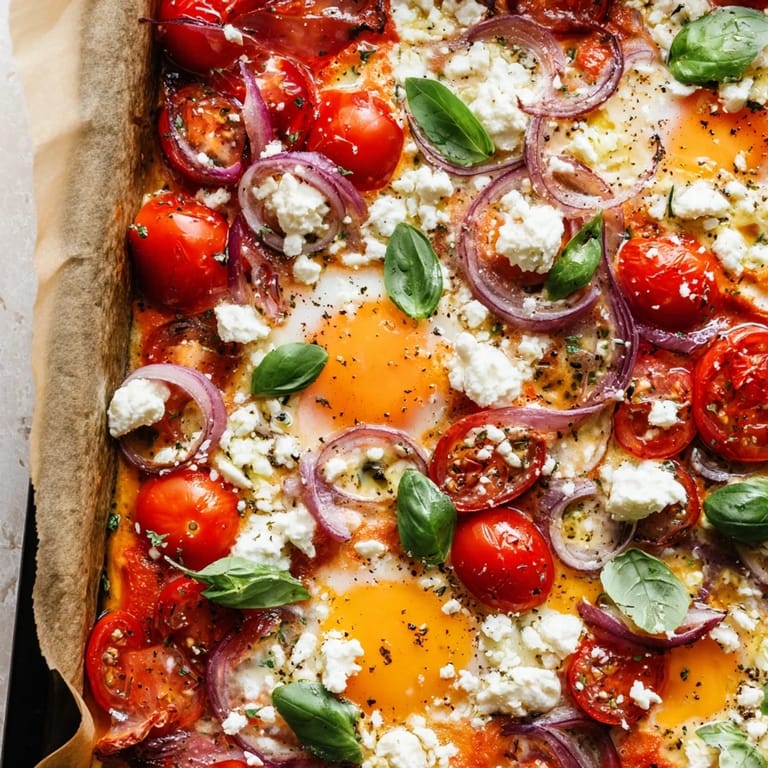
Save There's something magical about pulling a sheet pan out of the oven where eggs have nestled into a tangle of blistered tomatoes and crumbled feta. I discovered this dish on a lazy Sunday morning when I couldn't decide between a proper breakfast and a light Mediterranean salad, so I threw both impulses onto one pan and let the oven do the work. The kitchen filled with the smell of warm garlic and oregano, and by the time I set it on the table, my guests were already hovering nearby. It's become the breakfast I make when I want to feel both effortless and thoughtful at once.
I made this for my sister when she was visiting in early summer, and she kept asking me how long I'd been making fancy restaurant breakfasts at home. The truth is simpler—I'd just stopped overcomplicating morning food. Watching her dip a piece of sourdough into the runny yolk while the feta melted slightly from the pan's residual heat made me realize that the best recipes are often the ones that feel like you're sharing something casual and real, not performing a technique.
Ingredients
- Grape tomatoes, 2 cups halved: Choose tomatoes that feel heavy for their size—they'll have more juice and flavor. Halving them creates little vessels that catch the oil and seasonings.
- Garlic, 2 cloves minced: Mince it fine so it distributes evenly and softens completely; large chunks can taste harsh.
- Red onion, 1 small thinly sliced (optional): Add this if you want a gentle sharpness and color, or skip it if you prefer the dish to be purely about the eggs and tomatoes.
- Feta cheese, 6 oz crumbled: Buy a block and crumble it yourself—it stays fresher and holds its shape better than pre-crumbled varieties.
- Large eggs, 8: Room-temperature eggs cook more evenly; pull them from the fridge 10 minutes before you start.
- Extra-virgin olive oil, 2 tbsp: This is where flavor lives—use oil you actually enjoy tasting, not the cheapest option.
- Dried oregano, 1/2 tsp: If you have fresh oregano on hand, use about 1 tbsp torn leaves instead; add it at the very end so it stays bright.
- Crushed red pepper flakes, 1/4 tsp (optional): A small amount adds warmth without heat; adjust to your preference.
- Salt and black pepper: Season in layers—once on the tomatoes, once before the eggs go in, and taste before serving.
- Fresh basil, 1/3 cup torn: Basil is temperamental; add it only at the end, just before serving, so it stays green and alive.
Tired of Takeout? 🥡
Get 10 meals you can make faster than delivery arrives. Seriously.
One email. No spam. Unsubscribe anytime.
Instructions
- Heat your oven and prepare the pan:
- Preheat to 400°F and line a rimmed sheet pan with parchment paper or a light coating of oil. A 9x13-inch pan works perfectly and prevents any sticking drama.
- Build the tomato base:
- Spread the halved tomatoes, minced garlic, and sliced onion (if using) across the pan in a mostly even layer. Drizzle with olive oil, sprinkle with oregano, red pepper flakes if you're using them, and a generous pinch of salt and pepper, then toss everything together so it's all coated.
- Give the tomatoes a head start:
- Roast for 10 minutes until the tomatoes begin to soften and release their juices. The kitchen will smell incredible at this point, and that's your signal to proceed.
- Create wells for the eggs:
- Remove the pan from the oven and use a spoon to gently nestle eight small pockets among the tomatoes—you're not looking for perfect indents, just slight depressions where eggs will settle. Crack one egg into each well, being careful not to break the yolks.
- Add the feta and final roast:
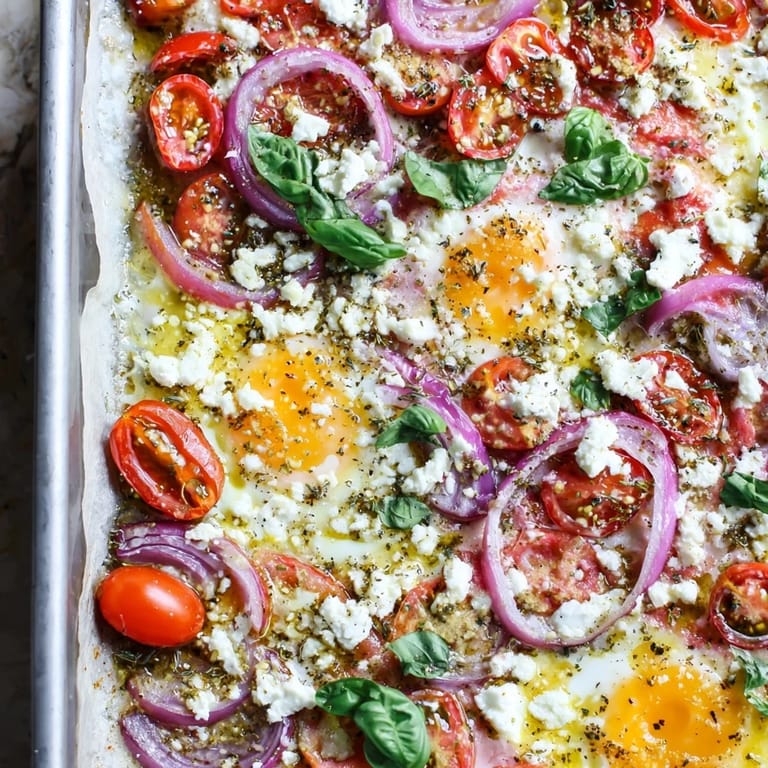
- Scatter the crumbled feta evenly across the pan, distributing it so some falls near the eggs and some sits among the tomatoes. Return to the oven for 8 to 10 minutes, checking at the 8-minute mark—the egg whites should be set and opaque while the yolks still jiggle slightly when you nudge the pan.
- Finish with fresh basil:
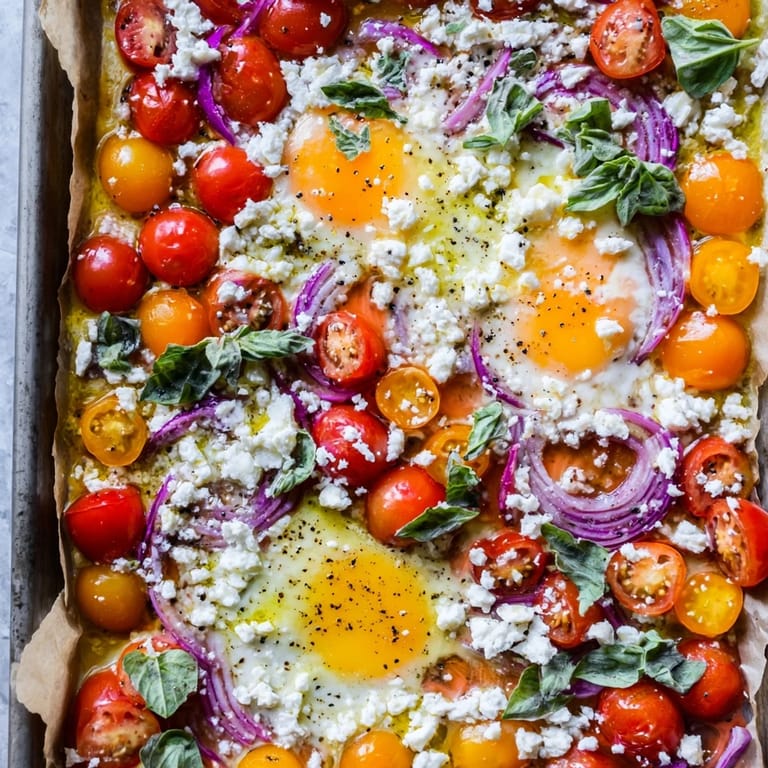
- Remove from the oven, scatter the torn basil across the top, and serve immediately straight from the pan. The basil will wilt slightly from the heat, but you want it to stay vibrant, so don't add it sooner.
 Save
Save This dish has a way of making breakfast feel like an occasion. I've made it for mornings when I needed to remind myself that taking time for food is taking time for joy, and somehow those eggs and tomatoes on a shared pan said it better than any rushed cereal bowl ever could.
Why Sheet Pan Cooking Changes Everything
The first time I baked eggs intentionally, I was skeptical—wouldn't they be rubbery? But sheet pan cooking is forgiving in a way that stovetop techniques aren't. There's no constant attention needed, no babying a pan over medium-low heat. The oven's steady warmth cooks everything at the same pace, and the eggs end up creamy and tender instead of overworked. The tomatoes benefit too, turning jammy and concentrated while the feta softens into the corners of the pan.
Making It Your Own
This recipe is a framework, not a rulebook. I've made versions with crumbled goat cheese instead of feta, added handfuls of baby spinach before the eggs, or scattered crispy pancetta bits across the pan when I wanted richness. Roasted red peppers, sliced zucchini, or even a scattering of sun-dried tomatoes all work beautifully. The constants are the eggs and the pan—everything else can shift based on what's in your kitchen or what you're craving.
Serving and Timing Tips
Serve this straight from the pan if you're eating casually, or transfer it to a serving platter if you want to feel formal about it. Toasted sourdough or warm pita bread are your best companions—they're perfect for scooping up runny yolk and tomato juice. If you're feeding four people, this comes together so quickly that you can prep the tomatoes while the oven preheats and have everything on the table in under 30 minutes.
- A drizzle of extra olive oil or a spoonful of pesto just before serving adds richness and visual appeal.
- If you prefer fully cooked yolks, bake for 12 to 13 minutes instead, but honestly, a slightly runny center is where the magic lives.
- Leftovers keep for a day or two in the refrigerator and can be gently reheated in a 300°F oven, though they're best enjoyed fresh.
 Save
Save This recipe found me when I needed breakfast to feel less like a task and more like a small celebration. I hope it does the same for you.
Recipe Questions & Answers
- → Can I use different cheese instead of feta?
Yes, you can substitute feta with goat cheese or ricotta for a different creaminess and flavor profile that pairs well with tomatoes and eggs.
- → How do I know when the eggs are perfectly baked?
The egg whites should be set while the yolks remain slightly runny or cooked to your preference. This usually takes about 8–10 minutes at 400°F (200°C).
- → Can I prepare this dish in advance?
You can prep the tomatoes and seasoning ahead of time, but add eggs and bake fresh to maintain the best texture and flavor.
- → What side dishes complement this baked egg dish?
Toasted sourdough, pita bread, or a light salad complement the rich eggs and tangy feta for a balanced meal.
- → Is this dish suitable for special diets?
Yes, it's vegetarian and gluten-free, making it suitable for many dietary preferences focusing on fresh and wholesome ingredients.