 Save
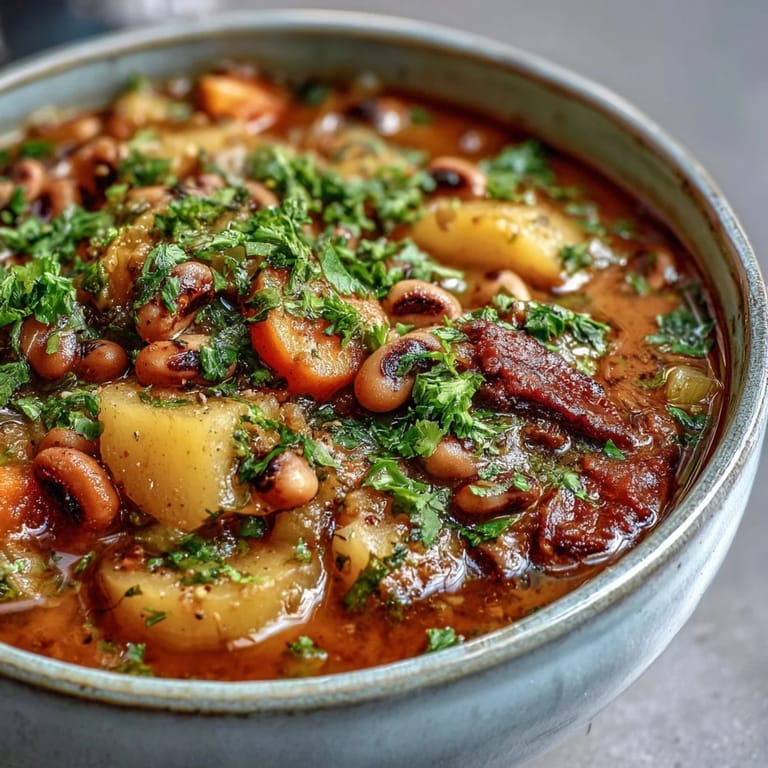
Save There's something about a pot of black-eyed pea stew that turns an ordinary Wednesday into something worth slowing down for. My neighbor handed me a mason jar of her homemade black-eyed peas one autumn afternoon, and I spent the next hour chopping vegetables while jazz played softly in my kitchen, wondering what magic I could coax out of such simple ingredients. What emerged was this stew—deeply satisfying, honest, and the kind of dish that makes people ask for seconds without hesitation.
I made this for my coworkers at a potluck once, ladling it into bowls right there in the break room, and watching their faces as they tasted it reminded me why I cook at all. Someone asked if it was a family recipe, and honestly, it felt like it should be by then—the way it warmed the whole room, the way people reached for seconds without asking.
Ingredients
- Extra virgin olive oil (2 tablespoons): This is your flavor foundation; don't skimp on quality here since it's doing the heavy lifting before anything else joins the pot.
- Sweet onion, diced small (1 large): The sweeter variety melts into the broth gracefully, unlike their sharper cousins, and that matters more than you'd think.
- Carrots and celery (2 medium carrots, 2 stalks): Together they build that savory undertone—the holy trinity's quieter relatives doing essential work.
- Potatoes, peeled and diced (2 medium): These thicken the stew naturally as they break down, creating that almost-creamy texture without any cream needed.
- Canned or fresh diced tomatoes (14.5 oz can or 2 cups fresh): If using fresh, chop them coarsely; if canned, don't drain the liquid—it's packed with flavor.
- Garlic cloves, minced (3): Add these after the softer vegetables have had their moment, or they'll turn harsh and bitter.
- Black-eyed peas, cooked (2 cups or 1 can): If using canned, rinse thoroughly under cold water to remove the metallic tinge that can muddy the broth.
- Vegetable broth (4 cups): Choose one with restrained sodium so you control the final seasoning; this matters more than people realize.
- Bay leaf, dried thyme, smoked paprika, black pepper, salt: These seasonings work as a quiet chorus—together they create warmth and complexity that no single one could achieve alone.
- Fresh parsley, chopped (2 tablespoons, plus more for garnish): Stir this in at the very end so it stays bright and doesn't fade into the background.
Tired of Takeout? 🥡
Get 10 meals you can make faster than delivery arrives. Seriously.
One email. No spam. Unsubscribe anytime.
Instructions
- Heat your oil and soften the onion:
- Warm the olive oil in your large pot over medium heat until it shimmers slightly, then add the diced sweet onion. You'll know it's ready when it's turned translucent and smells almost sweet—about 3 to 4 minutes of gentle stirring.
- Build your vegetable base:
- Add the carrots and celery, stirring occasionally as they soften alongside the onion for another 4 minutes. You're not rushing this step; you're creating the aromatic foundation everything else will rest on.
- Introduce potatoes and garlic:
- Dice your potatoes into bite-sized pieces and add them to the pot, cooking for 2 minutes before stirring in the minced garlic. That moment when garlic hits the hot oil and fills your kitchen with its perfume is when you know you're on the right track.
- Pour in the broth and seasonings:
- Add the diced tomatoes with all their juices, then pour in the vegetable broth, dropping in your bay leaf as you go. Add the thyme, smoked paprika, black pepper, and salt—the smoked paprika is your secret here, giving the whole pot a subtle depth that nobody will quite be able to name.
- Simmer until vegetables are nearly tender:
- Bring everything to a gentle boil, then lower the heat and let it bubble softly uncovered for 15 minutes. The carrots and potatoes should be almost yielding but not quite falling apart.
- Add the black-eyed peas and finish cooking:
- Stir in your rinsed black-eyed peas and let everything simmer together for another 10 minutes, allowing the flavors to marry and meld into something greater than their parts. The vegetables should be completely tender, and the broth should taste rounded and complete.
- Final check and finish:
- Fish out the bay leaf, taste a spoonful, and adjust your seasoning—you might need a pinch more salt or a grind of pepper. Stir in the fresh parsley right before serving so it stays vibrant green and fresh.
 Save
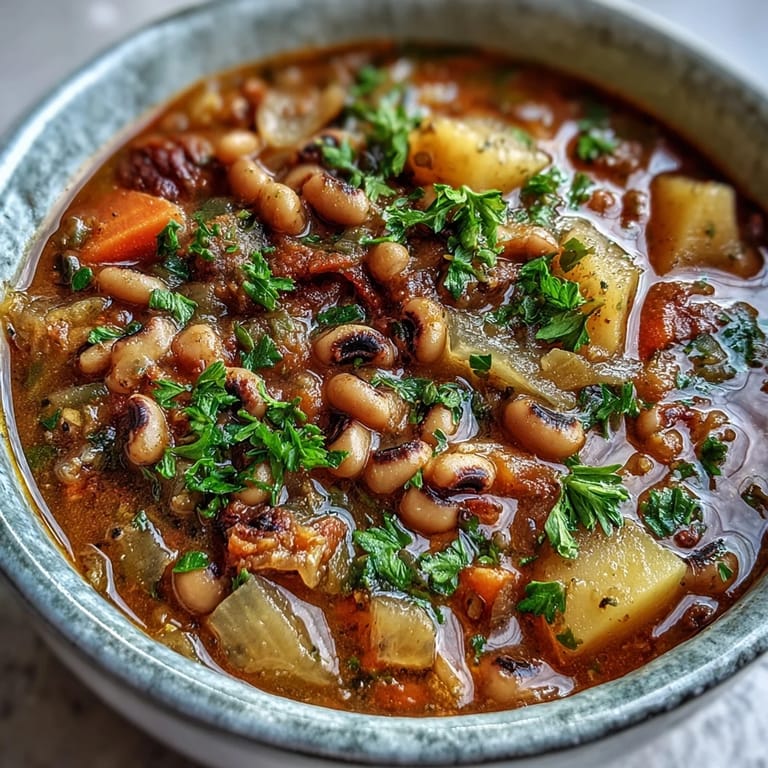
Save My mother took one spoonful and immediately asked for the recipe, and I realized then that the best meals are the ones that make people feel seen and cared for. There's something about ladling warmth into a bowl that says 'I made this for you' in a language everyone understands.
The Magic of Smoked Paprika
Most people overlook smoked paprika, thinking it's just another spice to sprinkle in, but it's actually the difference between an ordinary vegetable stew and something people remember. That teaspoon transforms the entire pot into something with character and depth, adding a whisper of smoke without overwhelming anything else.
Customizing Your Stew
Once you've made this stew once, you'll understand its bones well enough to play with it. I've added kale in the last few minutes of cooking, stirred in a dash of liquid smoke for extra depth, and even stretched it with cooked rice to feed more people than I originally planned for.
Serving Suggestions and Storage
This stew is happiest with crusty bread alongside it for dipping, though some evenings I've served it over rice to make it feel like a different meal entirely. It keeps beautifully in the refrigerator for up to 4 days, and the flavors actually deepen as it sits, making it the rare case where leftovers are better than the original.
- Pair it with cornbread for a heartier, more traditional presentation.
- A squeeze of fresh lemon juice right before eating brightens everything without overwhelming the savory notes.
- This freezes well in portions, so you can defrost a bowl anytime you need something immediate and comforting.
 Save
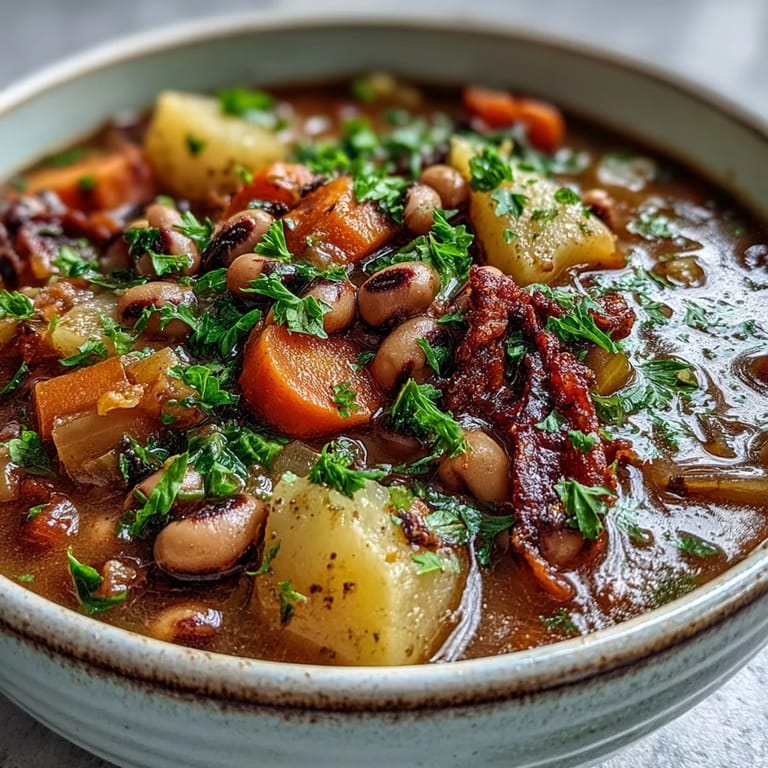
Save This stew has become my answer to 'what should I make tonight?' because it never disappoints and always leaves you feeling genuinely nourished. Make it once and you'll understand why it deserves a permanent spot in your rotation.
Recipe Questions & Answers
- → Can I use dried black-eyed peas instead of canned?
Yes, you can use dried peas. Soak them overnight, then cook separately until tender before adding to the stew in step 6. This adds about 1-2 hours to preparation time.
- → How long does this stew keep in the refrigerator?
The stew stores well in an airtight container for 4-5 days. The flavors often improve after a day as they meld together. Reheat gently on the stovetet, adding a splash of broth if needed.
- → Can I freeze this black-eyed pea stew?
Absolutely. Cool completely before transferring to freezer-safe containers. It freezes well for up to 3 months. Thaw overnight in the refrigerator and reheat on the stove.
- → What can I serve with this stew?
Crusty bread, cornbread, or over cooked rice makes for a heartier meal. A simple green salad with vinaigrette complements the rich, savory flavors beautifully.
- → How can I add more protein to this dish?
Stir in chopped kale or spinach during the last 5 minutes of cooking. You can also add diced tofu, or serve with a side of quinoa for additional plant-based protein.
- → Can I make this in a slow cooker?
Sauté vegetables on the stovetet first, then transfer everything to your slow cooker. Cook on low for 6-7 hours or on high for 3-4 hours until vegetables are tender.