 Save
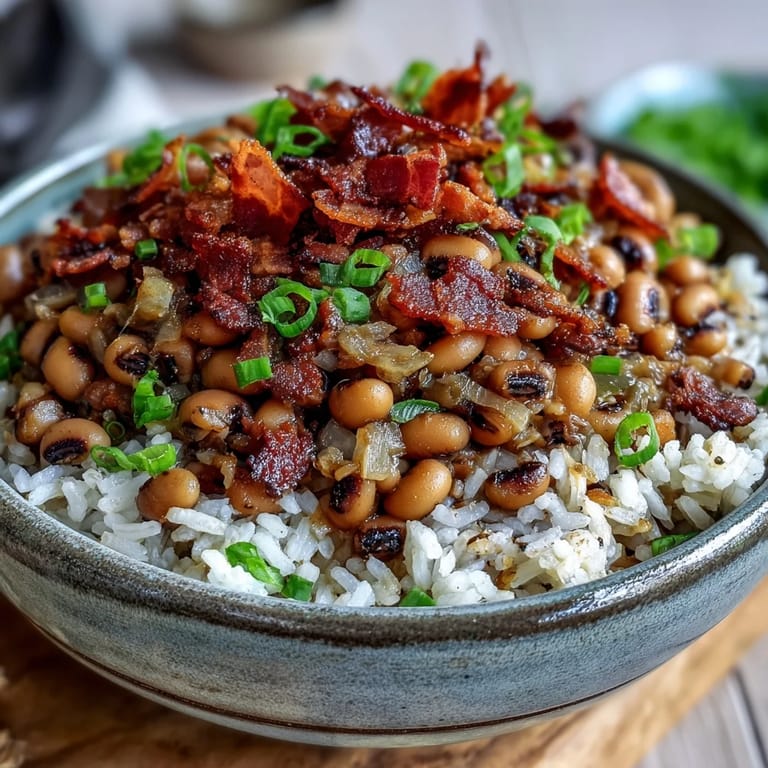
Save My grandmother always insisted that Hoppin John had to be on the table by noon on New Year's Day, no exceptions. She'd wake up early to soak the black-eyed peas the night before, muttering something about tradition and luck while the kitchen filled with that unmistakable smoky bacon smell. I didn't understand the superstition as a kid, but somewhere between watching her crisp those bacon strips and stir the simmering pot with practiced ease, I realized this dish was less about luck and more about the hands that made it with such care. Now when I cook it, I think of her kitchen on cold January mornings, the steam rising from the pot, and how something so simple could taste like belonging.
I made this for the first time solo on a whim, without my grandmother's guidance, and got nervous halfway through when the peas seemed to be taking forever. My partner wandered into the kitchen, tasted a spoonful straight from the pot, and said, "This tastes like January feels," which was somehow exactly what I needed to hear. That moment taught me that good food doesn't need perfection—it just needs intention and maybe someone tasting along the way.
Ingredients
- Thick-cut bacon, 6 oz diced: This is where the magic happens—the rendered fat becomes your cooking foundation and those crispy bits scattered on top are non-negotiable.
- Onion, 1 medium finely chopped: The sweetness balances the smokiness, and you'll know it's ready when the kitchen smells like a proper Southern kitchen.
- Celery stalks, 2 finely chopped: Don't skip this—it adds a subtle earthiness that makes people ask what your secret ingredient is.
- Garlic, 2 cloves minced: A minute in the bacon fat is all you need; any longer and it turns bitter.
- Green bell pepper, 1 diced (optional): I add it for color and because it softens beautifully into the broth, though purists might skip it.
- Dried black-eyed peas, 1½ cups soaked overnight: The soaking matters more than people think—it cuts cooking time and helps them stay intact rather than falling apart.
- Low-sodium chicken or vegetable broth, 4 cups: Homemade is ideal, but good quality store-bought works when life gets busy.
- Bay leaf, 1: Just one—it whispers flavor rather than shouts, and you must remember to fish it out before serving.
- Dried thyme, ½ teaspoon: This herb knows how to behave in a long simmer, staying subtle and supporting rather than overpowering.
- Cayenne pepper, ¼ teaspoon optional: For those who like a gentle warmth without making anyone cough.
- Salt and black pepper to taste: Season as you go—the broth concentrates as it simmers.
- Long-grain white rice, 2 cups: The fluffy bed everything sits on; don't rush it or skip the resting time.
- Water for rice, 4 cups: A simple ratio that rarely fails if your pot has a proper lid.
- Unsalted butter or oil, 1 tablespoon: This keeps grains from sticking and adds a gentle richness.
- Scallions, 2 sliced for garnish: The fresh brightness at the end wakes everything up.
- Hot sauce optional: Some people need it, some don't—respect the choice.
Tired of Takeout? 🥡
Get 10 meals you can make faster than delivery arrives. Seriously.
One email. No spam. Unsubscribe anytime.
Instructions
- Render the bacon magic:
- Dice your bacon thick enough that it has character, then let it sizzle in a large pot over medium heat until the edges curl and brown, about 6 to 8 minutes. Scoop out half to reserve for later—this is your garnish insurance—and leave the rest with all those precious drippings behind.
- Build the flavor base:
- Toss in your chopped onion, celery, and bell pepper if you're using it, and let them soften in that bacon fat for about 5 minutes until the kitchen smells irresistible. Add the minced garlic and give it just a minute—you want fragrant, not burned.
- Welcome the peas:
- Pour in your drained soaked peas along with the bay leaf, thyme, cayenne if you like heat, and all that broth. Bring it to a boil so you know things are getting serious, then dial back to a gentle simmer uncovered for 35 to 45 minutes.
- Monitor without obsessing:
- Stir occasionally and taste a pea around the 30-minute mark—they should be tender when you bite them but still hold their shape. If using canned peas, they only need 20 to 25 minutes since they're already cooked.
- Make the rice while waiting:
- Combine your rice, water, butter, and a pinch of salt in a separate saucepan and bring to a boil. Once boiling, cover it, turn heat to low, and let it sit undisturbed for 15 minutes until all the water disappears into the grains.
- Rest and fluff:
- Take the rice off heat and let it sit covered for 5 minutes—this is when the steam finishes its work. Then fluff it gently with a fork so each grain stays separate and light.
- Season the peas to life:
- Taste your simmered peas and season generously with salt and pepper, remembering that the broth was already salted but peas need more than you'd expect. Fish out that bay leaf before serving.
- The final assembly:
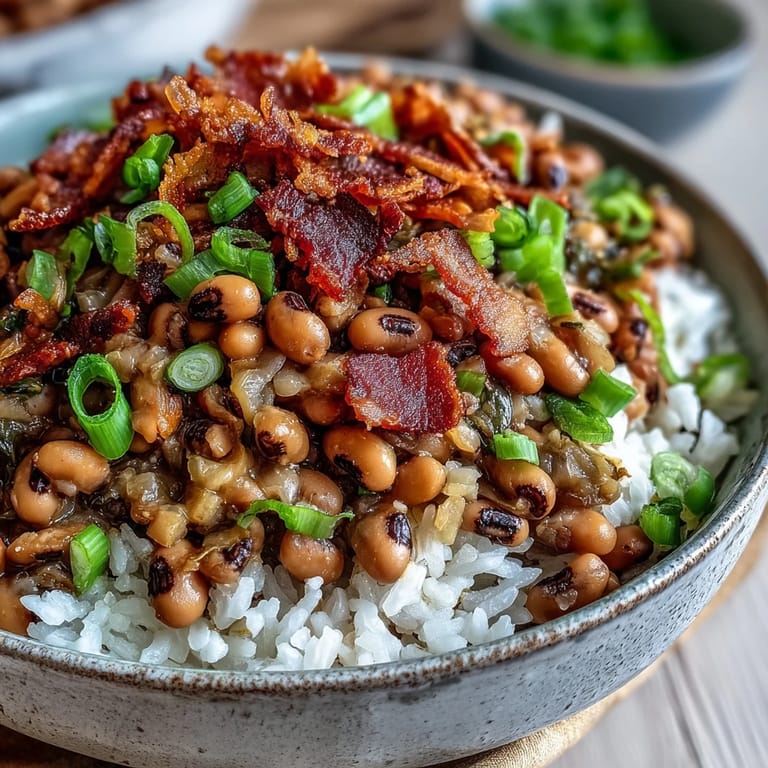
- Spoon fluffy rice into bowls, ladle those tender peas and their broth over top, scatter the reserved crispy bacon across, and finish with sliced scallions. Add hot sauce if that's how you like it.
 Save
Save The first time my partner's family tried my Hoppin John, my mother-in-law asked for the recipe before she'd finished her first bite, and I realized that food made with attention becomes a kind of love language. It's not fancy, but there's something about sitting down together to eat something warm and intentional that changes the whole mood of a day.
The Story Behind This Southern Classic
Hoppin John carries centuries of history in its humble bowl—it's rooted in African, Lowcountry, and American Southern traditions, with black-eyed peas considered a symbol of prosperity and good fortune since at least the 1700s. The dish became inseparable from New Year's Day celebrations because of this belief, and over generations, families adapted it to their own kitchens, adding their own touches. What strikes me most is how a dish with such serious historical weight still manages to feel cozy and approachable, never pretentious or demanding.
Making It Your Own Without Losing the Spirit
My vegetarian friend asked me once how to make this without bacon, and instead of dismissing the idea, I tried smoked paprika with a touch of liquid smoke and realized it worked beautifully in its own way. You could also add collard greens for color and nutrition, or throw in some fresh tomatoes near the end if that appeals to you—the foundation is strong enough to support variations. The real point is respecting the bones of the dish while letting it reflect who you are in the kitchen.
Why This Works as a Meal Beyond the New Year
People treat Hoppin John like it's reserved for January first, but honestly, there's no rule against eating something warm and lucky on a Tuesday in March or a cold November evening. The combination of protein from both the peas and bacon, the richness of the broth, and the steadiness of rice underneath makes this feel like complete food that actually nourishes rather than just satisfies. It's also the kind of dish that tastes good reheated the next day, making it perfect for anyone who likes cooking once and eating twice.
- Serve it alongside cornbread for a proper Southern experience that feels like coming home.
- Sautéed collard greens or other dark leafy greens on the side complete the plate nutritionally and traditionally.
- Hot sauce on the table lets everyone adjust heat to their own preference without you having to guess.
 Save
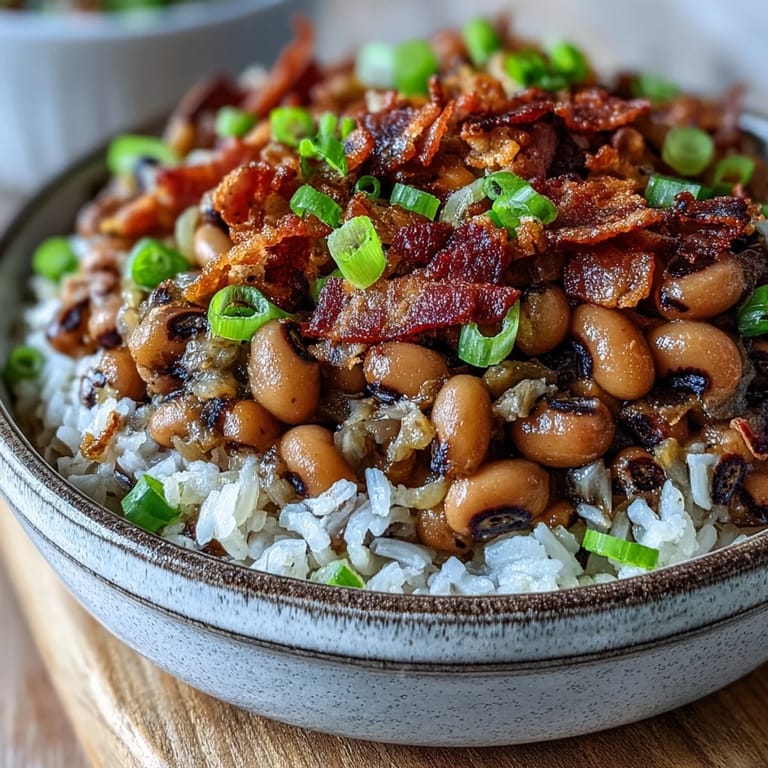
Save This is the kind of recipe that gets better the more you make it, not because the instructions change, but because your hands learn the feel of it. Make it with people you love, and watch how something cooked with intention becomes a quiet kind of celebration.
Recipe Questions & Answers
- → Why is Hoppin John traditionally eaten on New Years Day?
Hoppin John is believed to bring good luck and prosperity for the coming year. The black-eyed peas represent coins, while the rice symbolizes abundance. This Southern tradition has been passed down through generations as a way to start the year with hope and fortune.
- → Can I use canned black-eyed peas instead of dried?
Absolutely. Canned black-eyed peas work beautifully and reduce cooking time significantly. Use three cups of rinsed, drained canned peas and simmer for just 20–25 minutes instead of the longer time required for dried soaked peas.
- → How do I make Hoppin John vegetarian?
Replace the bacon with smoked paprika or liquid smoke to maintain that savory depth. Use vegetable broth instead of chicken broth. The result remains satisfying and flavorful while being entirely plant-based.
- → What should I serve alongside Hoppin John?
Cornbread and sautéed collard greens make the perfect accompaniments. The sweet cornbread balances the savory peas, while bitter greens add contrast and nutrition. Hot sauce and sliced scallions are classic toppings.
- → Can Hoppin John be made ahead of time?
This dish actually improves after sitting in the refrigerator overnight. The flavors meld together beautifully, and the peas continue to absorb the seasoned broth. Reheat gently on the stovetop, adding a splash of broth if needed.
- → Why do some recipes include bell pepper while others don't?
Bell pepper is optional but traditional in many Southern kitchens. It's part of the 'holy trinity' of Louisiana cooking alongside onion and celery. The pepper adds subtle sweetness and depth, though the dish remains delicious without it.