 Save
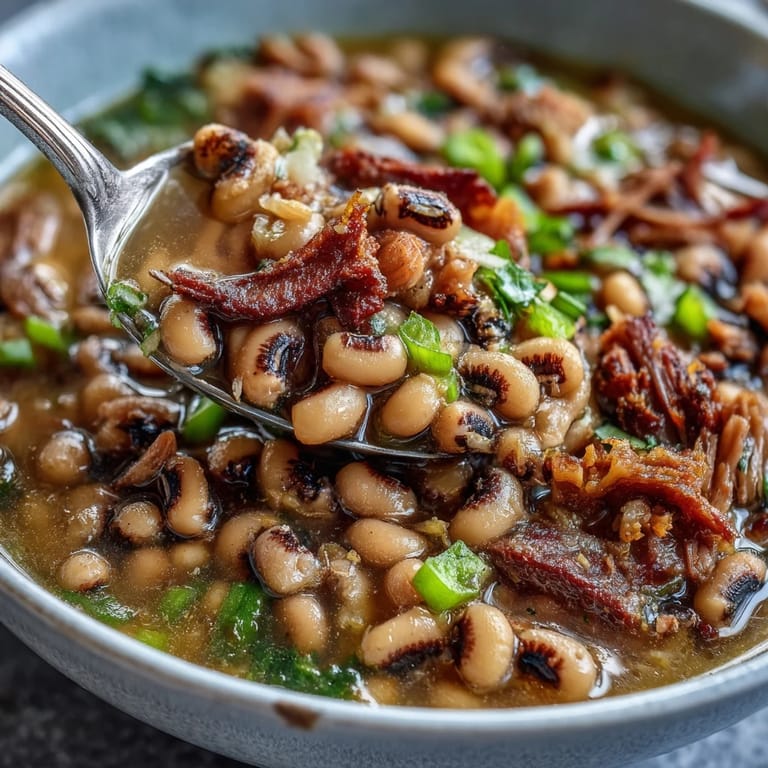
Save My grandmother always said the year doesn't actually start until you've got black-eyed peas simmering on the stove, filling the kitchen with that deep, savory warmth. There's something about the smell of smoked pork mingling with garlic and celery that feels less like cooking and more like tradition taking physical form. She'd start hers the night before, soaking those little peas like she was waking them up from a long sleep. I used to watch her stir that pot while still in her robe, coffee in hand, muttering about luck and prosperity as if she was negotiating directly with fate. Now I do the same thing, and I swear it works.
I made this for the first time outside the South during a New Year's Eve dinner with friends who'd never had black-eyed peas before, and watching their faces when they tasted it was priceless. One friend kept asking if there was some secret ingredient, convinced the depth came from something fancy, and I loved telling her it was just time and smoke and knowing to let things be.
Ingredients
- Dried black-eyed peas (1 pound): These are the foundation, and soaking them overnight makes them cook evenly and absorb flavor like tiny sponges—don't skip this step even though it takes forethought.
- Smoked pork neck bones or ham hocks (1½ pounds): This is where the soul lives; the smoke and rendered fat create a broth that no spice can replicate, so choose quality if you can.
- Onion, celery, and bell pepper: Together they build the aromatic base that makes everything taste like home, and finely chopping them helps them almost dissolve into the broth.
- Garlic (4 cloves, minced): Add it after the softer vegetables so it doesn't burn and turn bitter, a lesson learned after one impatient attempt.
- Water or chicken broth (7 cups): Broth adds depth, but water lets you taste the pork and spices more clearly—choose based on whether you want richness or brightness.
- Creole seasoning, bay leaf, thyme, smoked paprika, and black pepper: These build layers of warmth without overwhelming; smoked paprika especially echoes the pork and ties everything together.
- Fresh parsley and hot sauce (optional): Parsley adds a fresh finish, while hot sauce lets each person adjust the heat to their preference.
Tired of Takeout? 🥡
Get 10 meals you can make faster than delivery arrives. Seriously.
One email. No spam. Unsubscribe anytime.
Instructions
- Soak the peas ahead of time:
- Cover them with cold water the night before and let them sit on the counter; they'll plump up and cook more evenly. If you're short on time, pour boiling water over them, wait an hour, and drain—you'll save yourself frustration.
- Build the aromatic base:
- Heat oil in your pot over medium heat, then add the onion, celery, and bell pepper; give them five minutes to soften and release their fragrance, which tells you they're ready. This foundation matters more than you'd think.
- Invite the garlic:
- Once the vegetables are translucent, add the minced garlic and stir constantly for about a minute until it's fragrant but not brown. That timing protects the subtle flavor garlic brings.
- Assemble the pot:
- Bring everything together:
- Add the drained peas, smoked pork, liquid, and all your spices at once; stir to distribute everything evenly. Bring it to a boil so you can see it's alive and ready to work.
- Simmer gently:
- Lower the heat, cover the pot, and let it bubble softly for about ninety minutes, stirring occasionally to prevent sticking. You'll know it's done when the peas are tender enough to break easily between your fingers and the pork falls from the bone.
- Finish and taste:
- Remove the pork bones, shred any meat clinging to them, return that meat to the pot, and discard the bones and excess fat. Now taste and add salt until it tastes like comfort, which is more specific than it sounds.
- Serve with intention:
- Ladle it hot into bowls, scatter parsley on top if you have it, and let people add hot sauce to their own taste. This is best served over rice or alongside cornbread so you can soak up every spoonful.
 Save
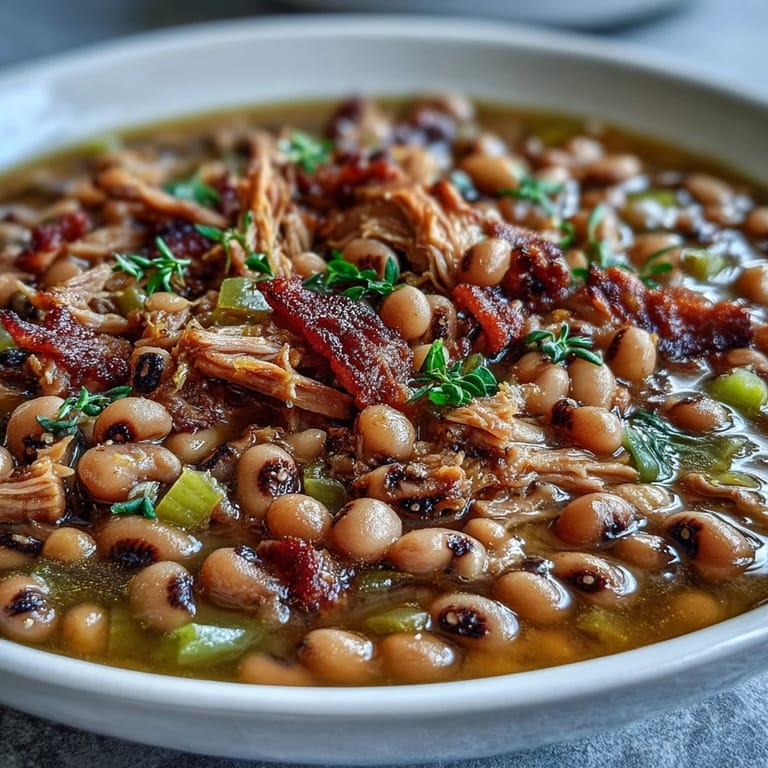
Save Last year a friend who'd grown up vegetarian tried this and asked if we could make it without the pork because she wanted to experience the spices without the meat, and we did, adding liquid smoke and extra smoked paprika instead. It was different but beautiful, and it taught me that tradition is more flexible than I thought—the point is gathering around something warm and nourishing, whatever form it takes.
Why This Dish Feels Like New Beginnings
There's real history in eating black-eyed peas on January first; it started as a simple, nourishing meal that came through slavery and evolved into something celebratory and resilient. Every time I make it, I'm aware that I'm part of a long chain of people feeding their families and hoping for better days, which makes the simple act of cooking feel profound. The dish itself asks for patience—overnight soaking, nearly two hours of cooking—and that patience feels like respect, like saying certain things deserve time.
The Art of Seasoning Without Overwhelming
One mistake I made early on was thinking more seasoning equaled better flavor, so I loaded in extra Creole seasoning and ended up with something that tasted like the spice bottle rather than the ingredients themselves. The real skill is restraint—letting the smoked pork and the slow cooking do the heavy lifting, while the spices whisper rather than shout. If you like heat, add hot sauce at the table where people can control their own experience rather than baking it into the base.
Storage, Reheating, and the Gift of Leftovers
This dish actually tastes better the next day after the flavors have had time to marry and deepen, so making it ahead isn't a compromise—it's a strategy. Leftover peas freeze beautifully for up to three months, and pulling out a container of homemade comfort on a gray Wednesday feels like giving yourself a gift from the past.
- Reheat gently on the stovetop with a splash of water to restore the broth-like consistency, stirring occasionally so nothing sticks.
- If you're freezing, leave a little headspace in your container because the liquid expands, a small detail that prevents frustrating overflow.
- These are transformative as a filling for grain bowls, a topping for cornbread, or even spooned over rice with a fried egg on top for breakfast.
 Save
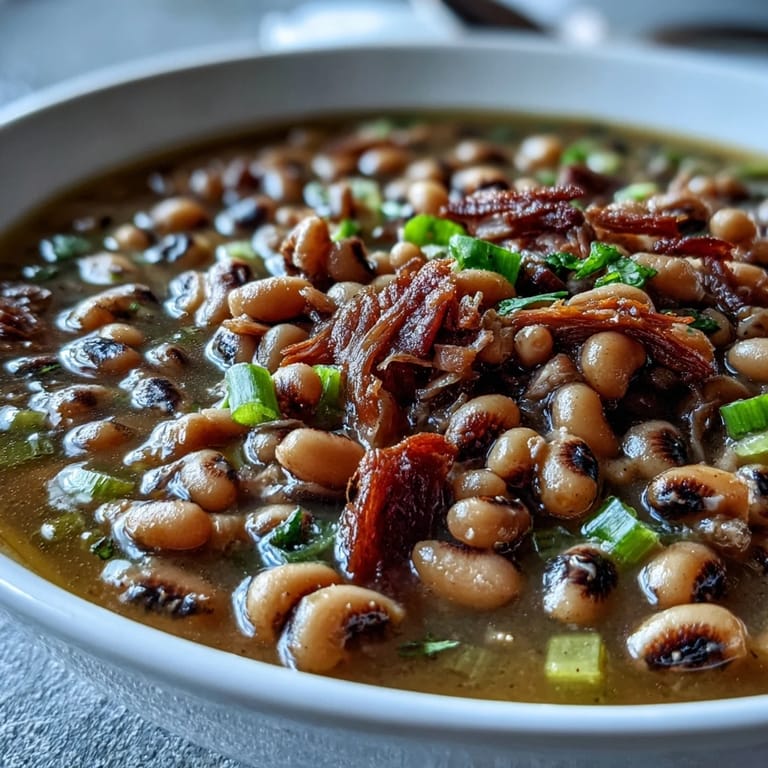
Save Black-eyed peas are simple food that carries weight and history, and making them connects you to something larger than just dinner. Feed them to people you love at the start of a new year, and let them do what they've always done—nourish, comfort, and quietly insist that better things are possible.
Recipe Questions & Answers
- → Why are black-eyed peas eaten on New Years?
Black-eyed peas symbolize coins and prosperity in Southern tradition. Eating them on New Years Day is believed to bring good luck and financial fortune for the coming year, a custom dating back to the Civil War era.
- → Can I use canned black-eyed peas instead of dried?
Yes, substitute with 4-5 cans (15 ounces each) of drained black-eyed peas. Reduce cooking time to 30-40 minutes since they're already tender. The flavor will still be delicious, though the texture may be slightly softer.
- → What's the difference between Creole and Cajun seasoning?
Both blends contain paprika, garlic powder, and cayenne, but Creole seasoning typically includes herbs like thyme and oregano, while Cajun leans heavier on peppers. They're interchangeable in this dish.
- → How do I make this vegetarian?
Omit the smoked pork bones and add 1 teaspoon liquid smoke plus extra smoked paprika. Use vegetable broth instead of chicken broth. Consider adding a diced smoked tofu or tempeh for protein and texture.
- → What should I serve with black-eyed peas?
Traditional Southern accompaniments include fluffy white rice, hot buttered cornbread, and collard or mustard greens. A slice of cornbread soaked in the savory potlikker is absolutely delicious.
- → How long do leftovers last?
Store cooled black-eyed peas in an airtight container for up to 5 days in the refrigerator. They freeze beautifully for up to 3 months—portion into freezer-safe bags for easy future meals.