 Save
Save I discovered soba noodles on a humid summer afternoon when my neighbor brought over a container of this exact salad after I'd complained about the heat making cooking feel impossible. The first forkful was revelatory—cool, nutty, and alive with sesame and ginger. I spent the next week pestering her for the recipe, and now it's become my go-to when I want something that feels both nourishing and effortless.
I made this for a potluck where I wasn't sure what anyone ate, and it turned out to be the dish that pleased the most people—vegetarians, my friend who avoids gluten, even my picky coworker who usually sticks to plain pasta. Watching people come back for seconds gave me that quiet satisfaction you get when food becomes a small moment of connection.
Ingredients
- Soba noodles (250 g): These buckwheat beauties have a slightly earthy flavor that grounds the whole dish; rinsing them thoroughly keeps them from clumping together.
- Carrot, julienned (1 medium): The sweetness cuts through the rich dressing, and the thin strips soak up flavor instead of sitting separate.
- Cucumber, thinly sliced (1 small): Adds a cool, crisp contrast that makes each bite feel refreshing rather than heavy.
- Red bell pepper, thinly sliced (1): The slight crunch and bright color matter as much as the mild sweetness it brings.
- Spring onions, finely sliced (2): They add a subtle sharpness that prevents the dish from tasting one-dimensional.
- Red cabbage, shredded (1 cup): Choose cabbage that feels firm, and don't skip it—the color and crunch are non-negotiable.
- Smooth peanut butter or tahini (3 tbsp): This is your dressing's backbone; use the kind without added sugar so the maple syrup stays in control.
- Soy sauce (2 tbsp): Tamari works beautifully if you're avoiding gluten, and honestly tastes a touch more delicate.
- Rice vinegar (1 tbsp): It's milder and rounder than white vinegar, which is why it belongs here.
- Toasted sesame oil (1 tbsp): Don't use the raw kind; the toasted version is what gives this dressing its characteristic warmth.
- Maple syrup or honey (1 tbsp): A touch of sweetness balances the salt and fat, so don't skip it or reduce it on instinct.
- Fresh ginger, grated (1 tsp): Grate it just before mixing so you get that bright, alive bite that fades once ginger sits too long.
- Garlic clove, minced (1 small): One clove is plenty—garlic can overwhelm sesame oil if you're not careful.
- Water (1–2 tbsp): Add this gradually to reach the dressing consistency you want; it should be silky, not thick.
- Toasted sesame seeds (2 tbsp): Toast your own if you can; they'll taste infinitely better than the pre-toasted ones.
- Fresh cilantro, chopped (2 tbsp): If you're one of those people to whom cilantro tastes like soap, skip this without guilt and add extra spring onion instead.
- Red chili, thinly sliced (1 small, optional): Include this if you want a quiet heat that lingers pleasantly, not a shock.
- Lime wedges (for serving): The final squeeze brings everything into focus and makes each bite feel lighter.
Tired of Takeout? 🥡
Get 10 meals you can make faster than delivery arrives. Seriously.
One email. No spam. Unsubscribe anytime.
Instructions
- Boil and chill the noodles:
- Bring a large pot of water to a rolling boil and add the soba noodles, stirring gently so they don't stick to the bottom. Cook for about 5–7 minutes until they're tender but still have a slight resistance when you bite them. Drain into a colander and rinse under cold running water, stirring gently with your fingers to remove all the starchy film—this step is what keeps them from clumping later.
- Build the dressing:
- In a large bowl, combine the peanut butter, soy sauce, rice vinegar, sesame oil, maple syrup, ginger, and minced garlic and whisk until smooth. The mixture will be thick at first, so add water one tablespoon at a time until it reaches a pourable consistency that coats a spoon lightly.
- Toss everything together:
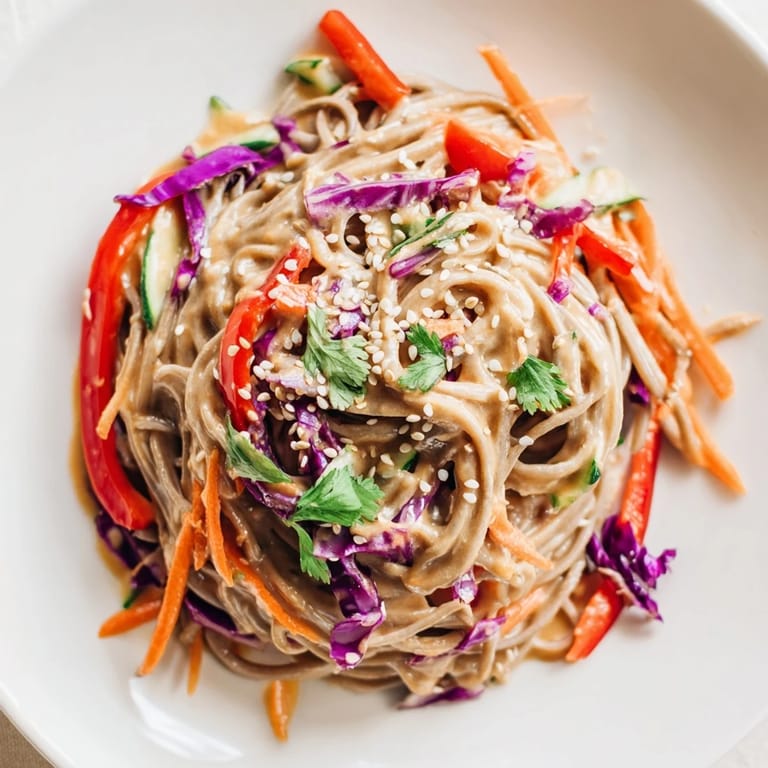
- Add the cooled noodles and all the vegetables to the bowl and toss gently but thoroughly, making sure every strand gets coated in that creamy dressing. You'll feel the difference between underdressed and perfect—trust your instincts and keep tossing until nothing looks dry.
- Plate and finish:
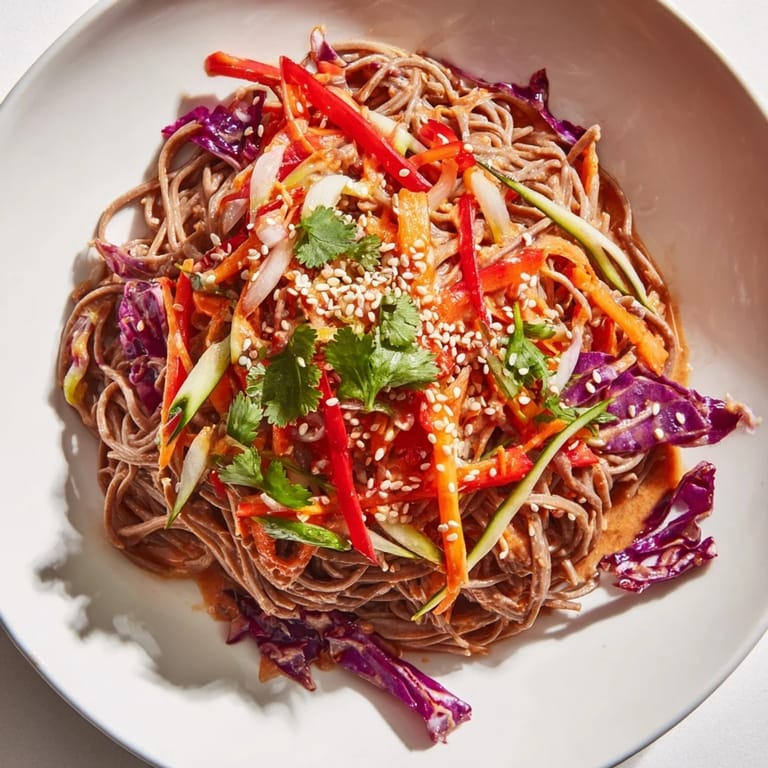
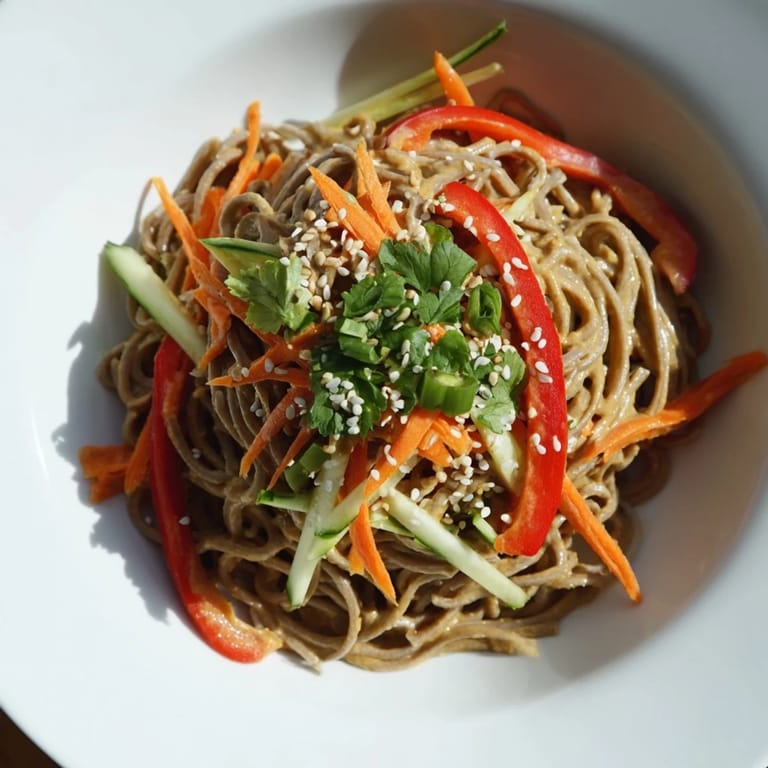
- Divide the salad among serving bowls and scatter toasted sesame seeds and cilantro over the top. Place a thin slice or two of red chili on each bowl if you're using it, and set a lime wedge alongside so people can add brightness as they eat.
 Save
Save There's something about serving this cold, composed salad on a warm evening that feels like a small act of kindness toward yourself. It's the kind of meal that reminds you that eating well doesn't always mean spending hours at the stove.
Variations and Add-Ins
This salad is genuinely forgiving and welcomes additions without complaint. I've added grilled tofu when I wanted something more substantial, crumbled marinated chickpeas when I had them on hand, and even shredded cooked chicken for a friend who needed the extra protein. A handful of edamame adds a pop of color and a boost of nutrition that feels natural alongside everything else. The beauty is that none of these changes will throw off the balance—the dressing is rich enough to carry more, and the vegetables are neutral enough to welcome partners.
Storage and Make-Ahead Tips
This salad keeps beautifully in the refrigerator for up to two days, which makes it ideal for meal prep or bringing to a picnic. If you're making it ahead, keep the dressing separate from the noodles and vegetables until just before serving; the noodles will absorb liquid and the vegetables will release their own as they sit, so you might need to add a splash more water when you toss it together. I usually pack the components in separate containers and dress it right before eating—that way, everything stays crisp and the flavors feel fresh rather than melded together.
Switching It Up
If peanut butter isn't your thing, tahini makes a wonderful swap and leans the recipe toward pure sesame flavor. For a nut-free version, use only tahini and perhaps increase the amount slightly to keep the dressing rich. I've also experimented with almond butter once when I was out of peanut butter, and while it wasn't quite the same, it was still delicious in its own lighter way. The dressing is flexible enough to bend without breaking, as long as you keep the soy sauce, sesame oil, and vinegar trio in place—those three are what make it sing.
- Tamari instead of soy sauce keeps it gluten-free and tastes subtly cleaner.
- A squeeze of lime juice in the dressing itself (in addition to the wedges for serving) adds brightness without needing more vinegar.
- Roasted cashews scattered on top add luxury and crunch if you're not avoiding tree nuts.
 Save
Save This is the kind of recipe that teaches you something quiet about cooking: that sometimes the best dishes are the ones that don't demand much of you, only honesty about what tastes good. Make it once, and it becomes something you reach for again and again.
Recipe Questions & Answers
- → How do I cook soba noodles properly?
Boil soba noodles for 5–7 minutes, then drain and rinse thoroughly under cold water to stop cooking and remove excess starch for the best texture.
- → Can I substitute peanut butter in the dressing?
Yes, tahini is a great alternative to peanut butter, providing a sesame flavor and making the dressing nut-free.
- → What vegetables work well in this salad?
Julienned carrot, sliced cucumber, red bell pepper, spring onions, and shredded red cabbage add crunch and color to the salad.
- → How long can the salad be stored?
Store the salad in an airtight container in the refrigerator for up to two days; refresh with a squeeze of lime before serving.
- → Is this salad gluten-free?
Use 100% buckwheat soba noodles and tamari instead of soy sauce for a gluten-free option.
- → Can I add protein to this dish?
Yes, edamame, grilled tofu, or shredded chicken can be added for extra protein.