 Save
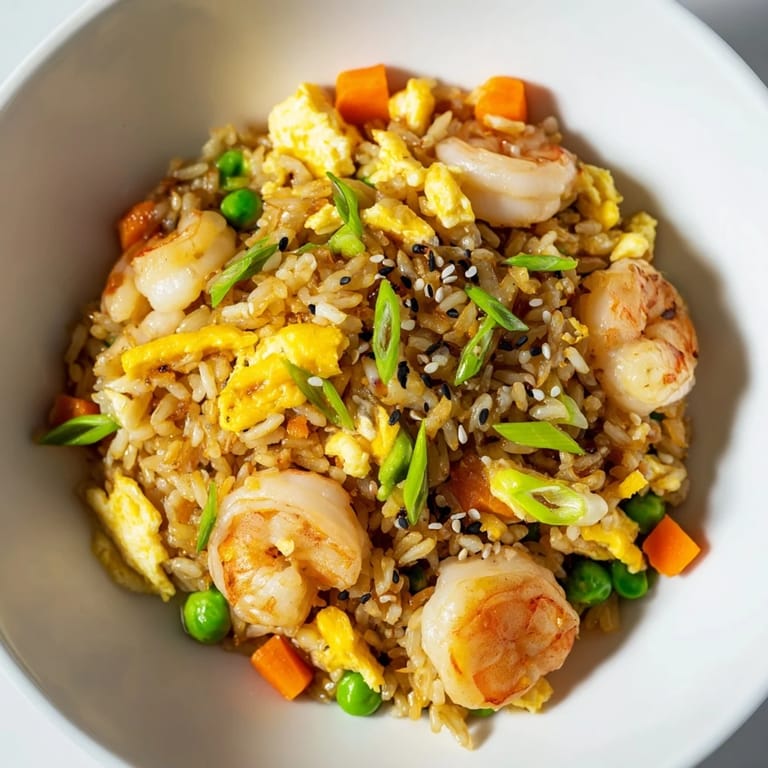
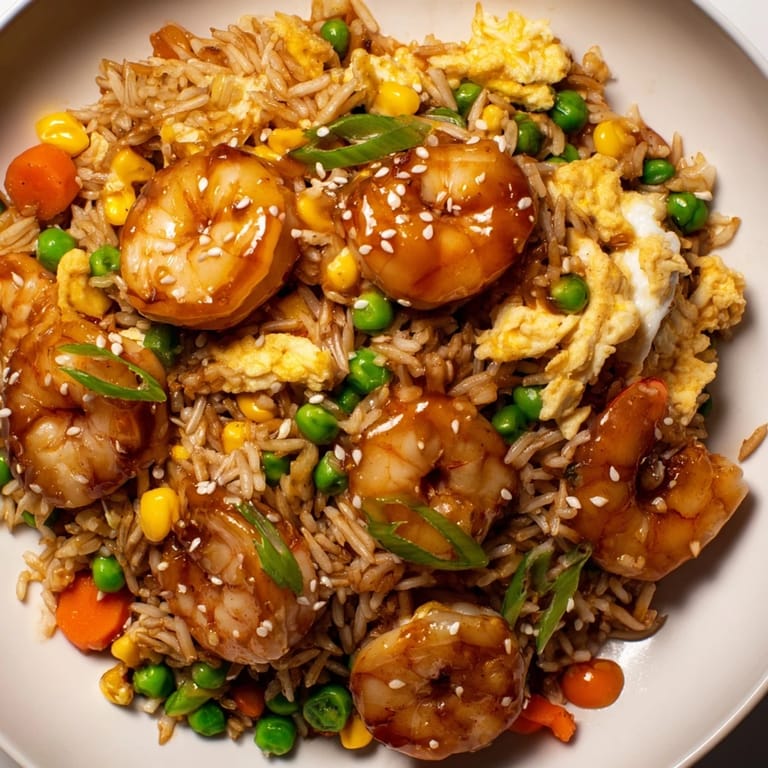
Save I discovered the magic of this shrimp fried rice one hectic Tuesday night when I had fifteen minutes and a freezer full of forgotten vegetables. The sizzle of shrimp hitting hot oil, the way cold rice transforms into something silky and alive—it completely changed how I think about weeknight cooking. Now it's my secret weapon when time is tight but satisfaction can't be.
My roommate came home from work absolutely exhausted one evening, and I had this on the table in the time it took her to change clothes. She ate it straight from the wok, standing up in the kitchen, and said nothing except "wow" between bites. That's when I knew this wasn't just fast food—it was actually good food that happened to be fast.
Ingredients
- Medium shrimp, peeled and deveined (200 g): The protein that cooks faster than you'd think, adding sweetness and a delicate chew that pulls everything together.
- Large eggs (2): These scramble into tender ribbons that distribute richness throughout every bite.
- Frozen mixed vegetables (100 g): Keep these on hand—they thaw just enough in the pan without turning mushy.
- Scallions (2): Sliced fresh, they add a sharp green brightness that cuts through the richness.
- Cooked jasmine rice, chilled (300 g): Day-old rice is the real hack here; warm rice gets gluey and disappointing.
- Soy sauce (2 tbsp): The umami backbone that makes this taste like it came from a proper kitchen.
- Oyster sauce (1 tbsp): Optional, but it adds a subtle sweetness and depth that changes everything.
- Sesame oil (1 tsp): Just a drizzle—this stuff is potent and aromatic, not a cooking oil but a flavor finisher.
- Ground white pepper (1/2 tsp): Milder and slightly different than black pepper, it integrates into the dish rather than standing out.
- Vegetable oil (1 tbsp): For cooking; the workhorse that lets everything else shine.
Tired of Takeout? 🥡
Get 10 meals you can make faster than delivery arrives. Seriously.
One email. No spam. Unsubscribe anytime.
Instructions
- Get your heat right:
- Pour the vegetable oil into your skillet or wok over medium-high heat and let it shimmer for a few seconds. You want it hot enough that the shrimp sizzles immediately when it hits the pan.
- Cook the shrimp first:
- Add the shrimp and let them sit for a moment before stirring—they'll turn pink and opaque in about 2 to 3 minutes. Don't walk away; they're done when they just stop being translucent.
- Scramble the eggs:
- Push the shrimp to the side and pour in your beaten eggs. They'll set fast; keep stirring gently until they're just done, still a bit soft and creamy.
- Warm the vegetables:
- Toss in your frozen vegetables and let them warm through for a minute or so. They'll go from icy to tender, adding color and texture without needing any real cooking time.
- Break up and fry the rice:
- Add your cold rice and use a spatula to crush any clumps as you stir. Two minutes of constant motion gets it heated through and coated in the other flavors.
- Bring it all back together:
- Return the shrimp to the pan and pour in the soy sauce, oyster sauce if you're using it, sesame oil, and white pepper. Stir everything until every grain of rice is glossy and coated.
- Finish with green:
- Add the scallions and give it one final stir-fry for about a minute. Taste it, adjust the seasoning if needed, and serve while it's still steaming.
 Save
Save I once made this dish for a dinner party when I thought nobody would be impressed by fried rice. Three people asked for the recipe, and two of them admitted they'd been ordering the exact same thing from their favorite restaurant for years. That's when I realized that sometimes the simplest things done right hit hardest.
Why Cold Rice Changes Everything
The difference between good fried rice and regrettable fried rice comes down to rice temperature. Warm or room-temperature rice absorbs moisture and clumps into a starchy mess; cold rice stays separate and lets the oil and seasonings coat each grain individually. I learned this the hard way after watching a perfectly good batch turn into something resembling rice pudding. Now I'm religious about using day-old rice straight from the fridge, and it's honestly the only reason this recipe works so fast.
The Shrimp Timing Secret
Shrimp is forgiving until suddenly it isn't—overcook it by thirty seconds and you've got rubber instead of tender seafood. The trick is watching for that moment when they turn completely pink and opaque, which happens faster than you'd think. I used to pull mine out a touch early because I was paranoid, and then I realized that undercooked shrimp is a real food safety issue, not a texture preference. Now I trust the color change and remove them at exactly the right moment, which also means they finish cooking slightly as they sit on the side of the pan.
Make It Your Own
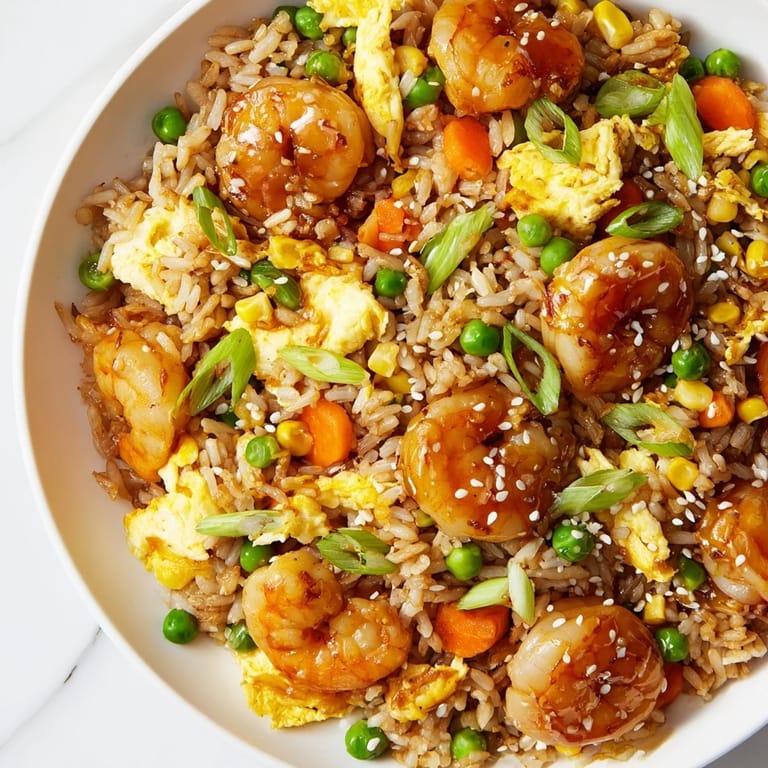
This recipe is a template that begs for experimentation without losing its essential speed and satisfaction. I've made it with chicken, tofu, or nothing but vegetables and had equally good results every single time. The structure stays the same; you're just swapping proteins based on what you have or what you're in the mood for. Some nights I add chili sauce and it becomes something spicy and dangerous; other nights a splash of rice vinegar gives it a brightness that surprised me the first time.
- Try cashews or peanuts stirred in at the end for unexpected crunch and richness.
- A drizzle of chili oil or sriracha mixed into the sauce transforms the whole vibe if you like heat.
- Fresh ginger minced fine and added with the vegetables brings a sharp brightness that wakes up your palate.
 Save
Save This recipe proved to me that fast food and good food don't have to be opposing ideas. When you respect your ingredients and nail the timing, twenty minutes is plenty of time to make something that tastes like care.
Recipe Questions & Answers
- → Can I use fresh rice instead of day-old rice?
Freshly cooked rice tends to be stickier and can clump during stir-frying. Using chilled day-old rice gives a better, fluffy texture in this dish.
- → What substitutions can I make for shrimp?
Chicken, tofu, or other proteins work well as alternatives. Adjust cooking times to suit the protein chosen.
- → Is it necessary to add oyster sauce?
Oyster sauce adds a savory depth but is optional. Soy sauce alone provides plenty of umami flavor.
- → How do I get evenly cooked vegetables?
Use frozen mixed vegetables that warm quickly, and stir-fry briefly to maintain their crispness and color.
- → What oils are best for stir-frying this dish?
Vegetable oil is ideal for high-heat cooking, while sesame oil added at the end enhances aroma and flavor.