 Save
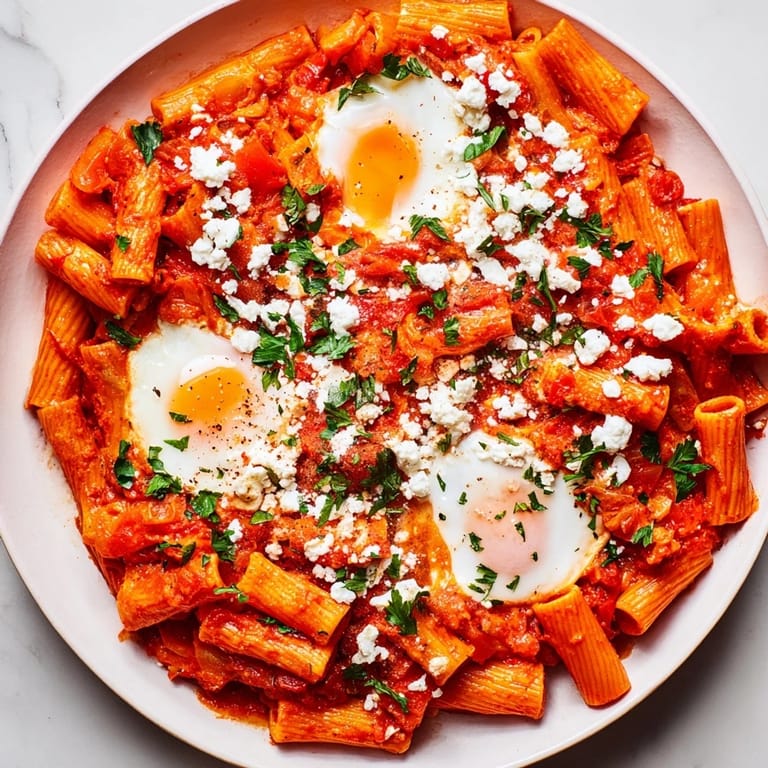
Save There's something about the way a runny egg yolk breaks into a spiced tomato sauce that feels like pure comfort, even when you're moving fast through a weeknight kitchen. The first time I combined shakshuka's warm spices with pasta instead of bread, I was trying to stretch a half-empty can of tomatoes and some leftover penne, and somehow it became the thing I keep making on nights when I need dinner that tastes intentional but doesn't demand hours of attention. It's the kind of dish that works because it doesn't apologize for being simple—it just leans into what makes it delicious.
I made this for my sister on a Saturday when she showed up unannounced, tired from moving boxes, asking if I had anything that wouldn't take forever. Watching her fork break that golden yolk and drag it through the warm pasta and sauce—the quiet "oh wow" that followed—was the moment I knew this recipe belonged in regular rotation, not just on nights when I was experimenting.
Ingredients
- Penne or rigatoni (300 g): The tube shapes catch the spiced sauce beautifully; smaller tubes hold more than long strands ever could.
- Olive oil (2 tbsp): Use something you actually like tasting—this isn't a background ingredient here.
- Medium onion, finely chopped: The sweetness balances the heat and spice; don't rush the softening step.
- Red bell pepper, diced: Adds color and a gentle sweetness that keeps the sauce from feeling one-dimensional.
- Garlic cloves, minced (3): Fresh is non-negotiable; garlic in this ratio makes the whole dish sing.
- Ground cumin (1 tsp): This is your signature spice; toast it in the pan with the garlic for depth.
- Smoked paprika (1 tsp): The smoke makes it taste like you fussed more than you did.
- Chili flakes (1/4 tsp): Start here; you can always add more, but you can't take it out.
- Crushed tomatoes, one 400 g can: San Marzano if you can find them; they're less watery and taste brighter.
- Tomato paste (1 tbsp): Concentrate the flavor; don't skip this small amount.
- Sugar (1/2 tsp): A tiny pinch to round out the acidity—it's a whisper, not a shout.
- Salt and black pepper: Season in layers as you go; taste at every stage.
- Large eggs (4): Cold eggs crack cleaner; room temperature eggs cook a tiny bit faster.
- Fresh parsley or cilantro, chopped (2 tbsp): Cilantro leans toward the North African side; parsley stays Mediterranean.
- Crumbled feta cheese: Optional but transforms the dish into something you'll think about later.
Tired of Takeout? 🥡
Get 10 meals you can make faster than delivery arrives. Seriously.
One email. No spam. Unsubscribe anytime.
Instructions
- Start the pasta:
- Bring a large pot of salted water to a rolling boil—it should taste like the sea. Add pasta and cook until just al dente, chewy in the center; you'll finish it in the sauce, so slightly underdone is your target. Reserve a half cup of pasta water before draining.
- Build the base:
- While pasta cooks, heat olive oil in a large skillet over medium heat until it shimmers. Add your chopped onion and bell pepper, letting them soften and turn golden at the edges—about 5 minutes—while you listen to them quiet down in the pan.
- Toast the spices:
- Stir in minced garlic, cumin, paprika, and chili flakes, cooking for just one minute until the kitchen smells like a place you want to stay. This step is quick but transforms everything; don't let it burn.
- Build the sauce:
- Add your crushed tomatoes, tomato paste, and sugar, stirring gently to combine. Season with salt and pepper, then let it simmer for 8 to 10 minutes, stirring occasionally, until the sauce thickens and darkens slightly—you're looking for reduced and concentrated.
- Cradle the eggs:
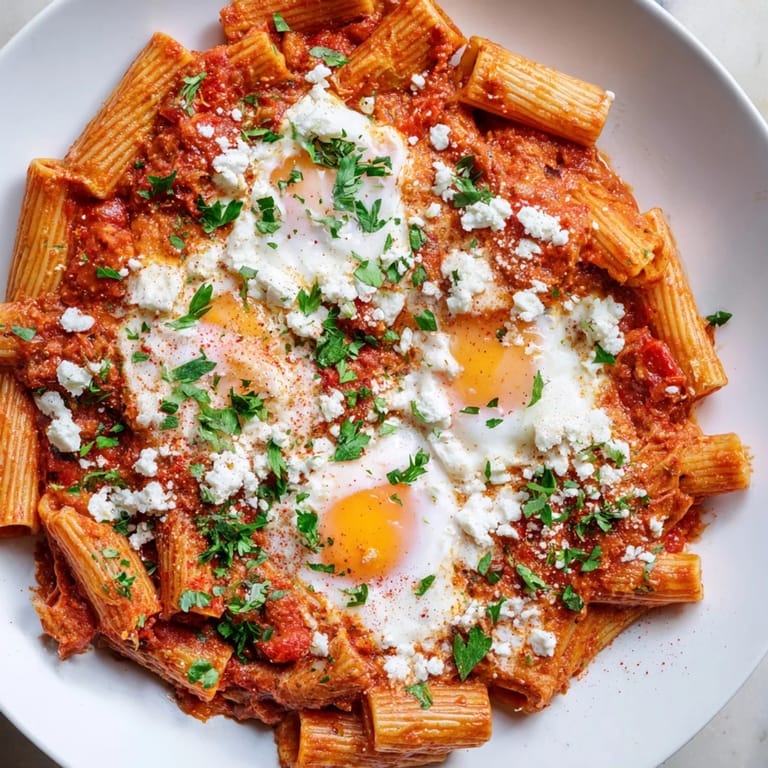
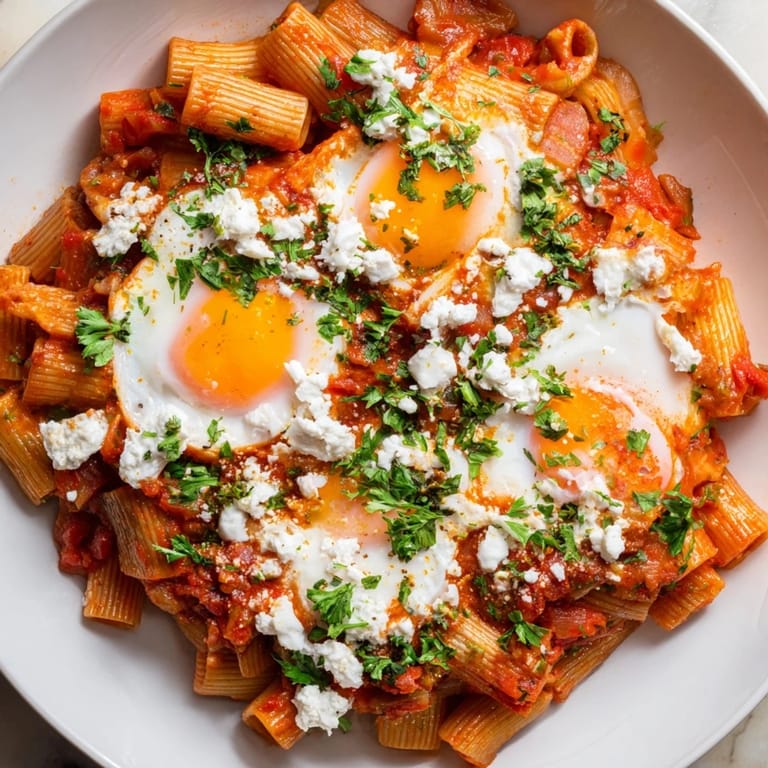
- Using the back of a spoon, make four little wells in the sauce, spaced evenly around the skillet. Crack one egg into each well carefully, trying not to break the yolks. Cover the skillet and let them cook for 4 to 6 minutes, until the whites set but the yolks stay runny and beautiful.
- Bring it together:
- Add your cooked pasta directly to the skillet, gently tossing it into the sauce using a fork so you don't disturb those precious eggs. If the mixture feels thick, add some of your reserved pasta water, a splash at a time, until it reaches the consistency you want—creamy but not soupy.
- Finish and serve:
- Sprinkle the whole skillet with fresh herbs and crumbled feta if you're using it. Serve immediately on warm plates, making sure each person gets an egg in their bowl.
 Save
Save My friend called it "fancy pasta" after her first bite, and that's stuck with me—the way something simple and fast can feel like a small ceremony when you take five minutes to arrange it on a plate with intention. It's made me think differently about weeknight cooking, less about time-saving shortcuts and more about choosing dishes that taste like they matter.
Why This Works Every Time
The architecture of this dish is its genius: soft vegetables and aromatic spices build a foundation that tastes developed and complex, while the eggs add richness without any cream or butter. The pasta becomes a vehicle for sauce rather than the focus, and by keeping everything in one skillet, nothing gets lost or forgotten on the back of the stove. It's impossible to overcomplicate because there simply aren't that many moving parts.
Playing with Heat and Flavor
This is a dish that rewards tasting as you go; your spice tolerance is real, and the amount of chili flakes that makes my food sing might be too much for someone else. Start conservative and build from there—the cumin and paprika carry most of the warmth anyway, so chili flakes are really about depth and a gentle burn. If you love heat, cayenne pepper works beautifully too, but add it in small pinches and let it settle into the sauce.
The Tiny Details That Matter
The difference between good shakshuka pasta and the kind you'll make again is often something small: using actual fresh garlic instead of the jarred kind, letting the onions get soft enough to almost dissolve, tasting and adjusting salt before the eggs go in. These aren't difficult things, just deliberate ones. The pasta water becomes your secret weapon because its starch does work that cream can't; it helps the sauce coat every piece evenly and ties everything together into something cohesive.
- If your sauce looks thin when you add the pasta, that's okay—it will tighten as the eggs warm and the sauce reduces.
- Crumbled feta is optional but honestly transforms this from a quick dinner into something special enough for company.
- Serve this while everything is still hot, because the magic is in those contrasts: warm sauce, creamy yolk, tender pasta, and the cooling cilantro on top.
 Save
Save This is the kind of recipe that teaches you something every time you make it, usually something small and useful about how your stove works and what you actually like eating. It's become my answer to the question "what can we have tonight," and somehow never feels like settling.
Recipe Questions & Answers
- → What type of pasta works best?
Penne or rigatoni are ideal as their shape holds the sauce well, but any short pasta can be used.
- → Can I adjust the spice level?
Yes, increase or omit chili flakes according to your heat preference for milder or spicier results.
- → How do I keep the eggs runny?
Cook the eggs covered in the sauce for 4–6 minutes until whites set but yolks remain soft.
- → What are good herb options for garnish?
Fresh parsley or cilantro add bright, fresh notes, but basil would also complement well.
- → Is there a dairy-free alternative to feta?
Yes, you can omit the cheese or use plant-based cheese substitutes to keep it dairy-free.