 Save
Save I discovered this honey mustard salmon at a farmer's market stand where a vendor was cooking samples over a small camp stove, the aroma cutting through the Saturday morning chaos. She handed me a forkful of perfectly glazed salmon, still warm, and I was struck by how the sweetness of honey somehow made the mustard taste sharper, more alive. That one bite convinced me to ask for her technique, and what she shared was deceptively simple: good mustard, real honey, and respect for the fish. Now it's become my go-to when I need something that feels effortless but tastes like I spent hours in the kitchen.
My friend Sarah came over on one of those evenings where we hadn't seen each other in months, and I wanted to cook something that wouldn't keep me tethered to the stove. This salmon came together while we caught up in the kitchen, and she kept circling back to ask what I was doing because the smell alone was making her hungry. By the time we sat down, the conversation had shifted from gossip to pure appreciation for this golden, glistening fish. It became one of those meals that tasted like friendship.
Ingredients
- Salmon fillets (6 oz each): Choose ones that feel firm and smell like the ocean, not fishy—skin-on helps them stay intact while baking, but either works beautifully.
- Dijon mustard: This is your backbone; the creamy heat it provides is what makes the whole sauce sing.
- Whole grain mustard: The little seeds add texture and a subtle earthiness that keeps the sauce from tasting one-note.
- Honey: Not just sweetness—it's the glue that binds everything together and creates that glossy finish.
- Olive oil: Just enough to make the sauce silky and help it coat every inch of the salmon.
- Fresh lemon juice: This is the secret weapon that prevents the honey from being cloying and adds brightness.
- Garlic (minced): Two cloves is the right amount—enough to whisper in the background, not shout.
- Salt and black pepper: Season generously; the salmon can handle it.
Tired of Takeout? 🥡
Get 10 meals you can make faster than delivery arrives. Seriously.
One email. No spam. Unsubscribe anytime.
Instructions
- Get your oven ready:
- Preheat to 400°F and line your baking sheet with parchment paper—this saves you from scrubbing later and prevents the salmon from sticking. If you don't have parchment, a light coating of oil works too.
- Make the magic sauce:
- Whisk the Dijon, whole grain mustard, honey, olive oil, lemon juice, garlic, salt, and pepper in a small bowl until it looks smooth and emulsified. Taste it—you should feel the mustard first, then the sweetness, then that bright lemon finish.
- Prepare your salmon:
- Pat each fillet dry with paper towels; this tiny step makes a real difference in how the sauce clings. Arrange them on your prepped baking sheet, skin-side down if you're using skin-on.
- Coat generously:
- Spoon the sauce over each fillet, spreading it so every part gets covered. Don't be shy—this sauce is meant to caramelize, not just coat.
- Bake until golden:
- Slide into the oven for 15 to 20 minutes, depending on thickness. The salmon is done when it flakes easily with a fork and the thickest part is opaque all the way through.
- Finish and serve:
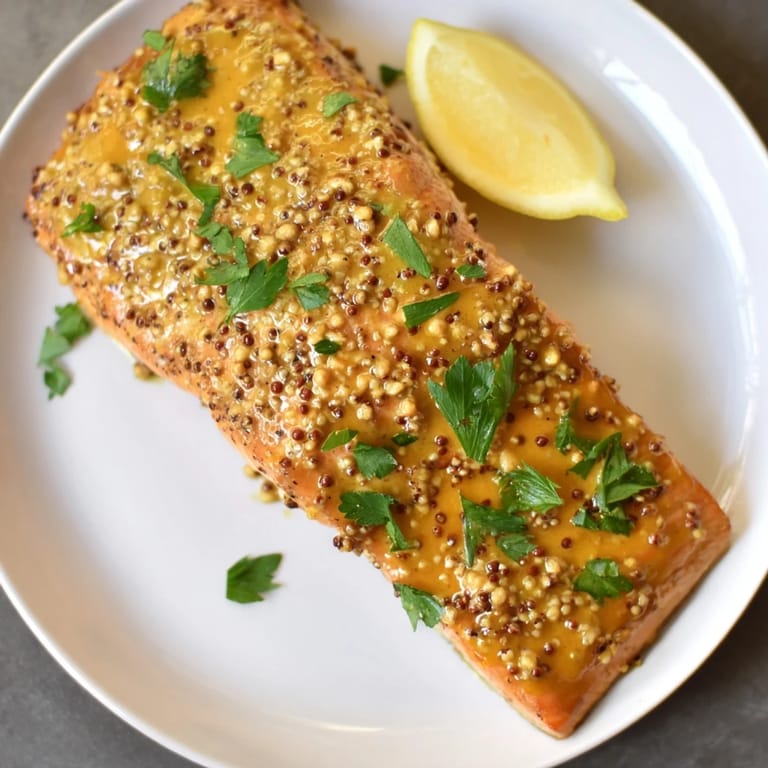
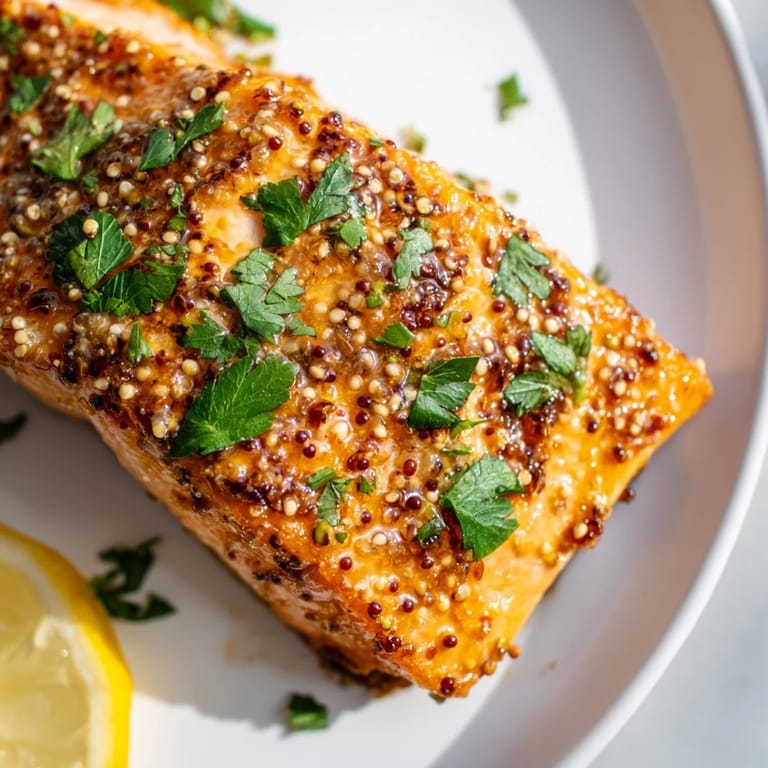
- Pull it from the oven, scatter fresh parsley over top, and serve with lemon wedges so people can add brightness to taste. The sauce should be glossy and caramelized on the edges.
 Save
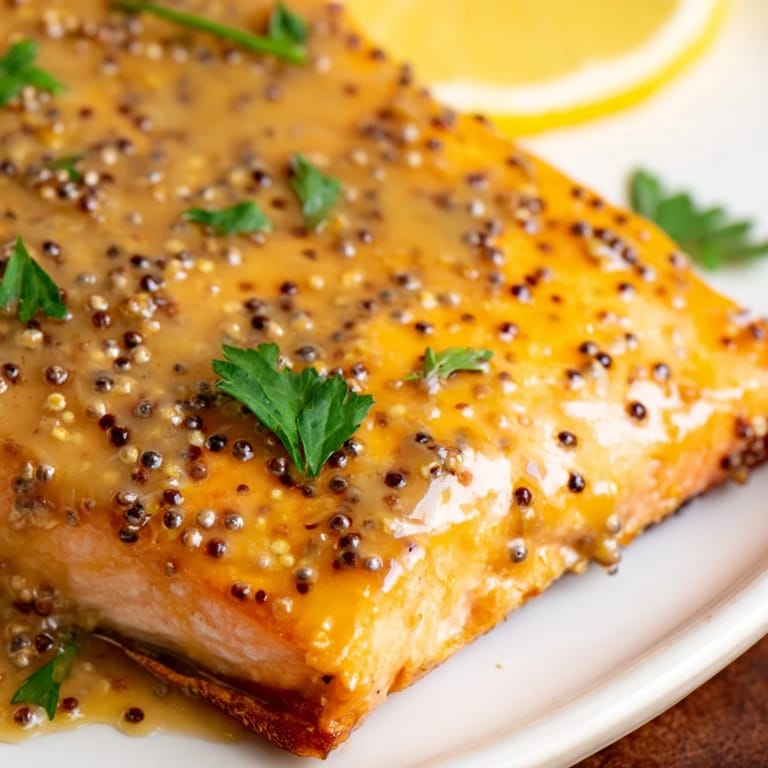
Save There's a moment when you pull this out of the oven and the kitchen fills with this warm, tangy-sweet smell that makes everyone pause mid-conversation. That's when you know you've gotten it right—not because of technique, but because of presence.
Why This Sauce Works
The combination of Dijon and whole grain mustard creates a layered flavor that's more interesting than using just one. Dijon brings that creamy heat, while whole grain contributes texture and earthiness. The honey adds sweetness, but the lemon juice keeps it from being dessert, and the garlic ties everything together with a gentle savory undertone. It's balanced in a way that makes you want another bite even when you're full.
Timing It All
The 15 to 20 minute bake time depends entirely on how thick your salmon is—thin fillets will be done closer to 15 minutes, thicker ones closer to 20. The best way to check is to look at the sides; the fish will turn opaque from the outside in, so when the thickest part in the center flakes easily, you're there. Pull it out a minute early rather than a minute late; salmon dries out quickly once it crosses the line.
Serving and Sides
This salmon pairs beautifully with anything that won't compete with the honey-mustard flavor. Rice soaks up the extra sauce in the pan, quinoa adds a gentle nuttiness, and roasted vegetables give you color and texture. A fresh green salad with a simple vinaigrette is equally lovely if you want something lighter. The beauty of this dish is that it's the star—everything else should support, not distract.
- Serve immediately while the salmon is still warm and the sauce is glossy.
- Any leftover salmon keeps for two days in the fridge and tastes good cold or gently reheated.
- If you're swapping out mustard, use regular yellow mustard for a gentler flavor, but reduce the honey slightly so it doesn't tip too sweet.
 Save
Save This recipe has become my answer to the question of what to make when you want to feel like you've cooked something special but you're genuinely tired. It's proof that simple ingredients, treated with a little care, become something memorable.
Recipe Questions & Answers
- → What type of mustard is best for this dish?
A combination of Dijon and whole grain mustards provides a balanced tangy and textured flavor to the glaze.
- → Can I use skin-on salmon fillets?
Yes, both skin-on or skinless salmon fillets work well and help retain moisture during baking.
- → How do I know when the salmon is cooked perfectly?
The salmon should flake easily with a fork and appear opaque in the center after 15–20 minutes of baking.
- → Is it possible to make the sauce spicier?
Yes, adding a pinch of cayenne pepper or crushed red pepper flakes to the sauce can enhance its heat.
- → What sides pair well with this salmon preparation?
Serve with rice, quinoa, roasted vegetables, or a fresh salad to complement the flavors.