 Save
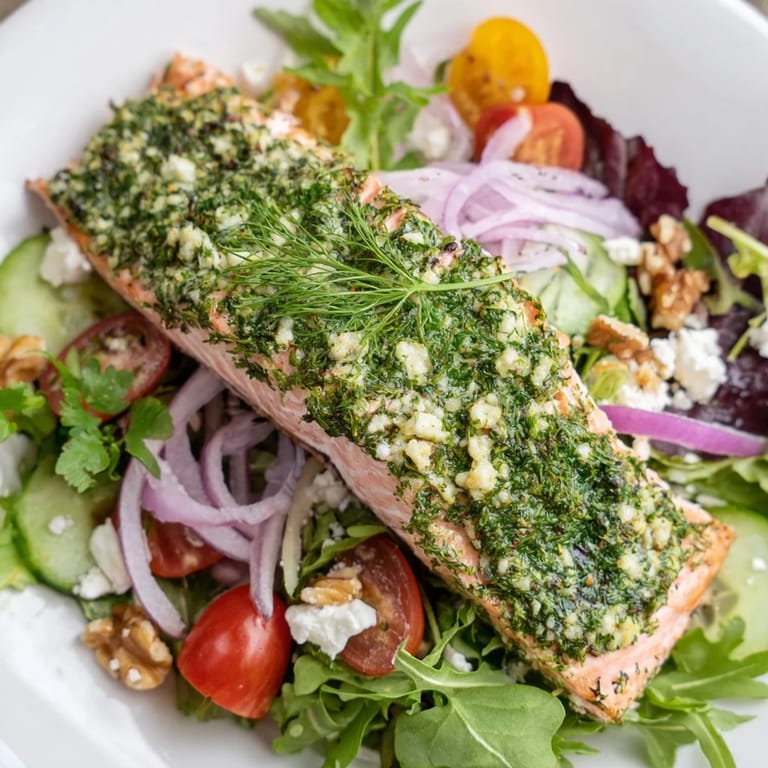
Save I discovered this salad on a warm afternoon when my neighbor dropped off fresh dill from her garden, and I had salmon thawing on the counter. There was something about combining the herb brightness with the buttery fish that felt like summer in a bowl. What started as improvisation became my go-to when I want something satisfying but not heavy, something that tastes like you spent hours cooking but takes barely half an hour.
I made this for my sister when she was going through a phase of eating lighter, and she took one bite and exhaled like she'd been holding her breath. She asked for the recipe before dessert. That moment taught me that restraint in the kitchen—using quality ingredients and not drowning them—can hit harder than anything elaborate.
Ingredients
- Salmon fillets: Look for fillets that feel firm to the touch and smell briny, not fishy; room-temperature salmon cooks more evenly than cold, so pull it from the fridge five minutes before baking.
- Fresh herbs (parsley, dill, chives): The trio creates a bright crust that makes people ask what you did differently; dried herbs will taste flat and dusty by comparison, so don't substitute.
- Dijon mustard: Both in the herb paste and vinaigrette, it acts as an invisible glue that holds flavors together and adds a subtle spice without heat.
- Mixed salad greens: Peppery arugula and tender spinach work best; iceberg will feel thin and lifeless against the richness of the salmon.
- Cherry tomatoes: Halve them just before serving so they don't weep into the salad and make everything soggy.
- Extra-virgin olive oil: In the vinaigrette, this is where quality matters; cheap oil tastes thin and metallic next to good vinegar.
- Walnuts and feta: Both optional but they're the reason people ask for seconds—the nuts add crunch and the feta brings a salty tang that makes the salmon taste even fresher.
Tired of Takeout? 🥡
Get 10 meals you can make faster than delivery arrives. Seriously.
One email. No spam. Unsubscribe anytime.
Instructions
- Preheat and prep:
- Get your oven to 200°C and line your baking sheet with parchment paper so nothing sticks and cleanup is kind to your hands.
- Make the herb paste:
- Whisk the olive oil, mustard, lemon juice, and all three fresh herbs together until it looks like a loose, fragrant paste; you should be able to smell the garden in your bowl.
- Coat the salmon:
- Pat your fillets dry with a paper towel, then spread the herb mixture generously across the top of each one, pressing gently so it sticks.
- Bake until just cooked:
- Salmon dries out fast, so watch it closely—it's done when the thickest part flakes with the gentlest fork pressure and still looks slightly opaque in the very center, usually 12 to 15 minutes.
- Build the salad:
- While the salmon bakes, toss your greens, tomatoes, cucumber, red onion, and nuts together in a large bowl; this way everything gets to know each other.
- Whisk the vinaigrette:
- Combine the oil, vinegar, honey, and mustard and taste as you go—you want it bright and slightly sweet, balanced enough that it doesn't overpower the delicate fish.
- Dress and plate:
- Drizzle the vinaigrette over the salad, toss gently so the leaves coat without bruising, then divide among plates and top each with a warm fillet while it still has that just-baked warmth.
 Save
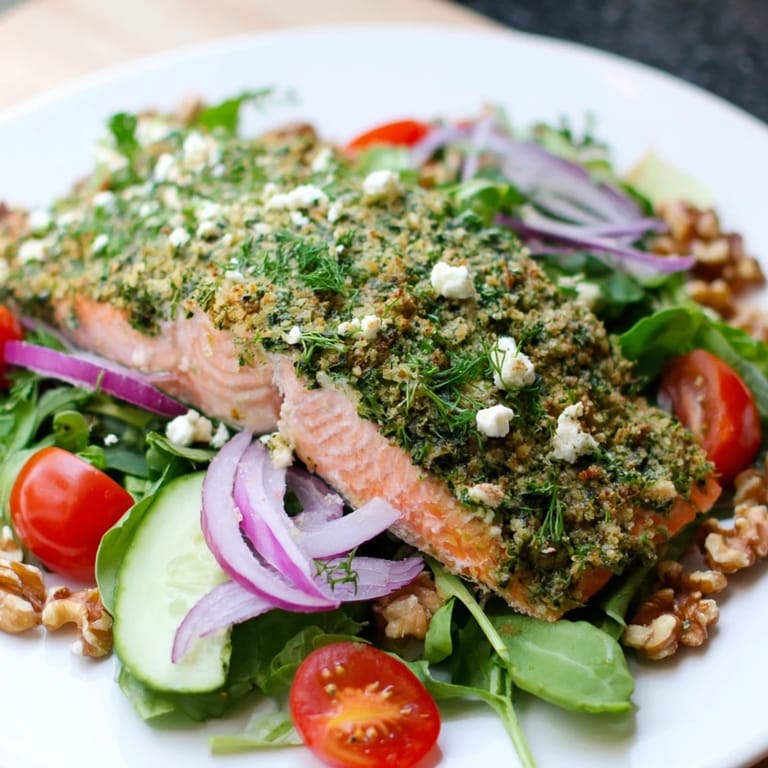
Save There's a particular magic in this dish because of how it hits different senses at once—the warmth of the salmon, the cold snap of cucumber, the earthiness of arugula, the bright salt of feta. My brother once said it made him feel like he was eating at a restaurant but sitting at his own kitchen table, and I realized that was the goal all along.
Why This Combination Works
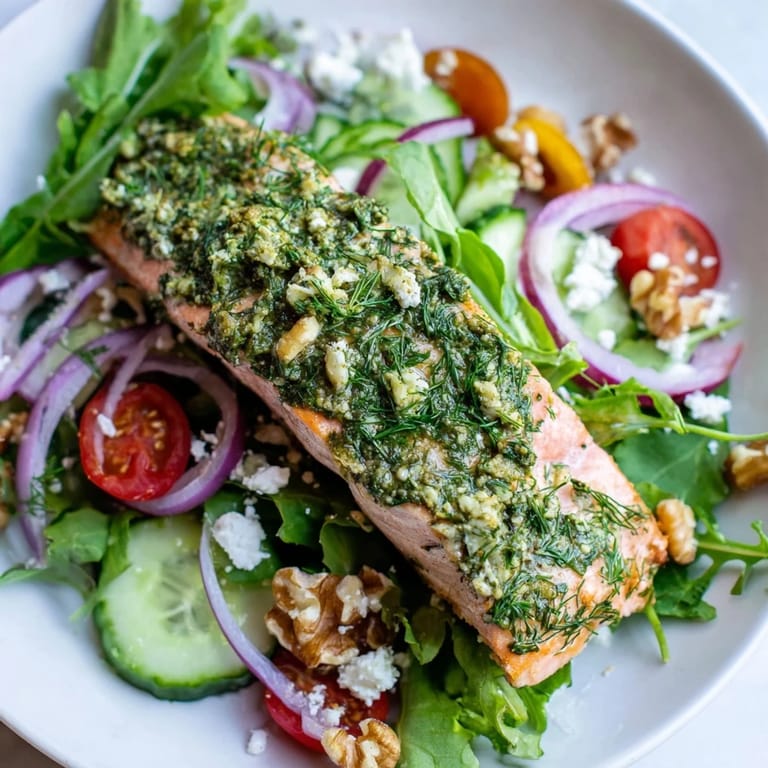
The herb crust on salmon does something unexpected: it keeps the fish moist while the oven heat is doing its work, and the fresh herbs stay bright instead of turning bitter. The cool salad underneath acts as a counterpoint, so you're never eating the same temperature twice. The vinaigrette ties it all together with acidity that cuts through the salmon's richness and wakes up your palate.
Timing and Temperature
This dish lives or dies by timing, which sounds dramatic but it's true. The salmon must hit the table warm, so don't dress the salad until the fish is in the oven; cold salmon is a different meal entirely, less interesting, less forgiving. Room-temperature salmon is the sweet spot—it cooks through evenly and stays buttery inside, while a cold fillet straight from the fridge develops a dry band near the surface.
Variations and Flexibility
Once you get comfortable with this blueprint, it becomes endlessly adaptable. I've made it with trout when salmon was expensive, swapped dill for tarragon when I was in an adventurous mood, and added sliced avocado on days when I wanted extra richness. The structure—warm herb-crusted fish on cold greens with bright vinaigrette—stays the same and holds up beautifully.
- Try adding cooked quinoa or farro to make it heartier and more filling.
- Swap the white wine vinegar for champagne vinegar or sherry vinegar if you want deeper complexity.
- Toast your own nuts in a dry pan for two minutes right before serving so they taste fresh and warm.
 Save
Save This salad reminds me why I love cooking: it's simple enough that mistakes are forgiving, but thoughtful enough that people notice every good choice. Serve it warm, serve it with people you like, and you'll understand why it became a regular rotation in my kitchen.
Recipe Questions & Answers
- → How do I prepare the herb crust for the salmon?
Mix olive oil, Dijon mustard, lemon juice, chopped parsley, dill, chives, garlic powder, salt, and pepper into a paste, then spread evenly over the salmon fillets before baking.
- → What temperature and time are best for baking the salmon?
Bake the salmon at 200°C (400°F) for 12 to 15 minutes, until it flakes easily with a fork and is cooked through.
- → Can I substitute other fish for salmon?
Yes, firm fish like trout work well as a substitute, offering similar texture and flavor absorption for the herb crust.
- → What are good salad additions to complement the salmon?
Cherry tomatoes, cucumber slices, red onion, and mixed salad greens provide freshness and balance. Optional nuts and feta cheese add crunch and creaminess.
- → How is the vinaigrette made and served?
Whisk together extra-virgin olive oil, white wine vinegar or lemon juice, honey or maple syrup, Dijon mustard, salt, and pepper, then drizzle over the salad before tossing gently.
- → Are there any pairing suggestions for this dish?
A crisp Sauvignon Blanc or sparkling water with lemon complements the flavors and lightness of the salmon and salad.