 Save
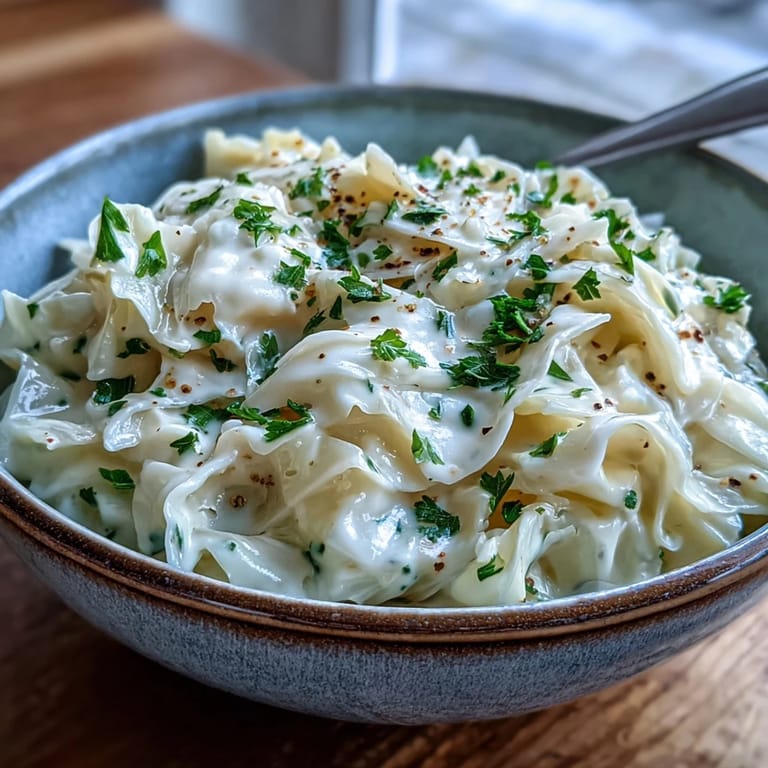
Save My grandmother used to make creamed cabbage on Sunday afternoons, and the kitchen would fill with this gentle, buttery warmth that made everything feel settled. She'd shred the cabbage by hand—a rhythmic, meditative task—and I'd sit at the counter watching her transform something so humble into something silky and elegant. Years later, I realized it wasn't just the technique she was teaching me; it was how to take what's simple and make it feel like comfort itself. This dish reminds me that the best meals don't need to be complicated, just made with intention.
I once made this for a dinner party where someone mentioned they'd never enjoyed cabbage—they found it too sharp, too vegetal. By the end of that meal, they were asking for the recipe, genuinely surprised that cabbage could taste this delicate and refined. That moment taught me that creamed cabbage is one of those quiet dishes that changes minds without trying too hard.
Ingredients
- 1 medium head green cabbage (about 2 lbs), cored and finely shredded: The thinness of your shred matters more than you'd think—finer pieces cook faster and absorb the cream more evenly, creating that silky texture you're after.
- 1 small yellow onion, finely chopped: Yellow onions mellow and sweeten as they cook, adding depth without any sharpness that would compete with the delicate cabbage.
- 2 tablespoons unsalted butter: This is your flavor base, so use good butter—it makes a noticeable difference in the final richness of the dish.
- 1 cup whole milk (or half-and-half for richer sauce): Whole milk keeps things balanced; half-and-half takes it into indulgent territory if you're in the mood for that.
- 1/2 cup heavy cream: This is what transforms the sauce from merely creamy to silky and luxurious—don't skip it unless you're going for the lighter version.
- 1 tablespoon all-purpose flour (or gluten-free flour blend): This thickener needs to be stirred in properly to avoid lumps; a whisk works beautifully here if you don't have a wooden spoon handy.
- 1/4 teaspoon ground nutmeg: Nutmeg is the secret whisper in this dish—it sounds odd until you taste it, then you understand why it's been pairing with creamed vegetables for centuries.
- Salt and freshly ground black pepper, to taste: Fresh black pepper makes all the difference; pre-ground can taste dusty by comparison.
- 1 tablespoon fresh parsley, chopped (for garnish, optional): A small handful of green adds color and a barely-there freshness that balances the richness.
Tired of Takeout? 🥡
Get 10 meals you can make faster than delivery arrives. Seriously.
One email. No spam. Unsubscribe anytime.
Instructions
- Start with your aromatics:
- Melt the butter over medium heat and add your chopped onion with a small pinch of salt. The salt draws out the onion's moisture and helps it soften in about 2 to 3 minutes—you're listening for a gentle sizzle, and watching for it to turn translucent and sweet. Don't let it brown; this isn't about caramelization, it's about building a gentle flavor foundation.
- Wilt the cabbage:
- Add all your shredded cabbage to the pan with another generous pinch of salt and stir often for 6 to 8 minutes. You'll see it go from a heap of raw green to something tender and reduced—it releases water as it cooks, and that's exactly what should happen. The kitchen will smell incredible, almost nutty and sweet.
- Make your roux:
- Sprinkle the flour over the wilted cabbage and stir constantly for about a minute, coating everything evenly. This cooks out the raw flour taste and creates the base that will thicken your cream sauce without lumps.
- Add the cream slowly:
- Pour in your milk and cream gradually while stirring constantly—this is the moment lumps happen if you rush, so take your time. The mixture should go from slightly thick to smooth and pourable as you stir.
- Simmer until silky:
- Turn the heat to low and let everything bubble gently for 6 to 8 minutes, stirring occasionally. You'll see the sauce thicken slightly and coat the cabbage in a way that feels luxurious—this is when you know it's almost ready.
- Season to perfection:
- Stir in the nutmeg, then taste and adjust with salt and black pepper. The nutmeg should be a subtle warmth, not pronounced, so add it a pinch at a time if you're nervous.
- Serve warm:
- Transfer everything to your serving dish, sprinkle parsley on top if you're using it, and serve while it's still warm and creamy. It also reheats beautifully if you need to make it ahead.
 Save
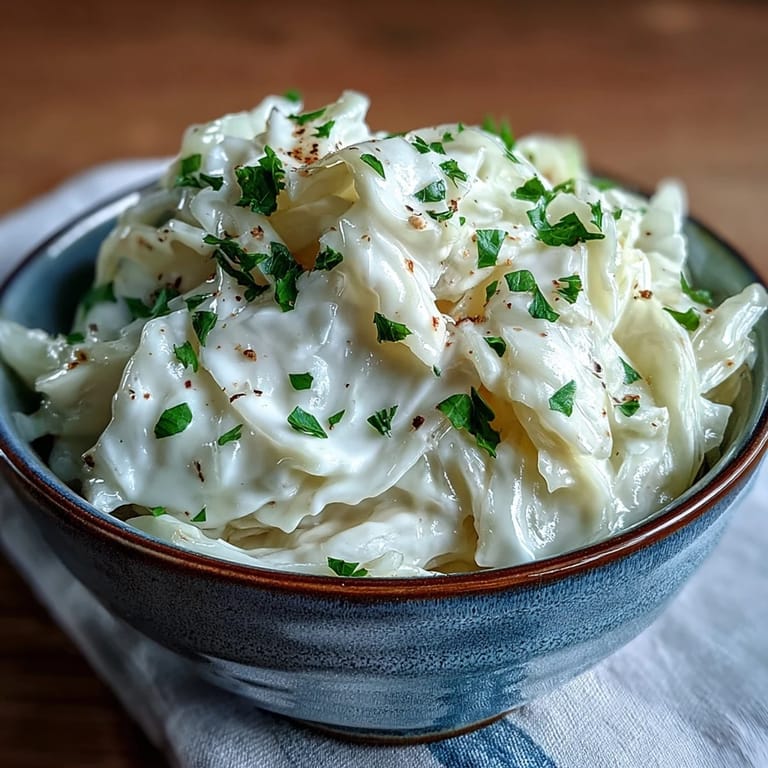
Save There's a moment during the final simmering when the sauce reaches that perfect silky consistency and you realize this dish is one of those quiet victories in the kitchen—nothing fancy, nothing fussy, just pure comfort rendered perfectly. My partner always asks why such a simple dish tastes so elegant, and I think it's because creamed cabbage doesn't try to be anything other than what it is.
Why This Dish Never Fails
Creamed cabbage has been part of European home cooking for generations because it's foolproof once you understand the principles. The cabbage's natural sweetness develops as it wilts, the cream carries that flavor forward, and the nutmeg ties everything together without overwhelming anything. There's no last-minute worry, no technique that requires years of practice—just gentle heat, patience, and the confidence that you're creating something genuinely delicious. I've made this for beginners who thought they couldn't cook, and they've nailed it on the first try.
What to Serve It With
This creamed cabbage is happiest alongside something with clear, robust flavors—roast chicken, pork chops, or rich beef all benefit from its gentle creaminess. It also works beautifully as a vegetarian main course alongside crusty bread and maybe a simple green salad, or paired with roasted root vegetables for a complete comfort meal. The lightness of the dish means it complements bold flavors without getting lost, and its richness never feels out of place no matter what's on the plate next to it.
Making It Your Own
Once you understand this basic formula, you can play with it endlessly without losing the soul of the dish. Some cooks add a clove of minced garlic sautéed with the onion, others swap in Savoy or Napa cabbage for a more delicate texture, and plenty of home cooks make it with all milk and no cream when they want something lighter but still silky. I've even seen it made with a splash of white wine or a pinch of caraway seeds, depending on what region or family tradition inspired the cook. The beauty of this dish is that it's flexible enough to adapt to what you have on hand, but structured enough that you can't really mess it up.
- For extra depth, try sautéing a smashed clove of garlic with the onion at the very beginning.
- Savoy cabbage gives a more delicate, tender result if you prefer that over the sturdier green variety.
- A lighter version using all milk instead of cream still tastes silky and rich without the heaviness.
 Save
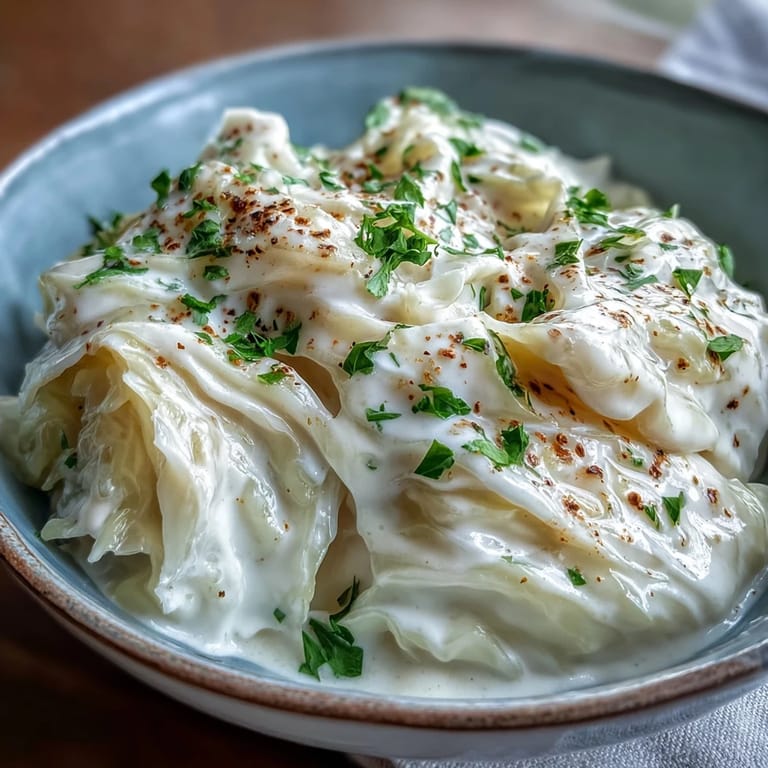
Save There's something deeply satisfying about mastering a dish this simple, this humble, and this consistently delicious. It's the kind of recipe that becomes part of your regular rotation not because it's trendy, but because every time you make it, people ask for more.
Recipe Questions & Answers
- → Can I use a different type of cabbage?
Yes, Savoy or Napa cabbage work wonderfully and provide a more delicate texture. You can also mix half green cabbage with another variety for added complexity.
- → How can I make this lighter?
Use all whole milk instead of the cream, or substitute half-and-half. The sauce will be thinner but still flavorful and comforting.
- → Can I prepare this ahead of time?
Yes, cook the cabbage completely and refrigerate for up to 2 days. Reheat gently on the stovetop with a splash of milk to restore the creamy consistency.
- → What can I serve this with?
This pairs excellently with roast chicken, pork chops, or braised meats. It also works as a vegetarian main course alongside crusty bread and a green salad.
- → How do I prevent the sauce from becoming lumpy?
After adding the flour, cook it for a full minute before adding liquids. Pour the milk and cream gradually while stirring constantly to ensure a smooth, lump-free sauce.
- → Can I make this gluten-free?
Absolutely. Simply substitute the all-purpose flour with your favorite gluten-free flour blend. The texture and taste will remain delicious.