 Save
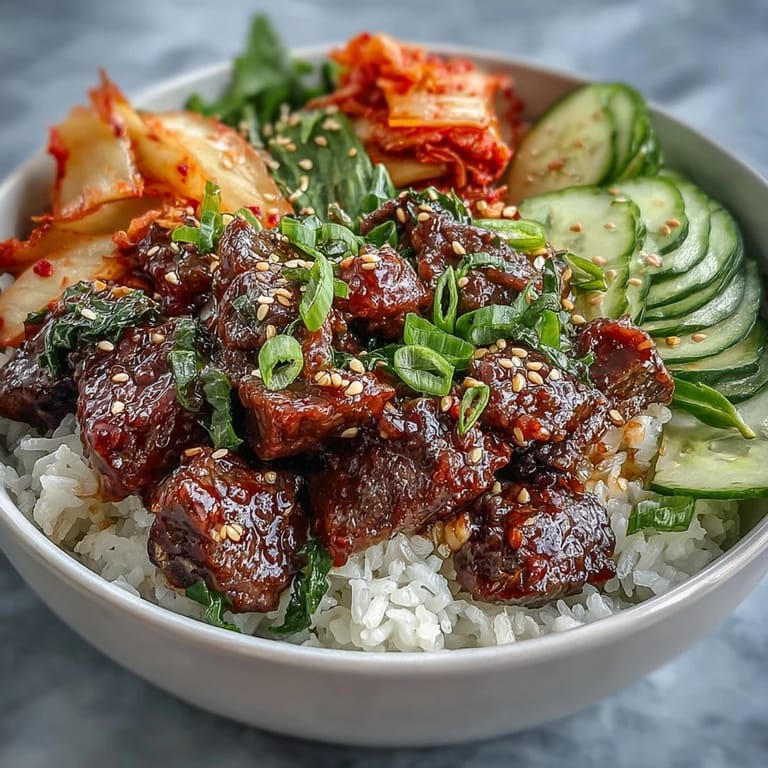
Save The smell of gochujang sizzling in a hot pan is enough to wake up every corner of my kitchen. I stumbled onto this bowl one weeknight when I had ground beef thawed and a craving for something bold and quick. What started as an experiment turned into a weekly rotation, the kind of dish that gets texts from my husband asking if it's on the menu soon. It's fast, it's punchy, and it clears out half the produce drawer in the best way possible.
I made this for friends on a rainy Saturday, and they hovered around the counter while I assembled the bowls. One of them, who claimed not to like spicy food, went back for seconds and asked for the recipe before she left. There's something about the contrast of cool cucumbers against warm, sticky beef that just works. It's the kind of meal that starts conversations and ends with empty bowls.
Ingredients
- Lean ground beef: The base of the bowl, it soaks up the gochujang sauce beautifully and cooks fast, look for 90% lean so you don't end up draining off too much fat.
- Vegetable oil: Neutral and high heat friendly, it lets the garlic and ginger bloom without burning.
- Garlic, minced: Fresh is essential here, it perfumes the oil and gives the beef a sharp, aromatic backbone.
- Fresh ginger, grated: Adds a warm, slightly floral heat that balances the richness of the meat, don't skip it.
- Gochujang: This Korean chili paste is the star, sweet, spicy, fermented, and deeply savory all at once.
- Soy sauce: Brings saltiness and umami, if you want gluten free, swap in tamari without losing any flavor.
- Brown sugar: Caramelizes slightly and tempers the heat, creating a sticky glaze that clings to every grain of rice.
- Rice vinegar: Cuts through the richness with a gentle tang, used in both the beef and the pickles.
- Toasted sesame oil: A few drops add a nutty, toasted finish that smells like a street food stall.
- Green onions: Bright, sharp, and fresh, they go in the beef and on top for color and crunch.
- Carrot and daikon radish, julienned: These quick pickles add crunch and acidity, they're ready by the time the beef is done.
- Sugar and salt for pickling: Dissolved in rice vinegar, they create a simple brine that transforms raw vegetables in minutes.
- Cooked white rice: The foundation of the bowl, fluffy and neutral, it soaks up all the sauce.
- Cucumber and radish: Cool, crisp, and refreshing, they balance the heat and add textural contrast.
- Kimchi: Funky, tangy, and alive, it brings fermented complexity and a second layer of spice.
- Toasted sesame seeds: The final touch, nutty and crunchy, they make the bowl look as good as it tastes.
Tired of Takeout? 🥡
Get 10 meals you can make faster than delivery arrives. Seriously.
One email. No spam. Unsubscribe anytime.
Instructions
- Prepare the Pickled Vegetables:
- In a small bowl, whisk together rice vinegar, sugar, and salt until the sugar dissolves completely. Toss in the julienned carrot and daikon, stir well, and set aside. They'll soften and brighten while you cook the beef.
- Cook the Beef:
- Heat vegetable oil in a large skillet over medium high heat until it shimmers. Add garlic and ginger, stirring constantly for about a minute until fragrant and just starting to turn golden. Add the ground beef, breaking it up with a wooden spoon, and cook until browned and cooked through, about 5 to 6 minutes. Drain off any excess fat if needed.
- Season the Beef:
- Stir in gochujang, soy sauce, brown sugar, rice vinegar, and sesame oil, mixing until the beef is evenly coated. Let it cook for another 2 to 3 minutes, stirring occasionally, until the sauce thickens and clings to the meat. Remove from heat and fold in half the sliced green onions.
- Assemble the Bowls:
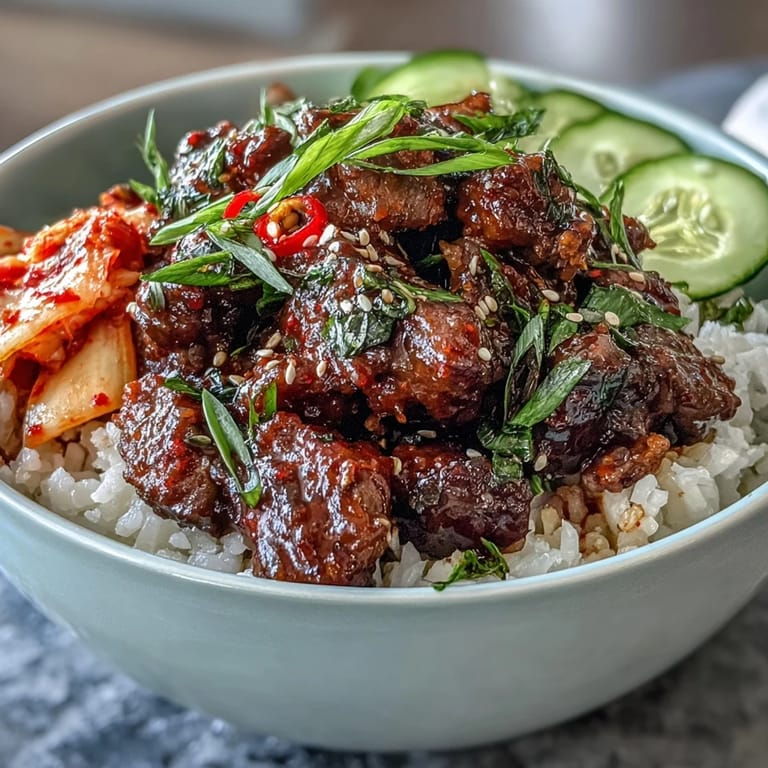
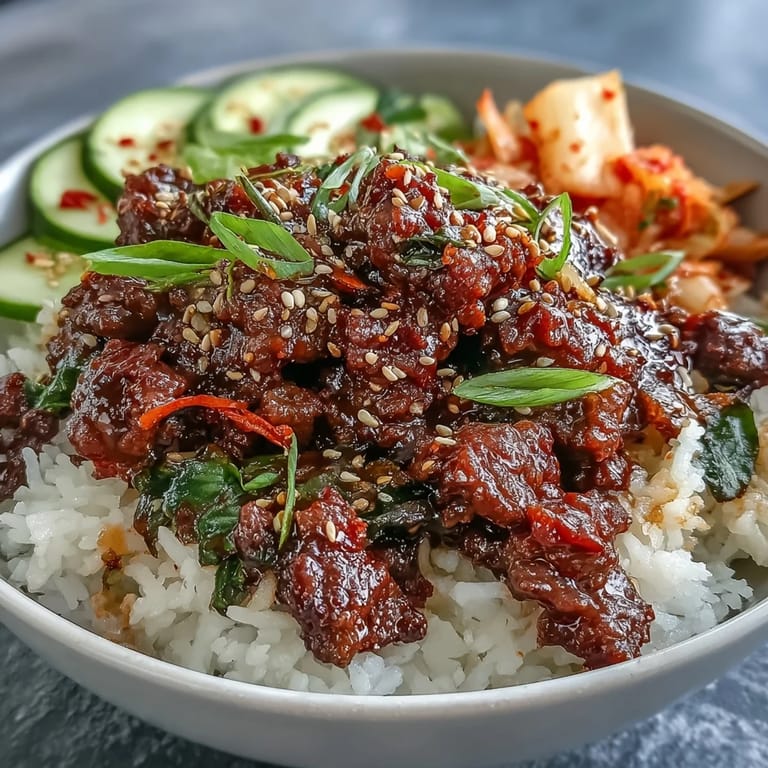
- Divide the cooked rice among four bowls, packing it down slightly so it holds its shape. Spoon a generous portion of the beef mixture over the rice, then arrange the pickled vegetables, cucumber slices, radish, and chopped kimchi around the beef. Garnish with the remaining green onions and a sprinkle of toasted sesame seeds.
- Serve Immediately:
- Bring the bowls to the table while the beef is still warm and the vegetables are cool and crisp. The contrast in temperature and texture is part of the magic.
 Save
Save The first time I served this to my kids, I braced for complaints about the kimchi. Instead, they asked if we could have it again the next night. It's become one of those meals that feels special but doesn't ask much of me. When I'm tired and need something that tastes like effort without requiring it, this is what I make.
Storing and Reheating
The beef keeps beautifully in the fridge for up to four days, and I actually prefer it the next day when the flavors have melded. Store the beef, rice, and toppings separately so nothing gets soggy. Reheat the beef gently in a skillet with a splash of water to loosen the sauce, and assemble fresh bowls with cold toppings. The pickles stay crunchy for days and only get more flavorful.
Swaps and Substitutions
Ground turkey or chicken work just as well if you want something leaner, though I add a bit more sesame oil to keep things moist. If you can't find daikon, use regular radishes or even thinly sliced cabbage for the pickles. No kimchi? A handful of sauerkraut or even pickled jalapeños will give you that fermented tang. I've also made this with cauliflower rice when I'm trying to lighten things up, and it still feels satisfying.
Serving Suggestions
I love setting out little bowls of extra toppings and letting everyone build their own bowl. Sliced avocado, a fried egg with a runny yolk, or extra green onions all make great additions. If you want more vegetables, blanched spinach or steamed broccoli fold right in. A cold lager or a cup of iced barley tea cuts through the richness and keeps things refreshing.
- Top with a fried egg for extra richness and protein.
- Serve alongside miso soup or a simple cucumber salad.
- Double the pickles and keep them in the fridge for snacking or adding to other bowls throughout the week.
 Save
Save This bowl has become my answer to the question of what to make when I want something that feels like takeout but tastes better and costs less. It's bright, it's bold, and it never gets old.
Recipe Questions & Answers
- → What does gochujang taste like?
Gochujang is a fermented Korean chili paste with a complex flavor profile combining sweet, savory, and spicy notes. It has a rich umami taste from fermentation, moderate heat, and a slightly sweet finish from added sugars. The paste adds depth and a beautiful red color to the beef.
- → Can I make this dish less spicy?
Absolutely. Reduce the amount of gochujang to 1-2 tablespoons for milder heat. You can also add a teaspoon of honey or brown sugar to balance the spice. Serving with extra rice and fresh vegetables helps tame the heat as well.
- → What can I substitute for ground beef?
Ground turkey, chicken, or pork work beautifully in this dish. For a vegetarian option, use crumbled tofu or plant-based ground meat alternative. The seasoning sauce flavors any protein wonderfully.
- → How long do the pickled vegetables last?
The quick-pickled carrots and daikon will keep in the refrigerator for up to 1 week in an airtight container. They actually develop more flavor after sitting for a day. Make extra to use in other dishes like tacos, sandwiches, or salads.
- → Is this dish gluten-free?
The traditional version contains gluten from soy sauce. To make it gluten-free, substitute tamari or coconut aminos for the soy sauce. Check your gochujang label carefully, as some brands contain wheat. Several certified gluten-free gochujang options are available.
- → Can I meal prep Korean beef bowls?
Yes, these bowls meal prep excellently. Store the cooked beef, pickled vegetables, and rice in separate containers for up to 4 days. Reheat the beef gently and assemble fresh bowls. Keep the cucumber, radish, and kimchi separate to maintain their crisp texture.