 Save
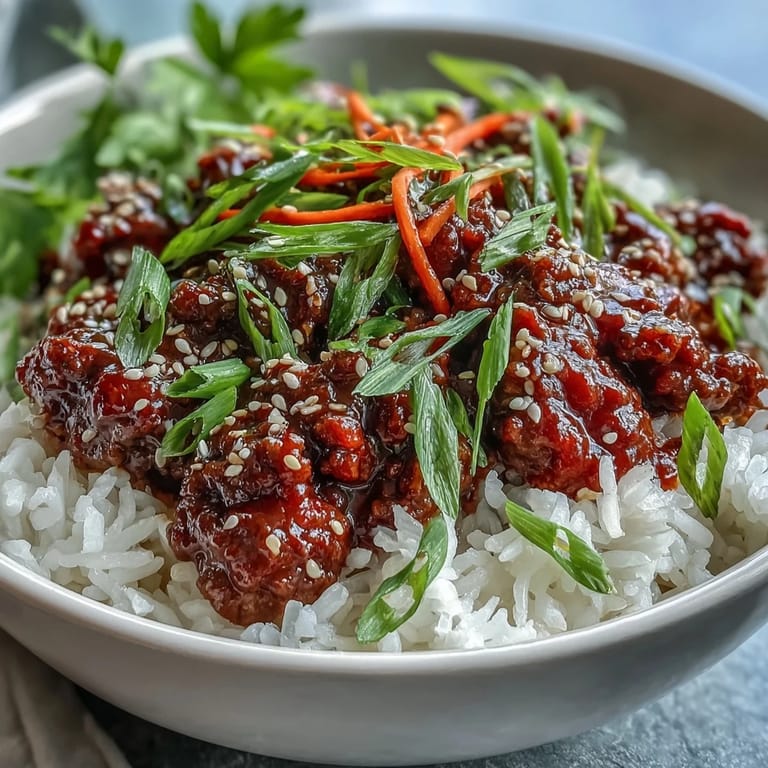
Save My neighbor Jin knocked on my door one Thursday holding a jar of gochujang and a crumpled grocery receipt. She wanted to teach me something fast, something her mom made on busy nights when everyone was starving and nobody had patience. We browned beef in my old skillet, and the smell that filled my kitchen made me understand why this dish survived generations of weeknights. Twenty minutes later, we were eating straight from the pan, laughing about how the best recipes never need fancy techniques.
The first time I made this for my kids, my youngest wrinkled her nose at the word kimchi. I skipped it for her bowl, piled on extra cucumber, and watched her devour every bite before asking if Korean food could be dinner again tomorrow. My older one loaded his bowl with everything, including the sliced chili I warned him about, then spent five minutes fanning his mouth while grinning. Now they argue over who gets to pick the toppings.
Ingredients
- Lean ground beef: The star protein that soaks up all that gochujang magic, and using lean meat keeps the sauce from turning greasy.
- Gochujang: This fermented Korean chili paste is smoky, slightly sweet, and irreplaceable, find it in the Asian aisle or any Korean market.
- Low-sodium soy sauce: Controls the saltiness so you can actually taste everything else, and swap for tamari if gluten is an issue.
- Brown sugar: Balances the heat and helps the sauce cling to the beef with a subtle caramel note.
- Sesame oil: Just a tablespoon fills your kitchen with nutty warmth and makes the whole dish taste more authentic.
- Garlic and fresh ginger: These two together create the aromatic base that makes your neighbors jealous.
- Rice vinegar: A splash of tang that cuts through the richness and wakes up your palate.
- Black pepper: A small amount adds depth without competing with the gochujang.
- Cooked rice or cauliflower rice: Your choice of base, one comforting and classic, the other light and low-carb.
- Cucumber and carrot: Cool, crunchy, and refreshing, they provide the contrast that keeps each bite interesting.
- Green onions and sesame seeds: The finishing touches that make your bowl look like it came from a restaurant.
- Optional red chili and kimchi: For those who want to turn up the heat or add funky, fermented complexity.
Tired of Takeout? 🥡
Get 10 meals you can make faster than delivery arrives. Seriously.
One email. No spam. Unsubscribe anytime.
Instructions
- Brown the beef:
- Heat sesame oil in a large skillet over medium-high until it shimmers, then add the ground beef and break it apart with your spatula. Let it cook undisturbed for a minute so it gets a nice sear, then keep breaking it up until no pink remains, about four to five minutes total.
- Add aromatics:
- Toss in the minced garlic and grated ginger, stirring constantly for about a minute until your kitchen smells like the best kind of takeout. Do not let the garlic burn or it will turn bitter and ruin your day.
- Build the sauce:
- Stir in the gochujang, soy sauce, brown sugar, rice vinegar, and black pepper, mixing until the beef is completely coated in glossy red sauce. Let it simmer for two to three minutes, stirring occasionally, until the sauce thickens just enough to cling to the meat.
- Taste and adjust:
- This is your chance to make it yours, add more gochujang for heat, a pinch more sugar for sweetness, or a splash of soy sauce for saltiness. Once it tastes right, pull the skillet off the heat.
- Assemble the bowls:
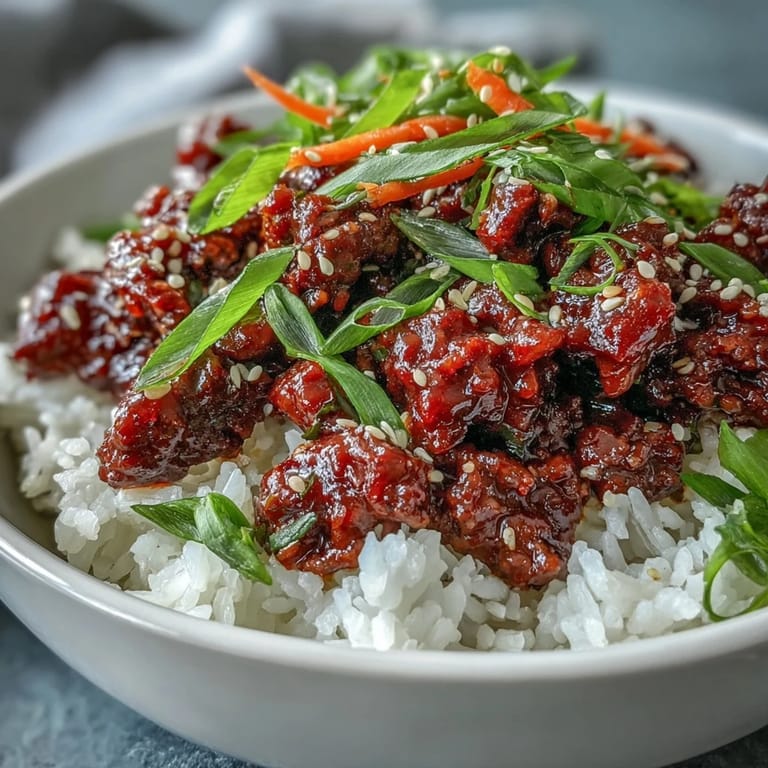
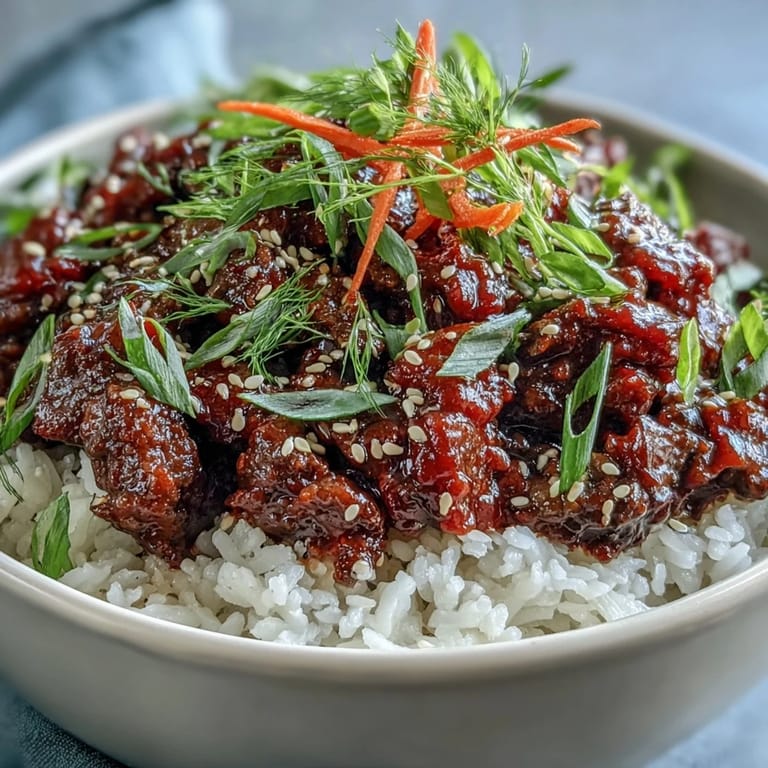
- Divide your cooked rice or cauliflower rice among four bowls, then spoon the hot Korean beef right on top. Do not be shy with the portions, this is the main event.
- Garnish generously:
- Scatter cucumber slices, julienned carrots, green onions, and sesame seeds over each bowl. If you are feeling bold, add thin slices of fresh red chili or a generous spoonful of kimchi, then serve immediately while everything is still warm and vibrant.
 Save
Save I brought this to a potluck once, nervous because everyone else had signed up for casseroles and lasagnas. By the time I looked up from talking to someone, my bowl was empty and three people were asking for the recipe. One guy told me he had already screenshot my text with the ingredient list. That is when I realized this dish does not need an occasion, it just needs to be tasted.
Making It Your Own
This recipe is basically a template for whatever your week demands. Swap the ground beef for turkey or chicken if you want something lighter, or crumble in some tofu for a plant-based version. I have made it with ground pork when that was all I had, and it was just as satisfying. You can crank up the gochujang if you are a heat seeker or dial it back if you are cooking for cautious eaters. The toppings are where you can really play, try shredded red cabbage, pickled radish, or even a fried egg on top for extra richness.
Storing and Reheating
The beef mixture keeps beautifully in an airtight container in the fridge for up to four days, and it reheats like a dream in the microwave or on the stovetop with a splash of water. I actually prefer to store the rice and beef separately so the rice does not get mushy. The fresh toppings should stay separate too, slice them fresh each time for that crisp contrast. If you are meal prepping, portion everything into containers on Sunday and you will have lunch ready faster than you can say delivery.
Serving Suggestions
This bowl plays well with others, even though it does not really need backup. A simple cucumber salad dressed with rice vinegar and a pinch of sugar makes a cool, refreshing side. If you want to go all in, serve it with miso soup or a light seaweed salad. For drinks, iced barley tea or a cold beer cuts through the richness perfectly.
- Add a fried egg on top for a next level breakfast-for-dinner vibe.
- Serve with steamed edamame or vegetable dumplings if you are feeding a crowd.
- Keep extra gochujang and sesame oil on the table so people can customize their heat and richness.
 Save
Save This is the kind of dinner that makes you feel capable, even on nights when you are running on fumes and the sink is full of dishes. It is fast, it is flavorful, and it never lets you down.
Recipe Questions & Answers
- → What is gochujang?
Gochujang is a Korean fermented chili paste made from red chili powder, glutinous rice, fermented soybeans, and salt. It has a sweet, savory, and slightly spicy flavor that's essential to Korean cooking.
- → Can I make this dish less spicy?
Yes, reduce the gochujang to 1 tablespoon or substitute half with miso paste for a milder version. You can also serve with plain yogurt or cucumber on the side to help balance the heat.
- → Is this dish freezer-friendly?
The seasoned beef freezes well for up to 3 months. Store in airtight containers and thaw overnight in the refrigerator. Reheat gently in a skillet, adding a splash of water if the sauce seems thick.
- → What other proteins work in this bowl?
Ground turkey, chicken, or pork all work beautifully with the gochujang sauce. For a vegetarian version, use crumbled tofu or tempeh, adjusting cooking time to brown the protein before adding the sauce.
- → Can I prepare the components ahead?
The vegetables can be sliced up to a day in advance and stored in the refrigerator. The sauce ingredients can be mixed together beforehand. Cook the beef fresh for the best texture and flavor.
- → What vegetables can I use as toppings?
Beyond cucumber and carrot, try shredded cabbage, radish slices, bean sprouts, spinach, or bok choy. Avocado adds creaminess while fresh herbs like cilantro or basil bring brightness.