 Save
Save The first time I made manti, I was standing in a cramped Istanbul kitchen with my friend Zeynep, flour dusting every surface. She had just returned from visiting family and wanted to show me how to fold these tiny parcels the way her grandmother taught her. What struck me most wasn't the technique—it was the quiet rhythm of it, how meditative the work became once my hands understood the motion. Now whenever I make them, that same calm settles over me, and I'm transported back to that afternoon where time felt less important than the gentle click of dumpling corners meeting.
I made this for a small dinner party last winter when everyone was tired of the same heavy meals. Watching my guests take that first bite—how their eyes widened at the combination of cool yogurt, warm dumpling, and that little spark from the spiced butter—made me understand why Turkish families have perfected this dish over generations. It wasn't complicated, but it felt thoughtful, like I'd done something special without spending hours in the kitchen.
Ingredients
- All-purpose flour: Use this as your foundation; it creates a tender dough that holds filling without tearing. I've learned that measuring by weight gives you more consistent results, but spooning and leveling works just fine too.
- Turkish white cheese or feta: This is the heart of the filling, providing that salty, slightly tangy richness. Turkish white cheese is milder than feta, so if using feta, taste your filling and adjust salt accordingly.
- Ricotta cheese: This adds a creamy texture that prevents the filling from being too crumbly. It's the secret that makes each bite feel luxurious without being heavy.
- Fresh parsley: Finely chopped parsley brightens the filling and adds a subtle herbaceous note that shouldn't be skipped.
- Greek yogurt: Full-fat Greek yogurt is essential here; it's thick, tangy, and won't curdle when you mix it with garlic. Regular yogurt works if that's what you have, but drain it first.
- Unsalted butter: For the spiced butter topping, this lets you control the saltiness and ensures the paprika and Aleppo pepper shine.
- Aleppo pepper: If you can't find Aleppo pepper, red chili flakes work, though Aleppo has a fruity warmth that's harder to replicate. A pinch of sumac mixed with the flakes gets you closer.
Tired of Takeout? 🥡
Get 10 meals you can make faster than delivery arrives. Seriously.
One email. No spam. Unsubscribe anytime.
Instructions
- Create your dough base:
- Mix flour and salt, then make a well and add your egg and water. Knead until the dough becomes smooth and elastic, about 10 minutes by hand—it should feel slightly tacky but hold together. Cover it and let it rest for 20 minutes; this time transforms the gluten structure and makes rolling infinitely easier.
- Prepare the cheese filling:
- While your dough rests, combine crumbled white cheese, ricotta, parsley, and black pepper in a bowl. Taste it and adjust seasoning; remember the yogurt sauce adds saltiness too, so don't over-salt at this stage.
- Make your yogurt sauce:
- Stir together Greek yogurt, minced garlic, and a pinch of salt until smooth and silky. This should taste slightly assertive with garlic since it will be toned down by the manti and butter.
- Roll and cut the dough:
- On a lightly floured surface, roll the dough as thin as you can manage—about 2 mm, nearly translucent. Cut into 1.5-inch squares; you're aiming for small bites, not substantial pillows.
- Fill and fold:
- Place a scant half-teaspoon of filling in the center of each square, then pinch the four corners together to seal. The manti should look like tiny gathered pouches, and sealing them well prevents the filling from escaping into the water.
- Cook until tender:
- Bring a large pot of salted water to a boil and add manti in batches to avoid crowding. They'll sink first, then float to the surface after about 5 minutes; cook another minute or two until they feel tender when you test one.
- Infuse the butter:
- While manti cook, melt butter gently in a small pan, then stir in paprika and Aleppo pepper. Let it cook for just 30 seconds so the spices bloom and release their warmth into the fat.
- Assemble and serve:
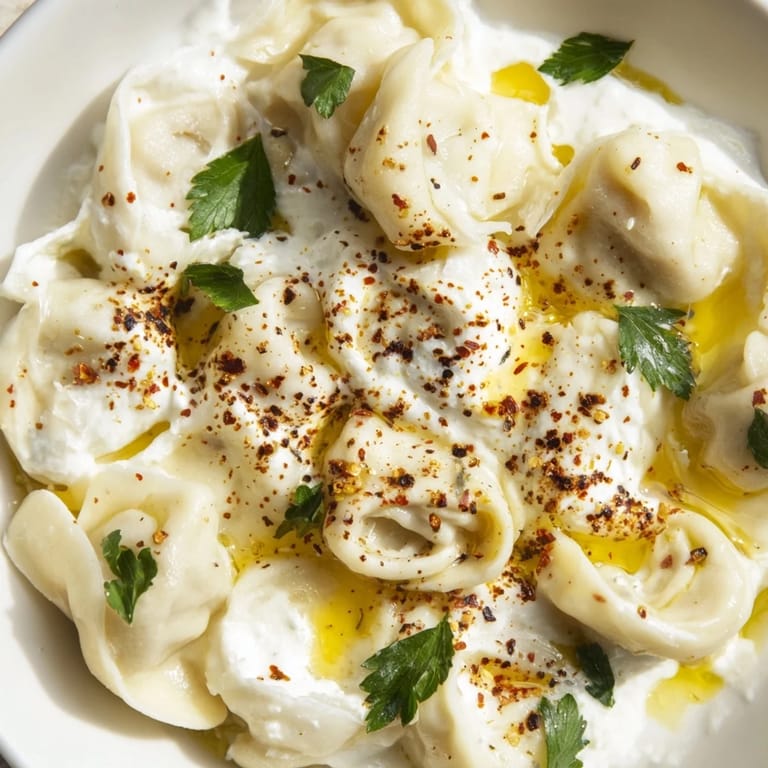
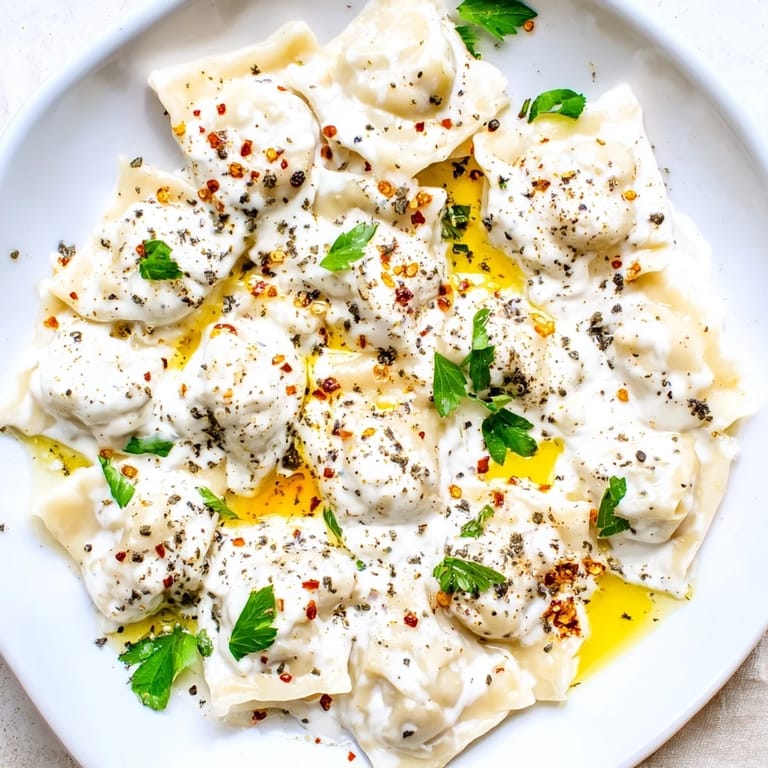
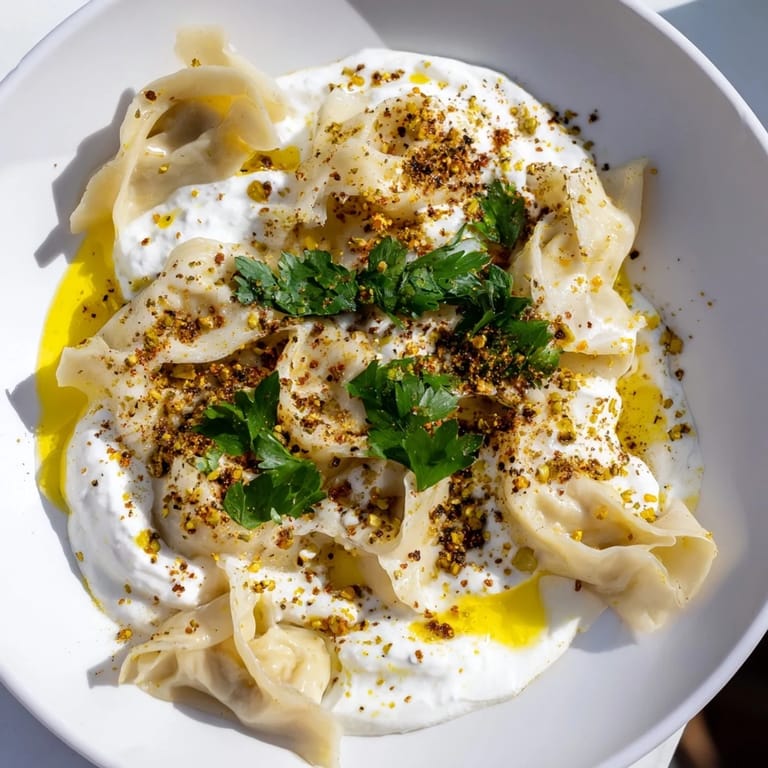
- Drain the manti well, arrange on plates, spoon yogurt sauce generously over top, and finish with a drizzle of spiced butter. Serve immediately while the manti are still warm and the yogurt is cool.
 Save
Save The magic moment arrives when you plate these and watch the butter melt into the yogurt, creating little golden rivers across the plate. It's the kind of dish that tastes like someone cared about you while cooking, even when it was just you in your own kitchen.
The Art of the Fold
Folding manti is a meditation that pays off. Once you've folded a few dozen, your hands learn the motion and it becomes almost automatic. I used to overthink it, worried each one wouldn't seal properly, but the truth is these little dumplings are forgiving as long as you pinch with intention. The corners matter because they're your seal, but they also create texture when they brown slightly during cooking.
Making Ahead and Freezing
One of the best things about manti is that you can fold them, arrange them on a baking sheet, and freeze them for up to a month. When you're ready to cook, just add them directly to boiling water without thawing. I've found they actually cook beautifully from frozen, sometimes even more tender than fresh, since the ice crystals help them stay moist. This makes manti a perfect weeknight dinner strategy—do the work when you have time, then pull them out when hunger strikes.
Variations and Seasonings
Once you master the basic formula, manti become a canvas for small adjustments and discoveries. Some people add a pinch of sumac to the yogurt for brightness, others dust the finished plate with dried mint that was crushed between their palms. I've experimented with adding a tiny pinch of nutmeg to the cheese filling and swear it adds something subtle that makes people lean back and say they can't quite identify what tastes so good. The beauty of this dish is that it welcomes these small touches without demanding them.
- Try mixing a pinch of sumac into the yogurt sauce for a lemony brightness that lifts the richness.
- Dust the finished dish with dried oregano or mint for an herbaceous flourish that feels like restaurant plating.
- A sprinkle of nigella seeds on top adds nuttiness and visual interest without changing the core flavor.
 Save
Save Turkish manti reminds me that the best dishes are the ones we return to not because they're impressive, but because they feel like home. Make these when you want to slow down.
Recipe Questions & Answers
- → What type of cheese is used in Turkish Cheesy Manti?
A blend of Turkish white cheese or feta and creamy ricotta creates a rich, tangy filling with fresh parsley and black pepper.
- → How thin should the dough be rolled?
The dough is rolled very thin, about 2 millimeters, to ensure delicate yet sturdy dumplings that cook evenly.
- → What is the best way to cook the dumplings?
Boil the dumplings in salted water for 5 to 7 minutes until they float and become tender, then drain carefully.
- → How is the spiced butter prepared?
Melt unsalted butter and stir in paprika and Aleppo pepper or chili flakes, cooking briefly until fragrant before drizzling.
- → Can I add extra flavor toppings?
Yes, sprinkling sumac or dried mint enhances aroma and layers additional flavor on the finished dish.