 Save
Save My mother never asked for much on her special day, but one year I decided to attempt something that terrified me—a pavlova. I'd watched her eat them at fancy brunches, always saying how impressive they looked but how simple they really were, and I thought maybe that was my way in. The kitchen filled with the sharp smell of vinegar and vanilla as I beat egg whites into clouds, and somewhere between the third and fourth minute of whipping, something clicked. It felt less like following instructions and more like creating air itself.
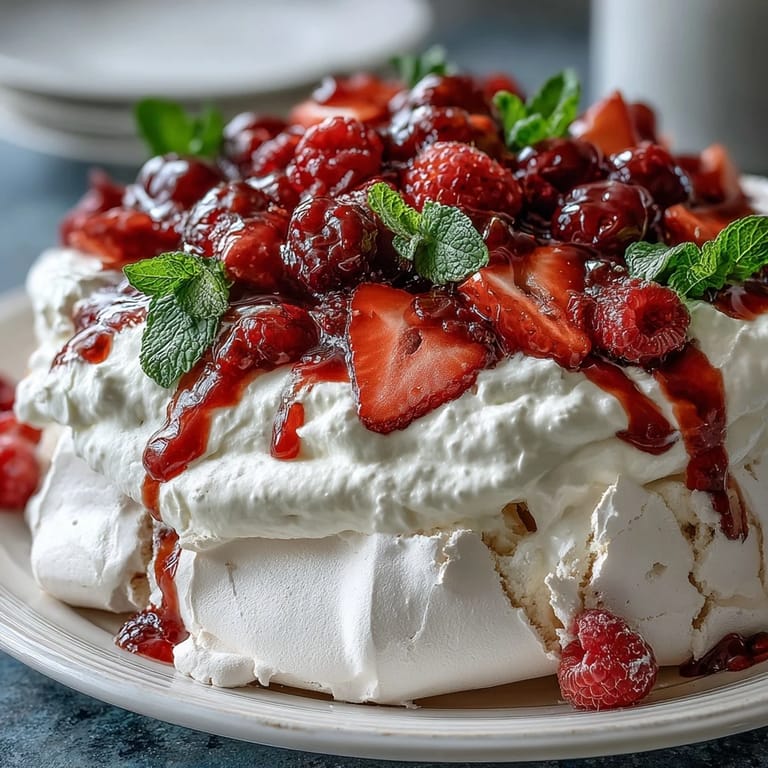
Serving this pavlova to my mother that Mother's Day morning, I watched her eyes light up in a way that had nothing to do with the taste and everything to do with the effort. She took a bite and the meringue shattered under her fork with this delicate crunch, and she said it was perfect—not because it was restaurant-quality, but because it proved I'd actually tried something that scared me. That's when I realized pavlova isn't really about impressing people with technique; it's about showing up with intention.
Ingredients
- Egg whites (4 large, room temperature): Cold eggs won't whip to the same volume, so let them sit on the counter for 15 minutes—this tiny step makes a real difference in how fluffy your meringue becomes.
- Superfine sugar (1 cup / 200 g): The fine crystals dissolve faster than regular sugar, giving you that glossy, stable meringue that holds stiff peaks without graininess.
- Cornstarch (1 tsp): This is the secret ingredient that keeps the inside pillowy soft while the outside crisps up—it traps moisture and prevents the whole thing from being uniformly hard.
- White vinegar (1 tsp): The acid stabilizes the egg white foam and adds just enough tang to balance the sweetness without being noticeable.
- Pure vanilla extract (1 tsp): Use the real thing here; imitation tastes hollow in something this simple and elegant.
- Salt (pinch): A tiny bit wakes up all the other flavors and strengthens the foam structure.
- Heavy whipping cream (1 cup / 240 ml, chilled): The cold temperature matters more than you'd think—warm cream won't whip properly, so keep it in the coldest part of your fridge until the last minute.
- Powdered sugar (2 tbsp plus extra for dusting): Its fine texture dissolves into the cream smoothly without the grittiness you'd get from regular sugar.
- Mixed berries (4 cups total—strawberries, raspberries, blueberries, blackberries): Buy them as close to serving day as possible, and if they're watery, pat them gently dry with a soft cloth so they don't release moisture onto your cream.
- Fresh mint leaves (optional): A small handful adds a fresh, almost surprising brightness that makes people pause and wonder what they're tasting.
Tired of Takeout? 🥡
Get 10 meals you can make faster than delivery arrives. Seriously.
One email. No spam. Unsubscribe anytime.
Instructions
- Set the stage with heat and paper:
- Preheat your oven to 250°F and line a baking sheet with parchment paper, then use a pen or pencil to lightly trace a 9-inch circle as your guide—this keeps the pavlova from spreading too wild and gives it a gentle nest shape. This low, slow temperature is the whole point; higher heat would bake the outside hard before the inside could set properly.
- Build your cloud from nothing:
- In a completely clean, dry bowl (any grease will ruin this), beat the egg whites with a pinch of salt until soft peaks form—you'll know it's right when you lift the beater and the peaks curl gently over themselves. This usually takes 2-3 minutes with an electric mixer.
- Add sweetness one spoonful at a time:
- This is where patience matters more than speed: sprinkle in the superfine sugar one tablespoon at a time, beating for 20-30 seconds between each addition. You'll watch it transform from fluffy to glossy to stiff peaks that stand straight up, which takes about 5-6 minutes total and feels like you're coaxing magic into the bowl.
- Fold in the hidden helpers:
- Sift the cornstarch over the meringue, pour in the vinegar and vanilla, then use a rubber spatula to fold everything together gently—about 15-20 folds until you don't see streaks anymore. Overmixing at this stage will deflate all that air you just worked to build.
- Shape your nest:
- Spoon the meringue onto your traced circle, then use the back of a spoon to create a gentle well in the center, leaving slightly raised edges like a bird's nest. Don't worry about perfection; the irregular edges actually look more authentic and homemade, which is better.
- Bake low and slow:
- Put it in the oven for 1 hour 15 minutes—the meringue will turn pale cream-colored but shouldn't brown much at all. When the time is up, turn off the oven and crack the door open about 2 inches, then let the pavlova sit there for at least another hour (or until completely cool), which prevents it from shattering from temperature shock.
- Whip your cloud of cream:
- While the pavlova cools, pour the chilled heavy cream into a clean bowl and whip it with powdered sugar and vanilla until soft peaks form—this is softer than stiff peaks and takes about 2-3 minutes. Overwhipping turns it into butter, so stop as soon as it looks like clouds.
- Assemble with intention:
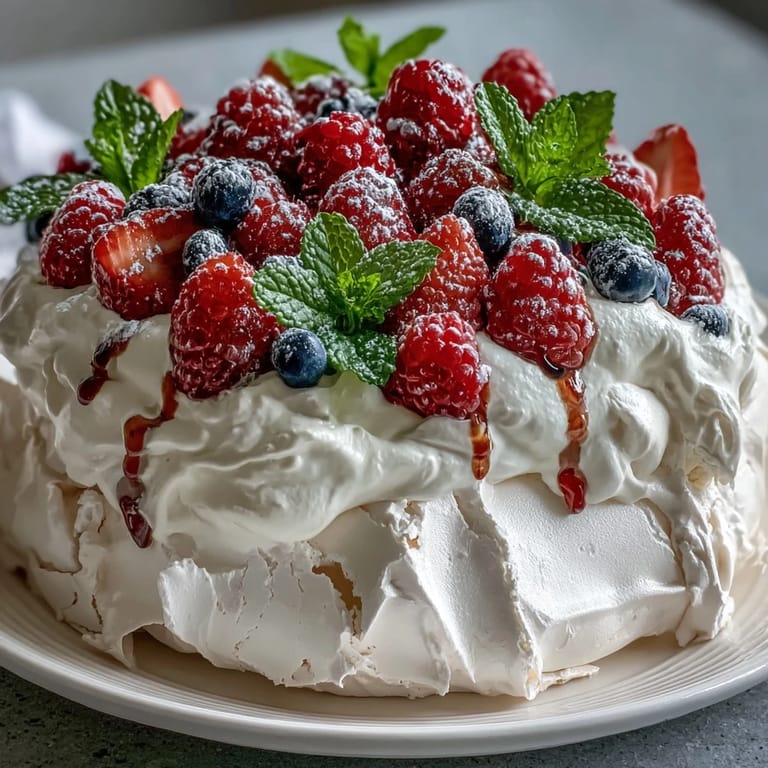
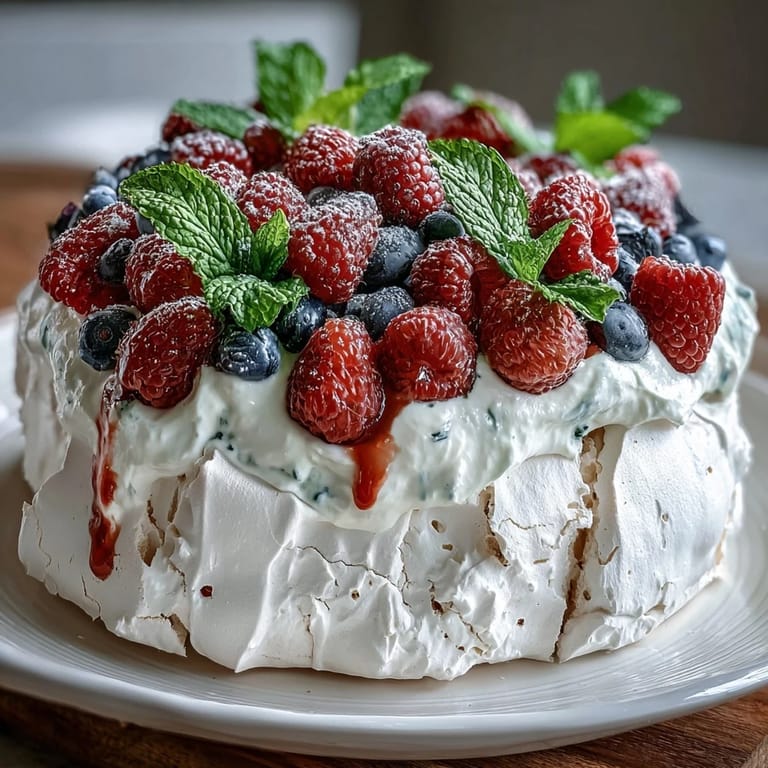
- Once the meringue is completely cool and you're ready to serve, slide it onto your prettiest platter, dollop the whipped cream generously onto the center, then scatter the berries across the top. A few mint leaves and a light dusting of powdered sugar finish it off with that restaurant-quality touch.
 Save
Save There's a moment when you bite into pavlova and it shatters into a thousand tiny shards that somehow melt on your tongue while you're still eating the soft, marshmallow center, and it's almost absurd how much joy something so simple can bring. My mother finished that first slice and asked me to make it again next year, which was the highest compliment she could have paid me.
The Berry Question
You don't have to use this exact mix of berries—strawberries, raspberries, blueberries, and blackberries are just what I reach for because they look beautiful together and their tartness balances the sweetness. But I've made this with sliced peaches and nectarines in summer, with kiwi and passionfruit for a tropical twist, and once memorably with pomegranate arils and raspberries when that's what the farmer's market had calling to me. The key is using whatever is ripe and seasonal where you live, because fresh berries always taste better than ones forced out of season.
A Word on Timing
This dessert asks for patience in a way modern cooking often doesn't—you beat for minutes, bake for over an hour, then let it cool just as long. There's something almost meditative about that slowness, though, and it's one reason I love making it for special occasions. The waiting period forces you to be present in the kitchen rather than rushing, and somehow that intentionality ends up tasting like it matters.
The Chocolate Variation
Once I got comfortable with the basic pavlova, I started playing with variations, and the one that surprised me most was adding cocoa powder. If you want to try it, sift 2 tablespoons of cocoa powder into the meringue after folding in the cornstarch and vinegar, and it creates this almost mousse-like chocolate flavor while keeping the crisp texture.
- Dark berries like blackberries and raspberries pair beautifully with chocolate pavlova.
- You can dust the finished dessert with cocoa powder instead of powdered sugar for extra drama.
- The cocoa adds richness without making the meringue heavy or dense, which feels like a small miracle.
 Save
Save Making pavlova for someone you love isn't about achieving perfection; it's about the care that goes into beating air and sugar into something beautiful. That's something my mother taught me without ever saying it out loud.
Recipe Questions & Answers
- → How do I achieve the perfect crisp pavlova texture?
Whip egg whites until stiff peaks form, gradually add superfine sugar, then gently fold in cornstarch and vinegar. Bake low and slow, allowing the pavlova to cool gradually inside the oven for a crisp shell and marshmallow center.
- → Can I substitute the mixed berries with other fruits?
Yes, seasonal fruits like kiwi, peaches, or passionfruit pair wonderfully, offering different flavors and textures while maintaining a fresh topping.
- → What is the purpose of cornstarch and vinegar in the meringue?
Cornstarch helps stabilize the meringue and create the soft interior, while vinegar adds acidity to maintain the structure and enhance texture.
- → How should I whip the cream for topping?
Use chilled heavy cream, add powdered sugar and vanilla, then whip until soft peaks form to achieve a light, airy consistency complementing the pavlova.
- → Are there tips to prevent meringue from cracking?
Use a dry day for preparation and cool the pavlova gradually inside the oven with the door slightly ajar to minimize cracking and moisture absorption.
- → Is pavlova suitable for gluten-free diets?
Yes, this pavlova naturally contains no gluten, making it safe for gluten-free dietary needs.