 Save
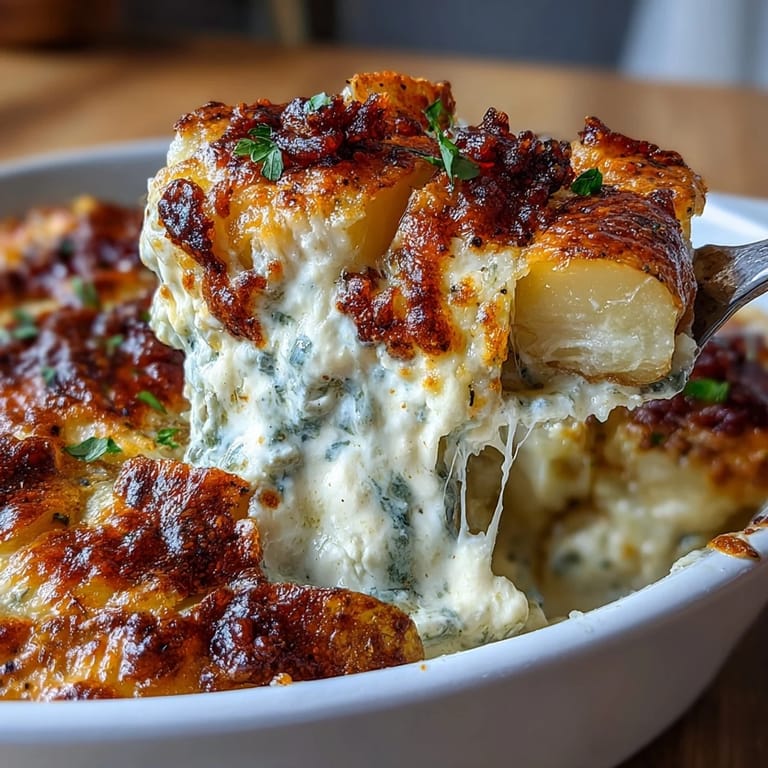
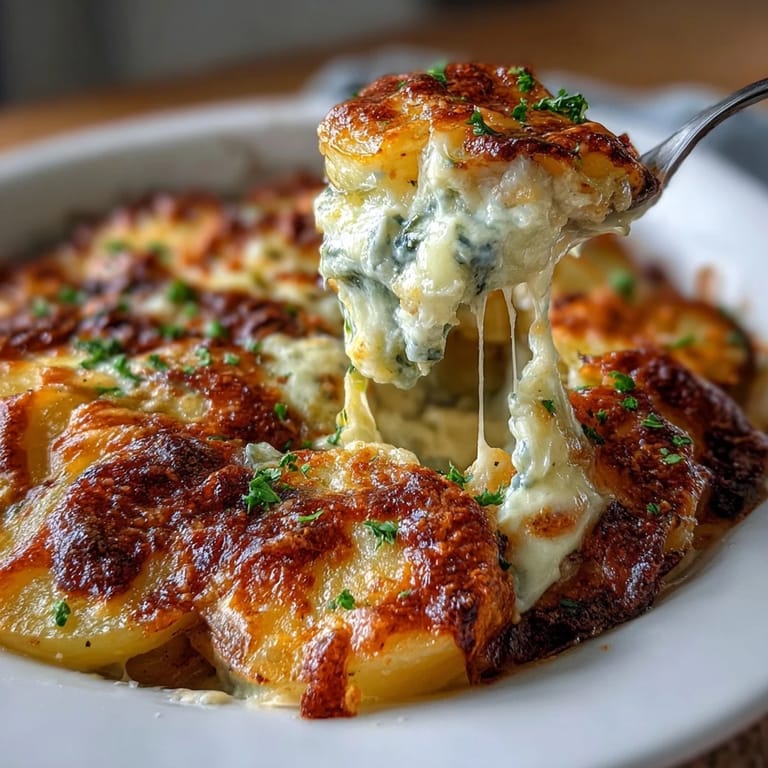
Save My aunt pulled this casserole from her oven on Christmas Eve, and the kitchen filled with this golden, buttery aroma that made everyone stop talking. I watched her slice into it—creamy layers of potato collapsing under the cheese crust—and I understood instantly why this dish shows up at every family gathering. There's something about the combination of sharp cheddar and mozzarella that transforms simple sliced potatoes into comfort on a plate. She let me make it the following year, and by the time I'd layered in the last handful of onions, I felt like I'd been handed down a secret.
I made this for a potluck at work, nervous that something so simple wouldn't impress, but people came back for seconds before the main course was even served. Someone asked if I'd used some fancy technique, and I had to laugh—it's just butter, flour, milk, and cheese doing exactly what they're supposed to do. That moment taught me that the best dishes aren't always the complicated ones; sometimes it's just about executing the basics with care and the right cheese combination.
Ingredients
- Yukon Gold or Russet potatoes (2 lbs, peeled and thinly sliced): Yukon Golds stay buttery and don't fall apart, but Russets work too if you're gentle with them—either way, slice them as thin as you can without a mandoline by using a sharp knife and steady hands.
- Yellow onion (1 medium, thinly sliced): The onion softens into the sauce and adds sweetness that balances the sharp cheese, so don't skip it even if you think you don't like onions.
- Sharp cheddar cheese (2 cups shredded): Sharp cheddar has flavor that doesn't get lost in the baking process—mild cheddar will taste nearly invisible by the time this comes out of the oven.
- Mozzarella cheese (1 cup shredded): Mozzarella melts smoothly and helps create that creamy texture without making the sauce grainy, and it stretches into those gorgeous golden strings on top.
- Whole milk (2 cups): Don't use low-fat milk or heavy cream alone; whole milk gives you the right consistency and richness without being overwhelming.
- Unsalted butter (2 tbsp) and all-purpose flour (2 tbsp): This is your roux, the foundation of everything—the flour thickens the milk into a silky sauce, so don't rush whisking it in.
- Salt (1 tsp), black pepper (½ tsp), garlic powder (½ tsp), and paprika (¼ tsp): These seasonings should be tasted in the sauce before you layer everything; if it tastes flat, add more salt—potatoes absorb seasoning as they bake.
Tired of Takeout? 🥡
Get 10 meals you can make faster than delivery arrives. Seriously.
One email. No spam. Unsubscribe anytime.
Instructions
- Heat your oven and prepare the dish:
- Set your oven to 375°F and grease a 9x13-inch baking dish with butter or cooking spray so nothing sticks to the edges. This step takes thirty seconds but saves you heartbreak at serving time.
- Build your roux with confidence:
- Melt the butter over medium heat, then whisk in the flour, stirring constantly for about a minute until it smells slightly toasted and nutty. You're cooking out the raw flour taste, which is the difference between a silky sauce and one that tastes starchy.
- Create your cheese sauce base:
- Pour the milk in slowly while whisking steadily—this prevents lumps from forming, and if you go too fast, stop and let the whisk catch up before pouring more. Once all the milk is in, keep whisking for 3 to 4 minutes until the sauce coats the back of a spoon.
- Season and melt the cheese in:
- Take the pan off the heat and stir in the salt, pepper, garlic powder, and half of both cheeses, stirring until everything melts together into a smooth, golden sauce. Taste it now—this is your only chance to adjust seasoning before everything bakes.
- Layer with intention:
- Spread half the potato slices into the baking dish, then scatter half the onion slices on top, then pour half the cheese sauce over everything. Repeat the layers: remaining potatoes, remaining onions, remaining sauce, so every layer gets its turn.
- Crown with cheese and paprika:
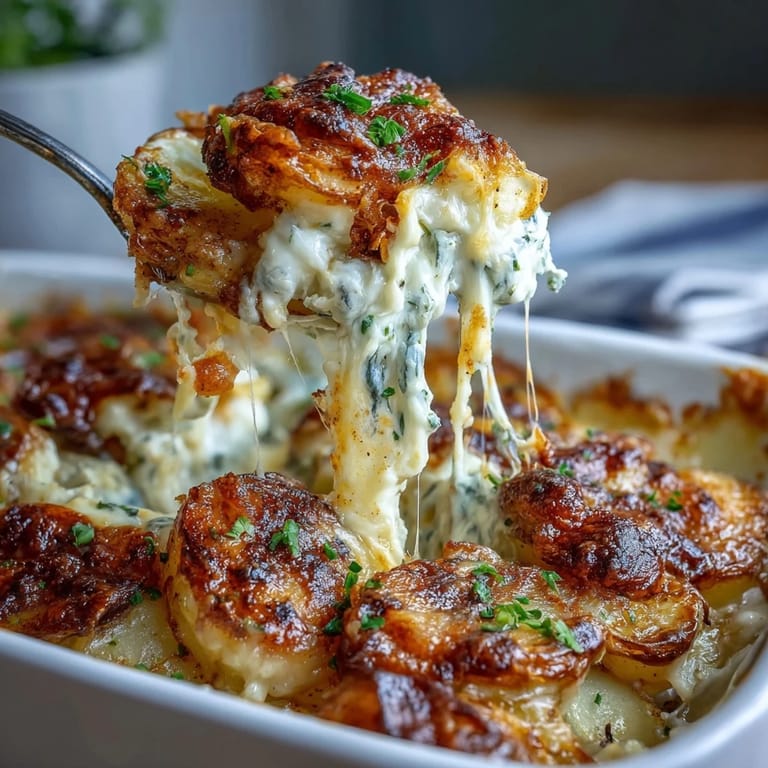
- Sprinkle the reserved cheeses and a pinch of paprika across the top—this becomes your golden crust, so don't be shy with it.
- Bake covered, then uncovered:
- Cover the dish tightly with foil and bake for 40 minutes until the potatoes start to soften, then remove the foil and bake another 25 to 30 minutes until the top is deep golden brown and the edges are bubbling. You'll smell it when it's almost done—that's your cue to check for doneness.
- Rest before serving:
- Let it sit for 10 minutes after coming out of the oven; this helps everything set so it doesn't fall apart when you scoop it onto plates.
 Save
Save My partner took his first bite and closed his eyes, and that's when I knew this recipe had crossed from "something I made for dinner" into "something that belongs in regular rotation." The way the cheese sauce clung to the potatoes, the texture contrast between the creamy interior and crispy top, the way it tasted even better the next day—it all clicked. That's the moment I stopped thinking of this as just a side dish and started thinking of it as the reason people come back to your table.
Why This Dish Works Every Time
Scalloped potatoes succeed because every component serves a purpose—the roux thickens without flour taste overpowering, the two cheeses complement rather than compete, and the milk creates richness without heaviness. The potatoes themselves act as a blank canvas that absorbs all those flavors while maintaining enough structure to stay layered and beautiful. I've made this dozens of times now, and I've never had it turn out poorly, which is something I can't say about a lot of recipes.
Timing and Make-Ahead Magic
You can assemble this casserole up to 8 hours ahead—just cover it and refrigerate, then add 10 to 15 minutes to your baking time since it'll start cold. I learned this when I was hosting Thanksgiving and needed to free up oven space, and it became my favorite kitchen hack. Just make sure your baking dish is oven-safe and your foil is fitted snugly so the edges don't brown before the center is tender.
Variations That Keep Things Interesting
Once you've made this a few times, the base becomes so familiar that experimenting feels natural instead of risky. A small pinch of nutmeg in the sauce adds a whisper of warmth, fresh thyme or chives scattered between layers brings brightness, or swapping half the cheddar for Gruyère deepens everything into something almost French. Don't be afraid to swap cheeses or add a handful of crispy bacon pieces to make it feel like your own creation—the structure is strong enough to carry variations.
- A thin layer of breadcrumbs mixed with melted butter on top creates extra crunch if you want textural contrast.
- Roasting the onions in butter for 5 minutes before layering sweetens them and mellows their sharpness.
- Save this recipe for potlucks, holiday tables, and any moment when you need something that tastes like care in casserole form.
 Save
Save This is the kind of recipe that builds confidence—you'll make it once and feel like you've unlocked something about cooking, then make it again because the people you feed keep asking for it. It belongs on your table, in your rotation, and in the collection of dishes you know by heart.
Recipe Questions & Answers
- → What type of potatoes work best for scalloped layers?
Yukon Gold or Russet potatoes are ideal thanks to their texture and ability to hold thin slices without falling apart during baking.
- → Can I prepare the dish ahead of time?
Yes, it can be assembled several hours in advance and baked just before serving to maintain freshness and texture.
- → What cheeses are recommended for creaminess and flavor?
Sharp cheddar and mozzarella combine well, providing a balance of sharpness and meltability; Gruyère is a great alternative for enhanced depth.
- → How can I make the sauce smooth and lump-free?
Whisk constantly while adding milk to the roux to prevent lumps and cook until slightly thickened before adding cheese.
- → Are there any seasoning tips for extra flavor?
Adding a pinch of nutmeg or fresh herbs to the sauce enhances aroma and complexity without overpowering the dish.
- → How do I achieve a golden crust on top?
Bake covered initially to cook through, then uncover for the final 25–30 minutes to brown the cheese topping perfectly.