 Save
Save My neighbor Maria once invited me over on a rainy afternoon, and the moment I walked into her kitchen, the smell of toasted chiles and simmering tomatoes wrapped around me like a warm blanket. She was making sopa azteca, she said, the kind her abuela taught her. Watching her move through each step with such ease, I realized this wasn't just a recipe—it was a conversation between her hands and the ingredients. That soup changed how I thought about Mexican cooking: bold, layered, and somehow both simple and sophisticated at once.
I made this for a group of friends on a weeknight, and something unexpected happened: everyone went quiet. Not an awkward silence, but the kind where people are genuinely lost in their food, mixing avocado into the warm broth, squeezing lime over everything, asking for seconds before finishing their first bowl. That's when I understood why Maria's abuela had passed this recipe down—it's the kind of dish that brings people together without trying.
Ingredients
- Vegetable oil (for broth and frying): Keep this neutral in flavor so the chiles and tomatoes shine; I learned the hard way that olive oil can compete with the broth's smokiness.
- White onion and garlic: These build the aromatic base, and mincing the garlic fine ensures it dissolves into the broth rather than leaving harsh chunks.
- Roma tomatoes: Choose ripe ones that yield slightly to pressure; underripe tomatoes won't break down properly and the broth tastes thin.
- Dried pasilla and guajillo chiles: Pasillas bring deep, almost chocolate-like notes while guajillos add bright acidity; toasting them wakes up their flavor in a way that dried chiles sitting in a bag for months simply cannot replicate.
- Vegetable broth: A good quality broth matters here because it's not masked by heavy cream or meat; I use low-sodium so I can control the salt level myself.
- Oregano and cumin: These warm spices deepen the broth without overpowering it; dried oregano works better than fresh because it concentrates the flavor.
- Corn tortillas: Fresh ones fry up crispiest, though day-old tortillas work too; store-bought flour tortillas will absorb too much oil and turn soggy instead of staying crisp.
- Panela cheese: This creamy, mild cheese melts slightly into the warm broth without disappearing completely; if you can't find it, queso fresco works but adds a different texture.
- Avocado: Add it at the very end so it doesn't oxidize and turn brown before you serve; I always keep the pit in half of an unused avocado and wrap it tightly to extend its life.
- Fresh cilantro: This is not optional in my kitchen; it brightens everything and tastes like sunshine in a bowl.
- Lime wedges: Essential for cutting through the richness and adding brightness; squeeze generously.
Tired of Takeout? 🥡
Get 10 meals you can make faster than delivery arrives. Seriously.
One email. No spam. Unsubscribe anytime.
Instructions
- Build your aromatic base:
- Heat oil in a large pot and add the chopped onion, letting it soften until the edges turn translucent and the raw bite mellows. Once you add the garlic, you'll smell when it's ready after about 1 minute—it shifts from sharp and pungent to sweet and mellow.
- Soften the tomatoes:
- Add your chopped tomatoes and let them break down for about 5 minutes, stirring occasionally. You'll watch them go from firm chunks to a soft, almost jammy texture as their water releases into the pot.
- Toast the dried chiles:
- While tomatoes cook, heat a dry skillet over medium heat and toast the pasilla and guajillo chiles for 1 to 2 minutes, just until you catch a hint of smoke and the kitchen fills with that intoxicating aroma. Toasting cracks open their flavor compounds, but burn them even slightly and you'll taste bitter regret in every spoonful.
- Blend into smoothness:
- Transfer the tomato mixture and toasted chiles to a blender with 1 cup of vegetable broth and blend until completely smooth, about 1 minute. You want no grit or chunk remaining.
- Simmer and season:
- Return the blended mixture to the pot, add the remaining broth and seasonings, and bring to a boil before reducing heat to a gentle simmer for 15 minutes. Taste as you go, adjusting salt and pepper until the broth tastes rich and balanced, not flat.
- Fry the tortilla strips to golden perfection:
- Heat about 1 inch of oil in a skillet until a small piece of tortilla sizzles immediately when it hits the pan, around medium-high heat. Fry the strips in batches for 1 to 2 minutes until they're golden and crisp, then drain on paper towels so they stay crunchy.
- Compose and serve:
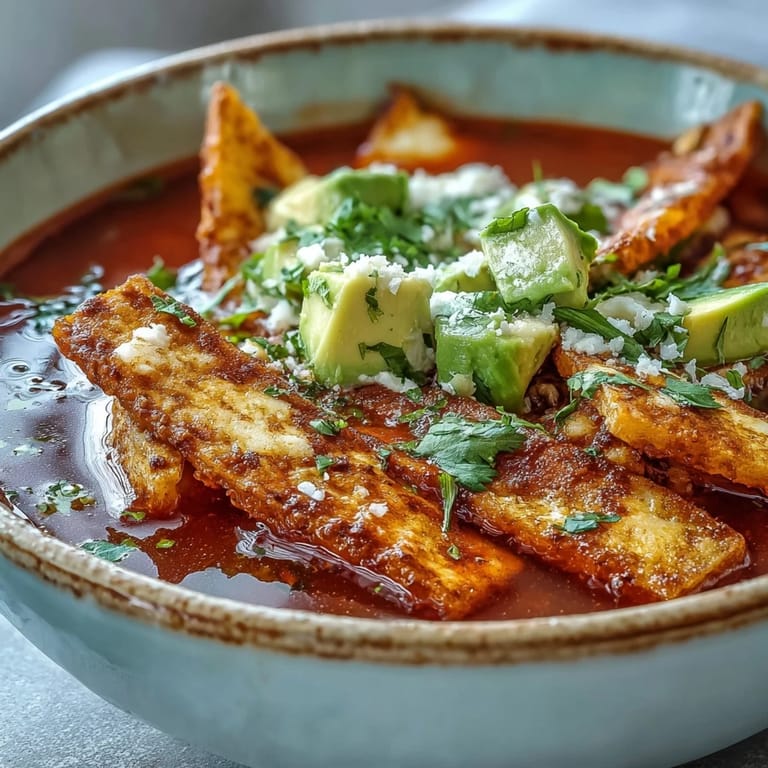
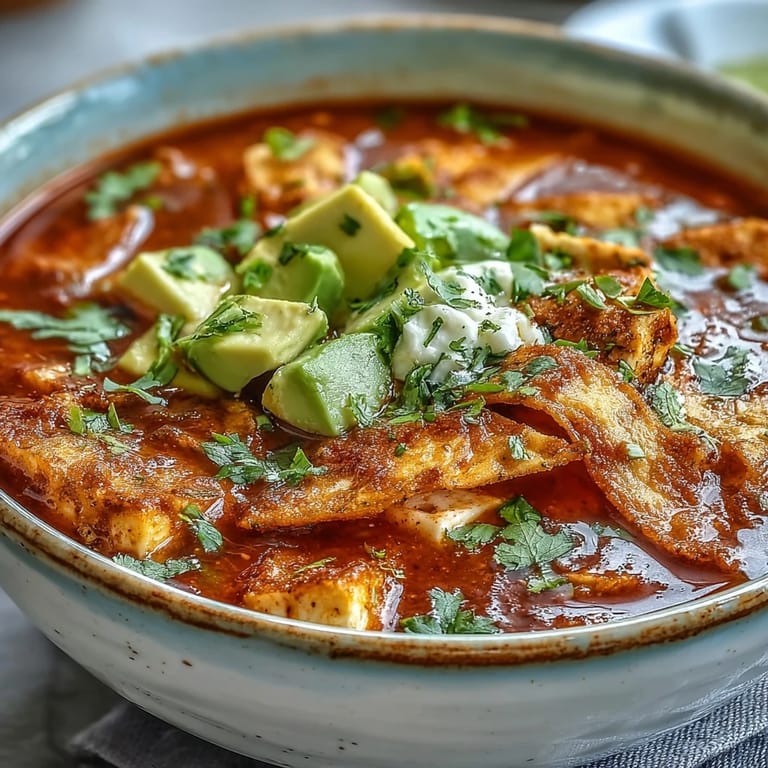
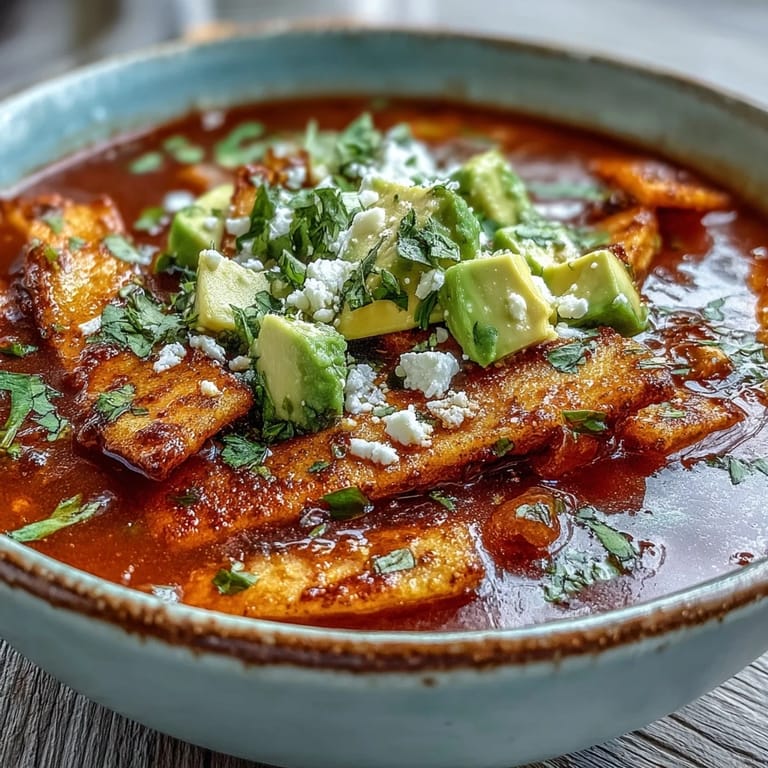
- Divide crispy tortilla strips among bowls, ladle the hot broth over them, and layer on the toppings: panela cheese, avocado, cilantro, and a drizzle of crema if you're feeling indulgent. Serve immediately with lime wedges and let everyone squeeze and stir according to their taste.
 Save
Save There's a moment about halfway through eating this soup when I notice people slow down, mixing bites more thoughtfully, making sure each spoonful has the right ratio of broth to tortilla to cheese to avocado. That deliberation, that care, tells me the dish has worked its magic.
The Secret Power of Toasted Chiles
The first time I forgot to toast my chiles, I figured it wouldn't matter much—they'd soften in the blender anyway, right? Wrong. The broth tasted one-dimensional, like I'd just thrown dried peppers into a blender without invitation. Toasting activates volatile oils and deepens their natural flavors in a way that soaking alone cannot achieve. Now I consider those 1 to 2 minutes of toasting as essential as cooking the onions, and the broth has never been better for it.
Why Timing Matters More Than You Think
I once made this soup for a dinner party and prepared everything in advance, including frying the tortilla strips an hour early. By the time I served it, those crispy strips had turned soft and chewy from the steam, and guests were left stirring soggy bread into their bowls instead of experiencing that textural joy. Now I know: fry the tortillas while the broth is finishing its simmer, and compose the bowls right before serving. Timing isn't rigid, but it matters in ways that transform the experience.
Making It Your Own
Once you've made this soup a few times and feel comfortable with the core flavors, it becomes a canvas for your own additions. Some cooks add a chipotle in adobo for smokiness, others swirl in crema at the end for richness, and I've seen versions topped with crispy onions or shredded jalapeños for heat. The foundation is solid enough to support your creativity.
- If you can't find panela cheese, crumbled queso fresco or even a sharp feta will give you that creamy-salty contrast.
- Shredded rotisserie chicken transforms this into a heartier meal if you want to step away from vegetarian; add it right before serving.
- Squeeze lime juice directly into your bowl and stir well, because that brightness changes everything about how the broth tastes on your palate.
 Save
Save Every time I make this soup, I think about Maria's kitchen and that moment of discovering how much care goes into something that tastes so effortless. That's the gift of sopa azteca—it teaches you that the best food is the kind where all the effort disappears into pure joy.
Recipe Questions & Answers
- → What makes Sopa Azteca different from regular tortilla soup?
Sopa Azteca features dried pasilla and guajillo chiles that are toasted and blended into the broth, creating a deeper, more complex smoky flavor compared to standard tortilla soup. The chiles are rehydrated through the blending process, releasing their essential oils and creating a velvety, reddish-orange broth with authentic Mexican depth.
- → Can I make the tortilla strips ahead of time?
Yes, fry the tortilla strips up to 2 days in advance. Store them in an airtight container at room temperature with a paper towel to absorb excess moisture. They'll stay crisp and ready to serve when you're ready to ladle the hot broth over them.
- → What can I substitute for panela cheese?
Queso fresco works beautifully as a lighter alternative, while feta provides a similar crumbly texture with a tangier profile. Fresh mozzarella cubes offer mild creaminess, though they lack panela's subtle tang. For a dairy-free option, try cubed avocado or vegan cheese alternatives.
- → How can I adjust the spice level?
For mild heat, remove all seeds from the dried chiles before toasting. For medium spice, keep some seeds intact. To increase heat, add a chipotle chile in adobo during blending or sprinkle crushed red pepper flakes into the simmering broth. Always taste the finished broth before serving.
- → Is it possible to make this soup vegetarian and gluten-free?
This version is already vegetarian when using vegetable broth. For gluten-free preparation, ensure your corn tortillas are certified gluten-free, as cross-contamination can occur during processing. The dried chiles, vegetables, and panela cheese are naturally gluten-free, making this dish easily adaptable to dietary restrictions.
- → Why toast the dried chiles before blending?
Toasting dried chiles in a dry skillet唤醒 their essential oils, enhancing their natural smokiness and deepening the broth's flavor profile. This quick step takes just 1-2 minutes but makes a significant difference in the soup's authenticity and complexity. Be careful not to burn them, as this can create bitter notes.