 Save
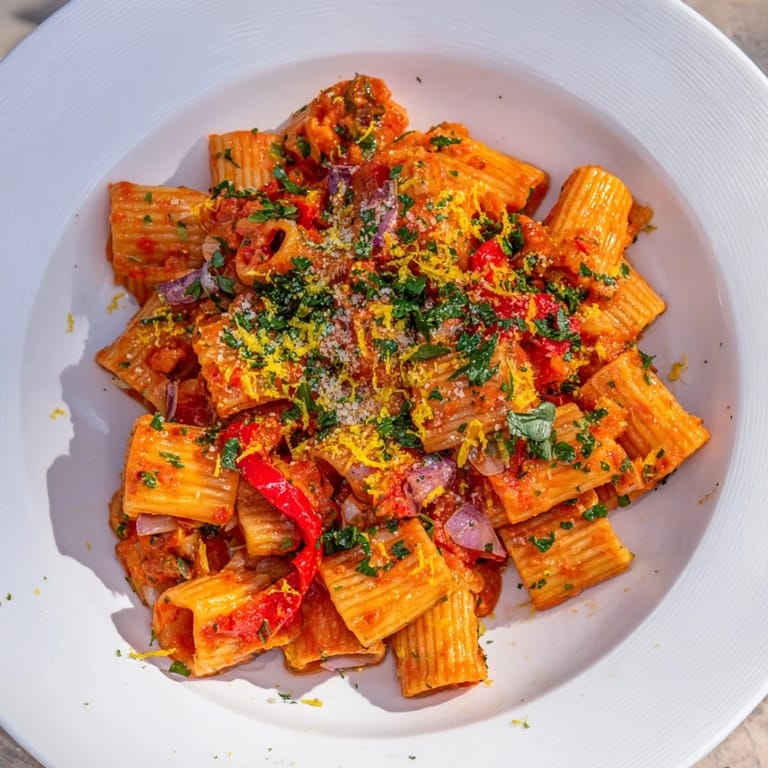
Save There's something about the smell of red pepper flakes hitting hot oil that makes my kitchen feel like a tiny Roman trattoria. I discovered this one-pot diavola on a chilly weeknight when I wanted something bold enough to cut through the monotony of another day, and the realization that everything could happen in a single skillet was genuinely thrilling. The beauty of cooking like this—where chaos becomes dinner in thirty minutes—changed how I think about weeknight meals. It's messy, it's loud, it's entirely Italian in spirit even though I'm not.
I made this for my neighbor who'd just moved in, and she showed up with wine and stayed for two hours just talking in my kitchen while the pasta simmered. That moment—when someone stops by hungry and leaves satisfied and somehow also your friend—that's when I knew this recipe was keeper-material. The spice got her talking, the simplicity let me breathe, and the whole thing felt like the kind of meal you make when you want someone to know you're glad they're here.
Ingredients
- Penne or rigatoni: The tubes catch the sauce inside them, which matters more than you'd think when you're going for flavor in every bite.
- Water or low-sodium vegetable broth: Broth adds depth if you have it on hand, but water works just fine if you trust your seasonings (which you should).
- Red onion: It softens into something almost sweet, balancing the heat that comes later.
- Garlic cloves: Mince them small so they distribute evenly and don't disappear.
- Red bell pepper: Thin slices mean it cooks through and becomes tender, not just decorative.
- Canned diced tomatoes: The juice is your sauce, so drain them less than you might think.
- Olive oil: This is where the first layer of flavor lives, so use something you'd actually taste in a salad.
- Italian seasoning: A shortcut that works because it carries oregano, basil, and thyme all at once.
- Crushed red pepper flakes: Start with 1½ tsp and taste as you go—heat is personal and builds as you cook.
- Smoked paprika: It adds color and a whisper of something that feels intentional, not an accident.
- Salt and black pepper: Taste everything twice.
- Grated Parmesan cheese: The sharp salt cuts through the heat beautifully.
- Fresh parsley or basil: Added at the end so it stays bright and alive.
- Lemon zest: Optional but it wakes everything up if the dish feels like it needs a nudge.
Tired of Takeout? 🥡
Get 10 meals you can make faster than delivery arrives. Seriously.
One email. No spam. Unsubscribe anytime.
Instructions
- Start with the base:
- Heat olive oil in your large skillet over medium heat and add the chopped red onion. You'll know it's ready when the kitchen smells like it's trying to convince you to stay home from wherever you were planning to go. Cook for about 2-3 minutes, stirring occasionally, until the onion turns translucent and starts to soften at the edges.
- Build the aromatics:
- Stir in the minced garlic and sliced red bell pepper, letting them get fragrant for another 2 minutes. This is the moment where the smell changes and you know something good is about to happen.
- Bring it all together:
- Pour in the canned tomatoes with all their juice, then add the dried pasta, water or broth, Italian seasoning, red pepper flakes, smoked paprika, salt, and black pepper. Stir everything together until the pasta is mostly submerged and the ingredients stop looking like separate things and start looking like a team.
- The main event:
- Bring the whole pot to a boil—you'll see big rolling bubbles and hear it before you see it. Once it's boiling, reduce the heat so it simmers gently without boiling over, then let it cook uncovered for 12-14 minutes, stirring frequently so the pasta cooks evenly and nothing sticks to the bottom. The liquid will gradually disappear and the pasta will go from hard to tender, and when you bite a piece it should have just the tiniest bit of resistance in the center.
- The finish:
- Remove from heat and stir in the grated Parmesan and lemon zest if you're using it. Taste and adjust salt and heat to your preference, because this is your spice level, not mine.
- Serve it:
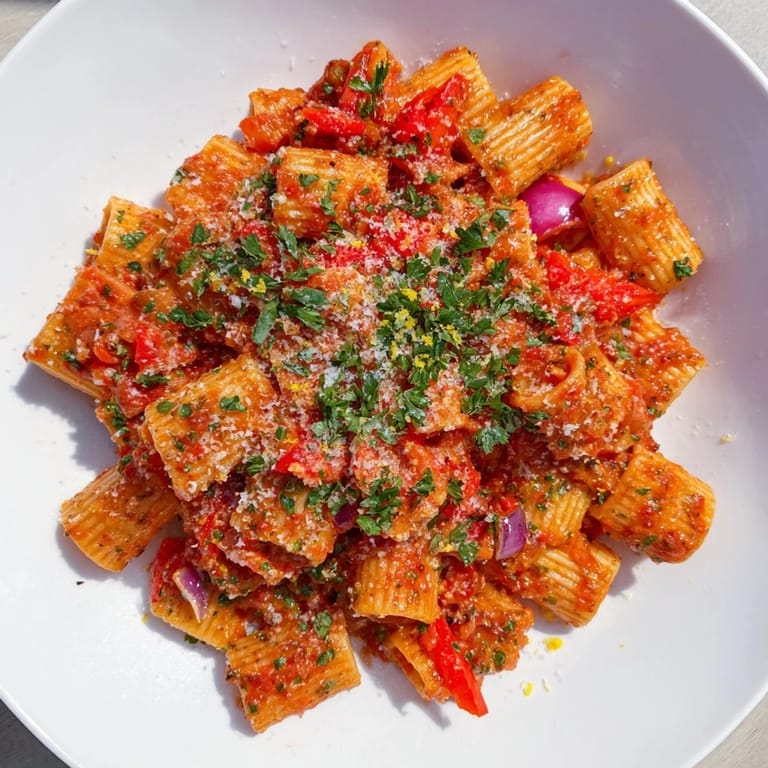
- Divide among bowls while it's hot, top with fresh parsley or basil, and set out extra Parmesan for people who want more (there will be people who want more).
 Save
Save I realized while eating this with my neighbor that some of the best meals aren't about impressing anyone—they're just about being honest and generous with whatever you're putting in the pot. This dish taught me that sometimes one pot is enough, and that's not settling, it's actually elegance.
Making It Your Own
The beauty of this recipe is that it doesn't need you to follow it exactly, even though I hope you do at least once. If you like more heat, the red pepper flakes are yours to adjust upward. If you want protein, cooked chicken sausage or sautéed shrimp slips in at the very end like it was always supposed to be there. I've made it with white wine instead of some of the water on nights when I was feeling slightly fancier, and it adds a brightness that works beautifully.
The Science of One-Pot Pasta
There's something almost magical about cooking pasta directly in its sauce instead of draining it separately. The starch from the pasta creates a creamier sauce as it cooks, and the pasta absorbs all the flavor instead of starting neutral and hoping to catch some seasoning on the way down. It's not just simpler—it actually tastes better, which I only realized the first time my pasta came out silky instead of dry.
Variations and Pairing Ideas
This dish pairs beautifully with a crisp Italian white wine like Pinot Grigio, or even just a cold glass of something sparkling to cut through the heat. If you're feeding people who eat differently—vegan guests, gluten-free, dairy-free—the modifications are all straightforward enough that nobody feels left out. It stands alone as a main course, but if you want to add something to the table, a simple green salad with lemon vinaigrette is all you need.
- For vegan, swap nutritional yeast for Parmesan and everything else stays exactly the same.
- For gluten-free, use gluten-free pasta and watch the cooking time since it can be finicky.
- For protein variation, stir in sliced cooked chicken sausage or sautéed shrimp in the last minute so they just warm through.
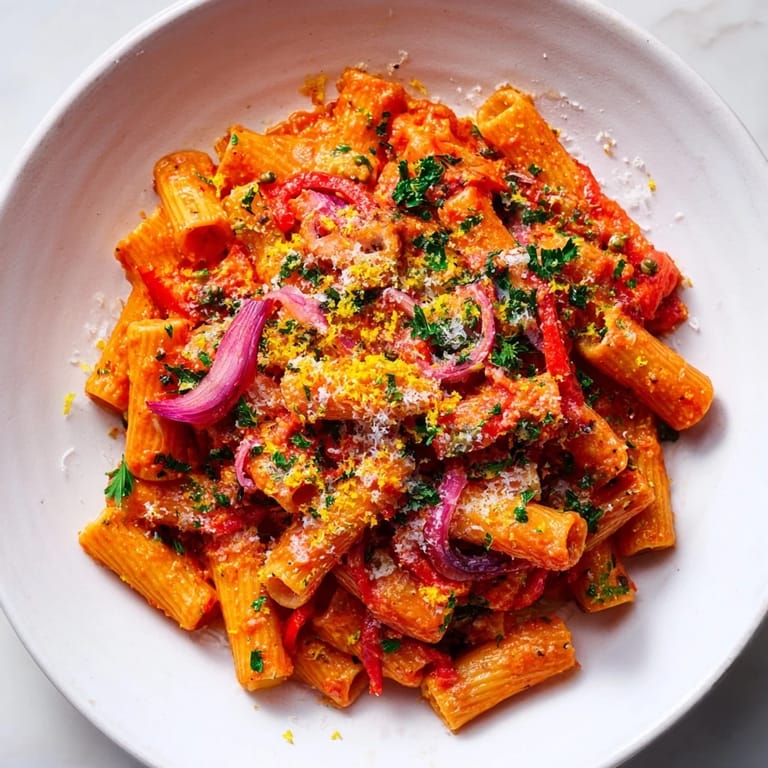 Save
Save This is the kind of recipe you'll come back to again and again, especially on nights when you need something fast but don't want to settle for boring. It asks so little of you but gives back honest, flavorful pasta that feels like it took effort.
Recipe Questions & Answers
- → What pasta works best with this dish?
Penne or rigatoni are ideal as they hold sauce well and cook evenly in one pot.
- → How spicy is this pasta?
The dish features crushed red pepper flakes for a moderate heat that can be adjusted to your preference.
- → Can I make it vegan?
Yes, substitute Parmesan with nutritional yeast to keep it dairy-free and vegan-friendly.
- → Is it possible to add protein?
Adding cooked chicken sausage or sautéed shrimp toward the end boosts protein and complements the flavors well.
- → What cooking tools are needed?
A large deep skillet or Dutch oven, wooden spoon, chef's knife, and cutting board are recommended for preparation.
- → How do I adjust the seasoning?
Taste after cooking and add extra salt, pepper, or lemon zest according to your flavor preference.