 Save
Save The first time I arranged The Hanging Gardens, it wasn't supposed to be a recipe at all—just me panicking before a dinner party, staring at a farmers market haul and wondering how to make it look intentional. I started playing with height and color, pulling out mismatched bowls and small stands from the back of my cabinet, and somehow what emerged felt alive on the table. Guests stopped mid-conversation just to admire it before diving in, and that's when I realized this wasn't about technique or precision—it was about permission to make food feel like an art installation. Now whenever I build one, it's less about following rules and more about listening to what each ingredient wants to be.
I learned the power of this arrangement when my usually quiet neighbor came to a gathering and spent twenty minutes just circling the display, pointing out flavor combinations to her grandkids. She mixed the goat cheese with the strawberries and hummus in a way I'd never considered, and suddenly I understood—this format invites creativity instead of dictating it. That's when The Hanging Gardens went from being just an appetizer to becoming the centerpiece that got people talking and experimenting together.
Ingredients
- Cherry tomatoes: Pick ones that are still slightly firm and full of juice—the halved ones release their flavor into the dips gorgeously.
- Baby carrots: Trimmed but leave a bit of the green on; it adds visual softness and tastes sweeter than you'd expect.
- Cucumber slices: Cut them thin enough to taste refreshing but thick enough they don't get limp in the first ten minutes.
- Radishes: Slice them paper-thin for that satisfying crunch; they're the secret textural anchor most people don't expect.
- Snap peas: Leave them whole—they're fun to grab and the sweetness balances the salty dips.
- Endive leaves: These are your edible spoons; they hold dip without falling apart and add a gentle bitterness.
- Seedless grapes: The sweetness keeps people coming back, especially mixed with salty cheese.
- Strawberries: Halve them to show off their interior; they pair unexpectedly well with savory elements.
- Goat cheese: Shape it into small balls while it's at room temperature; when it's too cold, it cracks and frustrates you.
- Feta: Cube it generously—small pieces disappear, but satisfying chunks become memorable bites.
- Hummus: Use good quality or make your own; the flavor matters here because it's a foundation.
- Tzatziki: Cool and herbal, it's the perfect foil for raw vegetables and warm goat cheese.
- Pesto: Bright and intense, a little goes a long way, especially when dolloped on fresh tomatoes.
- Toasted pistachios: Chop them roughly so people can see what they are; they add an earthy, almost buttery note.
- Fresh basil: Tear it gently by hand just before serving to preserve the oils and color.
- Edible flowers: Optional but they make the whole thing feel special without any extra effort.
- Extra virgin olive oil: A light drizzle matters—too much makes things slide around, too little feels stingy.
Tired of Takeout? 🥡
Get 10 meals you can make faster than delivery arrives. Seriously.
One email. No spam. Unsubscribe anytime.
Instructions
- Wash everything thoroughly:
- Rinse your vegetables and fruits gently; you want them clean but not bruised. Pat them dry with paper towels so nothing gets slippery on the platter.
- Prep with intention:
- Trim the carrots, halve the tomatoes, slice the cucumbers and radishes. This is meditative work—take your time so everything looks intentional.
- Shape your cheeses:
- Roll the goat cheese between your palms into small, imperfect balls; they don't need to be perfect. Cube the feta and set it aside where it won't start leaking.
- Build your landscape:
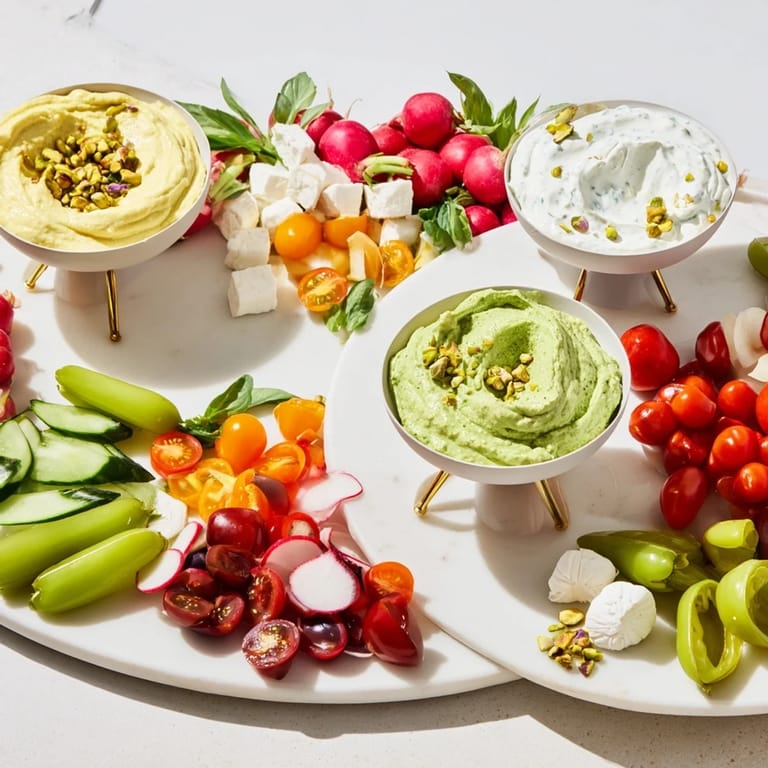
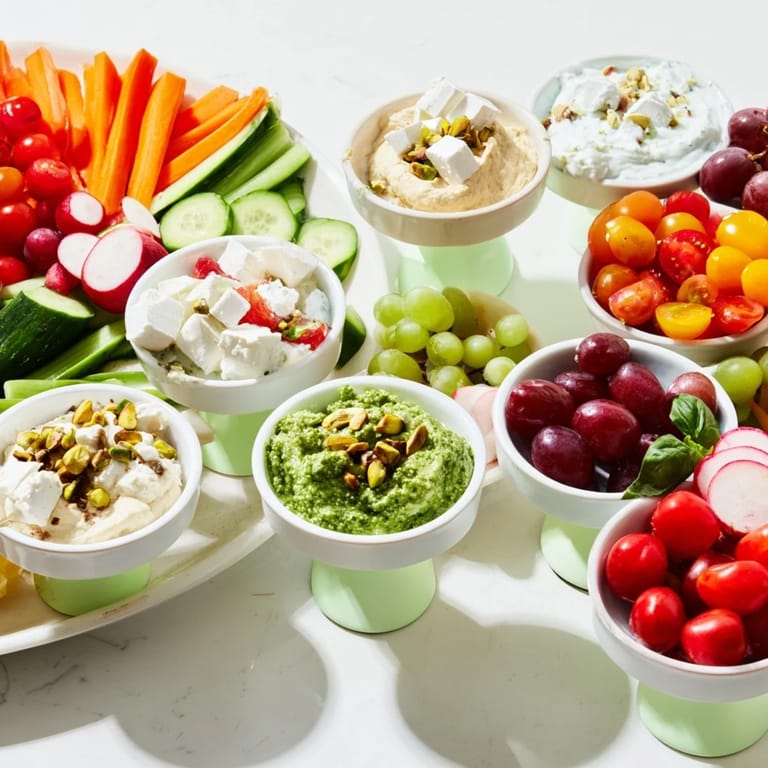
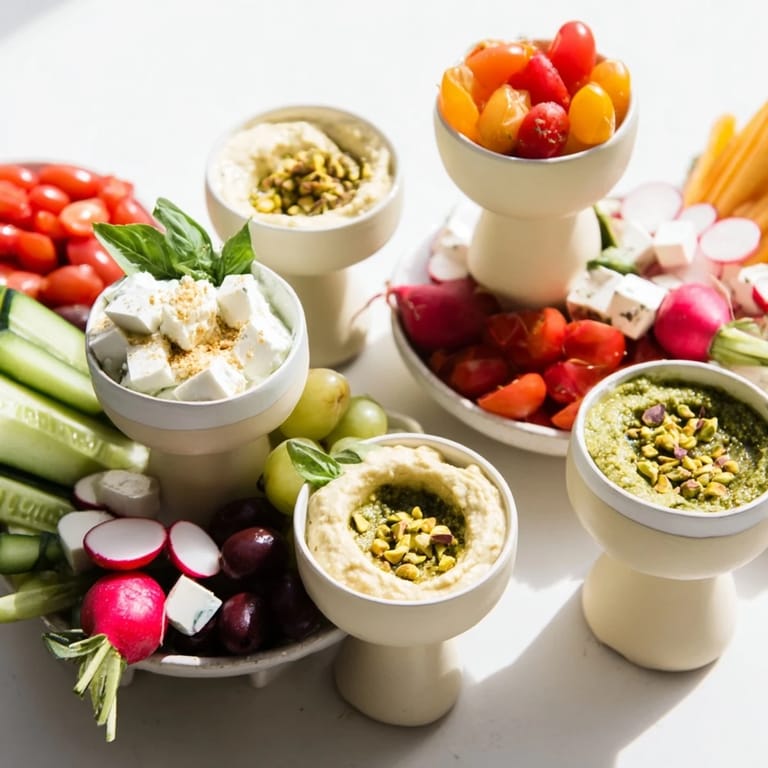
- Arrange your mini-stands and bowls at varying heights on your platter—this is where the magic happens, and there's no wrong way to do it. Step back and see if it feels balanced before you add anything.
- Distribute with abundance:
- Let things overflow slightly, create little pockets of color, and allow ingredients to interact visually. Think garden, not geometry—arranged but not rigid.
- Position your dips:
- Place small bowls of hummus, tzatziki, and pesto among the ingredients, making sure they're accessible but not crowded. They should feel like discoveries, not obstacles.
- Add the finishing layers:
- Scatter toasted pistachios, tear basil leaves by hand, and add edible flowers if you're using them. The garnishes are what catch the light and make people pause.
- Season and shine:
- Drizzle olive oil lightly across the whole arrangement, then finish with sea salt and freshly ground black pepper. Everything should glisten slightly, inviting people to dig in.
 Save
Save There was a moment at a celebration when someone reached for a strawberry covered in a tiny sprinkle of pistachios and a whisper of basil, dipped it in the pesto, and then just closed their eyes for a second. That's when I knew this arrangement wasn't just about filling a platter—it was about creating a space where flavors could find each other unexpectedly.
The Beauty of Simplicity
What makes The Hanging Gardens work is that there's almost no cooking involved, yet it feels elegant and thoughtful. I used to overcomplicate appetizers, thinking I needed to roast, brine, or compose things into tiny towers. This taught me that sometimes the most stunning food is just really good ingredients treated with respect and arranged with intention. It's liberating to discover that restraint and good taste often outshine complexity.
Making It Seasonal
The real gift of this recipe is how it shifts with what's available in your market or garden. In summer, I load it with stone fruits and berries; in fall, I add sliced apples, pears, and roasted beets; in winter, it becomes a celebration of citrus and pomegranate seeds. I've learned that working with seasons doesn't mean settling for less—it means tasting what's actually at its peak instead of forcing something that traveled halfway around the world.
The Art of Arrangement
Once you understand that this is really about color balance and visual rhythm, you start seeing your platter differently. I think about where the greens sit next to the reds, where white feta can brighten a corner, how a scattered handful of pistachios can anchor a busy section. It's not decorating—it's more like conducting, making sure every element gets a moment to shine while contributing to something larger than itself.
- Odd numbers work better than even ones—three clusters of radishes feel more natural than two.
- Let colors flow into each other rather than creating strict sections; nature doesn't organize itself by category.
- Step back multiple times during assembly and view it from where guests will see it, not just from directly above.
 Save
Save The Hanging Gardens has taught me that the most memorable meals often come from generosity and permission—permission to make something beautiful, to let people choose their own adventure, and to celebrate ingredients rather than compete with them. Once you make one, you'll find yourself building them for every gathering, each one a little different, always welcoming.
Recipe Questions & Answers
- → What ingredients add texture to this appetizer?
Crunchy vegetables like baby carrots, radishes, snap peas, and fresh endive leaves contribute varied textures to the fresh medley.
- → How can the dish be adapted for non-vegetarians?
Cured meats can be added alongside vegetables and cheeses for a meat-inclusive variation while retaining the garden-style presentation.
- → What dips complement the fresh ingredients?
Hummus, tzatziki, and pesto provide creamy and flavorful options that pair well with the vegetables and cheeses.
- → Are there any allergen considerations to keep in mind?
This dish contains dairy from cheeses and tzatziki, nuts from pistachios, and may include sesame and pine nuts in the dips. Checking ingredient labels is advised.
- → What presentation tools are recommended?
Using mini-stands or tiered trays with small bowls arranged on a large platter enhances the visual appeal, creating a layered garden effect.
- → How should the ingredients be prepared?
Wash, trim, and slice vegetables and fruits as needed; shape goat cheese into small balls and cube feta for uniform, bite-sized pieces.