 Save
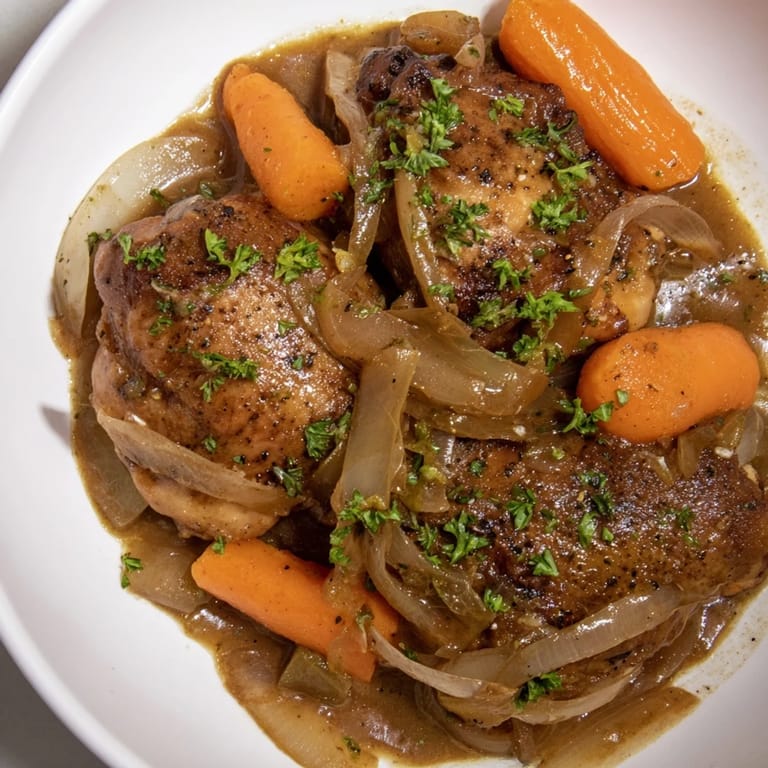
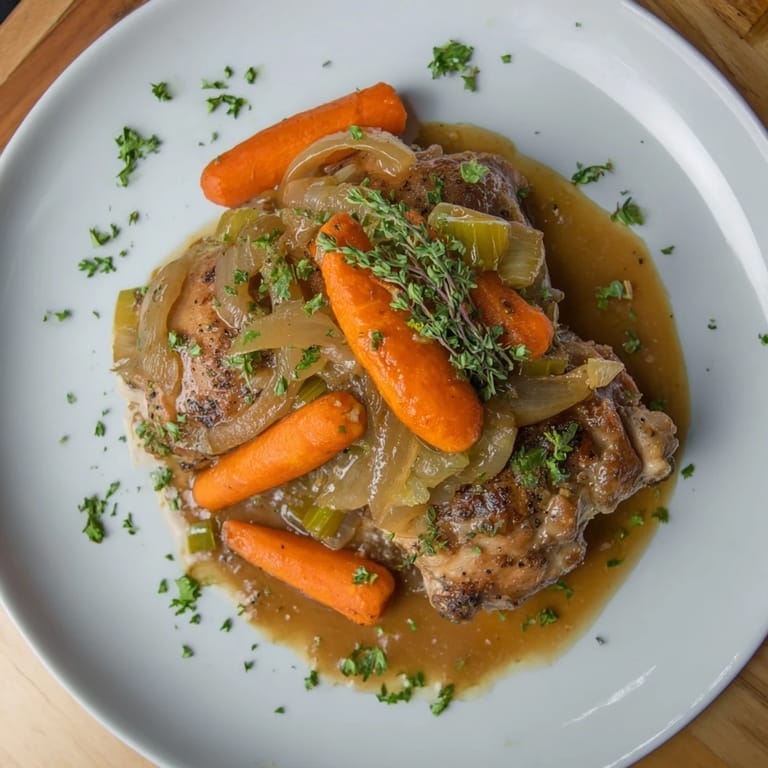
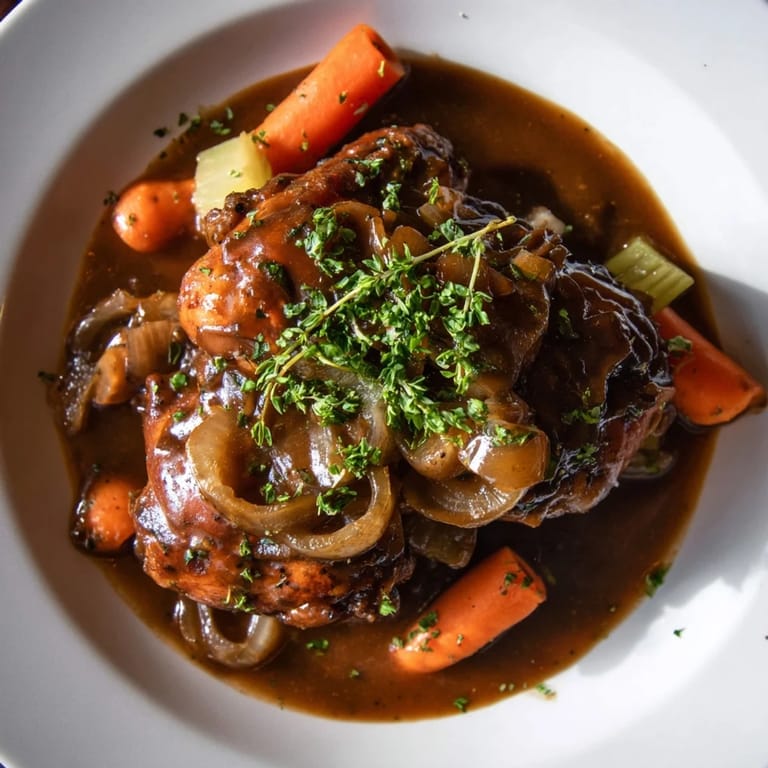
Save There's something about a Dutch oven that makes me slow down. Years ago, my grandmother kept one on the back of her stove in Georgia, and I'd watch her pour ingredients into it without measuring, trusting her hands more than any recipe. This Georgia Pot Roast Chicken is how I remember those afternoons—sweet, savory, and patient. The chicken thighs become so tender they nearly fall apart, cradled in a gravy that tastes like comfort itself.
I made this for my sister's family last winter, and her youngest asked for seconds before anyone else had finished their first plate. That doesn't happen often. My brother-in-law, who claims he doesn't like "fancy" food, ate in almost total silence, which I've learned is the highest compliment he can give. Afterward, my sister asked for the recipe, and I realized I'd found something that works for every table.
Ingredients
- Bone-in, skinless chicken thighs (2.5 lbs): Thighs have more fat than breasts, which keeps them moist during the long braise and gives the sauce real body and richness.
- Sweet pickled onions (one 16 oz jar): This is the secret. Don't skip them or substitute with raw onions—the vinegar and sugar have already done the work of breaking down their sharpness, and they add genuine depth.
- Reserved onion brine (2 tbsp): The liquid gold that ties everything together; it sounds like a small detail, but this is what prevents the sauce from tasting flat.
- Garlic (4 cloves, minced): Fresh garlic matters here because you're cooking it low and slow, so it becomes subtle and integrated rather than harsh.
- Carrots and celery (2 medium carrots, 2 ribs celery): These build the base layer of flavor and break down into the sauce, creating natural body without any flour.
- Yellow onion (1 small, thinly sliced): A fresh onion adds textural contrast to the tender pickled ones and softens as it cooks.
- Unsalted butter (2 tbsp): Use good butter for searing; it creates that brown crust on the chicken that flavor-rich braising liquid clings to.
- Chicken broth (1/4 cup): Keep it low-sodium so the other flavors stay in focus.
- Brown sugar (2 tbsp): This isn't gratuitous sweetness—it balances the Worcestershire and vinegar notes into something almost savory.
- Dijon mustard (1 tbsp): The mustard acts like an invisible hand, deepening savory notes without announcing itself.
- Worcestershire sauce (1 tbsp): This small amount adds umami and a subtle fermented depth that makes people wonder what your secret ingredient is.
- Dried thyme and oregano (1 tsp thyme, 1/2 tsp oregano): Dried herbs actually work better here than fresh because their intensity holds up during long cooking.
- Kosher salt and black pepper (1 tsp salt, 1/2 tsp pepper): Salt the chicken before searing to help it brown; taste as you go because the pickled onions bring their own seasoning.
Tired of Takeout? 🥡
Get 10 meals you can make faster than delivery arrives. Seriously.
One email. No spam. Unsubscribe anytime.
Instructions
- Set your oven to 325 degrees:
- This low, slow temperature is what transforms chicken thighs into something almost buttery. Any hotter and they'll dry out before the sauce has time to work its magic.
- Dry your chicken and season it:
- Pat the thighs completely dry with paper towels—this is what gives you that golden crust. Season generously with salt and pepper and let them sit for a minute so the seasoning sticks.
- Get that crust going:
- Heat your Dutch oven over medium-high heat and melt the butter until it's foaming. When you place the chicken in, it should sizzle immediately. Don't move it around; let each side sit for 3 to 4 minutes until it's deep golden brown, then flip. This crust is where flavor lives.
- Build your base:
- Once the chicken is seared and set aside, lower the heat to medium. Add your fresh onion, carrots, and celery to the same pot, scraping up any brown bits stuck to the bottom. These bits are liquid gold. Sauté for 4 to 5 minutes until the vegetables start to soften, then add the garlic and cook for just one more minute so it doesn't burn.
- Layer in the star ingredients:
- Return the chicken to the pot, nestling it among the vegetables. Scatter the drained pickled onions over everything like you're tucking them in. They'll distribute themselves as the dish cooks.
- Make your braising liquid:
- In a small bowl, whisk together the reserved onion brine, chicken broth, brown sugar, Dijon mustard, Worcestershire sauce, thyme, and oregano. This mixture should taste almost like a concentrated version of what you want the final sauce to be—a little sharp from the brine, a little sweet from the sugar, a little savory from the mustard and Worcestershire. Pour it over the chicken.
- Braise low and slow:
- Cover the pot with its lid and slide it into the 325-degree oven. Set a timer for 2 hours and 45 minutes, but don't peek. The steam trapped inside is doing essential work. You'll smell it before you see it—a warm, savory, slightly sweet aroma that'll make you hungry even if you just ate.
- Finish and taste:
- When the chicken is falling-apart tender, remove the pot from the oven. Taste the sauce and adjust with a pinch more salt, pepper, or even a tiny bit more Worcestershire if it feels flat. Scatter fresh parsley over the top if you have it—it adds a bright finish that cuts through the richness.
 Save
Save I learned something cooking this dish: the moments when food feels effortless are usually when you've done the small technical things right. There's no stress at the table when dinner is this good and this easy.
Why This Works as a Southern Dish
Southern cooking has always been about taking what you have and making it sing. This pot roast borrows from the Mississippi pot roast tradition but strips away the heat and adds sweetness, making it more approachable for families or when you want comfort without intensity. The pickled onions are the bridge—they're tangy and sweet at once, which is very Southern.
Serving Suggestions
I've served this with creamy mashed potatoes, fluffy rice, and warm biscuits, and each one transforms the dish in a different way. Potatoes catch and absorb the sauce, rice spreads it across the plate, and biscuits soak it up in the most indulgent way. Choose based on your mood or what's already in your kitchen.
Making It Your Own
The beauty of this dish is that it's a template more than a strict formula. Once you understand how the elements work together, you can play. The base of browned chicken, soft vegetables, and balanced braising liquid is solid ground to stand on.
- For heat, add a pinch of crushed red pepper or a dash of hot sauce stirred into the braising liquid.
- For a dairy-free version, swap the butter for olive oil and double-check that your Worcestershire sauce is gluten-free.
- If you're cooking for someone who prefers white meat, chicken breasts work but watch them closely so they don't overcook and become dry.
 Save
Save This is the kind of meal that feels like it took all day but asks almost nothing of you. That's the real comfort in it.
Recipe Questions & Answers
- → What cut of chicken works best for slow braising?
Bone-in, skinless chicken thighs are ideal as they stay moist and become tender during the slow braising process.
- → Can I use fresh onions instead of jarred sweet pickled onions?
Fresh onions can be used, but jarred sweet pickled onions add a subtle sweetness and depth that complement the Southern-style flavors.
- → How do I achieve a thicker gravy from the cooking sauce?
Remove the chicken after cooking and simmer the sauce uncovered to reduce it, or stir in a cornstarch slurry for desired thickness.
- → What are good side dishes to serve with this braised chicken?
Mashed potatoes, rice, or warm biscuits pair wonderfully to soak up the savory gravy.
- → Is it possible to make this dish dairy-free?
Yes, replacing butter with olive oil maintains flavor while keeping the dish dairy-free.