 Save
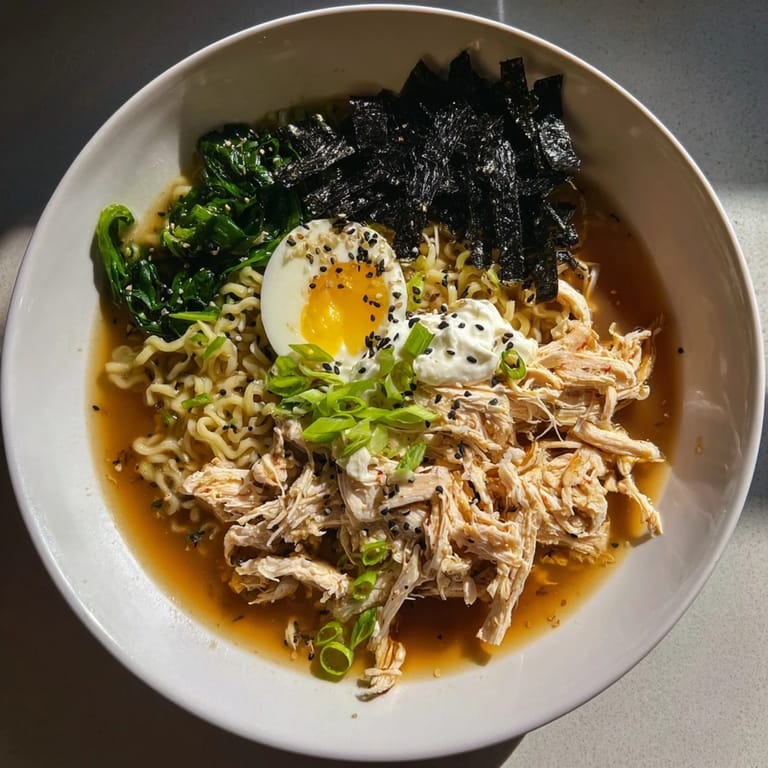
Save There's something almost meditative about watching that creamy Kewpie mayo swirl into steaming broth, turning a humble packet of instant ramen into something that feels like you spent hours perfecting it. I discovered this version on a particularly tired Tuesday when I had exactly twenty minutes and absolutely needed something warm and comforting. The magic isn't in complicated techniques—it's in choosing better ingredients and letting them do the work for you.
I made this for my partner one Saturday morning after we'd stayed up too late the night before, and they asked if I'd somehow upgraded our entire kitchen overnight. The bowl looked so intentional, so considered, that it felt like a small act of care rather than just throwing dinner together. That's when I realized the best recipes aren't always the most complicated—they're the ones that make people feel noticed.
Ingredients
- 2 packs instant chicken ramen with seasoning packets: These are your foundation, and honestly, there's no shame in using them—just choose a quality brand if you can.
- 1 cooked chicken breast, shredded or sliced: Rotisserie chicken works beautifully here and saves you another step; it brings substance without extra cooking.
- 2 soft-boiled eggs: The jammy yolk is non-negotiable—it's where the indulgence happens, so don't skip the ice bath or they'll overcook.
- 1 cup baby spinach or bok choy: Green vegetables add brightness and nutrition; bok choy stays firmer and tastes slightly mineral, which pairs wonderfully with the richness of the mayo.
- 2 scallions, thinly sliced: The sharp onion bite cuts through the richness and adds a textural contrast that matters more than you'd think.
- 1 sheet nori, cut into strips (optional): It adds umami and a subtle ocean note if you want an extra layer of flavor.
- 1 tablespoon toasted sesame seeds: Always toast them yourself if you have time—the difference in flavor is why this step matters.
- 2 tablespoons Kewpie mayonnaise: This is the secret ingredient that elevates everything; it's sweeter and richer than regular mayo, almost buttery, and it's worth seeking out.
- 1 teaspoon soy sauce, 1 teaspoon sesame oil: These deepen the broth and add warmth without overpowering the other flavors.
- Freshly ground black pepper, to taste: Fresh pepper adds a subtle bite that pre-ground simply can't match.
Tired of Takeout? 🥡
Get 10 meals you can make faster than delivery arrives. Seriously.
One email. No spam. Unsubscribe anytime.
Instructions
- Start the eggs first:
- Bring water to a boil, gently lower your eggs in with a spoon so they don't crack, and set a timer for exactly six and a half to seven minutes—this is where precision matters. The ice bath stops them cooking instantly, so don't skip it.
- Cook the noodles:
- Follow the package instructions in a medium pot, but keep your eye on them because instant noodles go from perfect to mushy quickly. The seasoning packet goes in now, creating your broth base.
- Add protein and greens at the end:
- During the final two minutes, add your shredded chicken and spinach so everything heats through together without the vegetables losing their color and bite. This timing matters—it keeps everything from becoming one soft, overcooked mass.
- Season and balance:
- Stir in the soy sauce and sesame oil, tasting as you go because some seasoning packets are saltier than others. You're looking for that savory warmth, not a broth that overshadows everything else.
- Build your bowls:
- Divide everything evenly between two bowls—noodles, broth, chicken, and greens—so both servings feel intentional and complete. This is the moment where presentation starts mattering.
- Finish with the toppings:
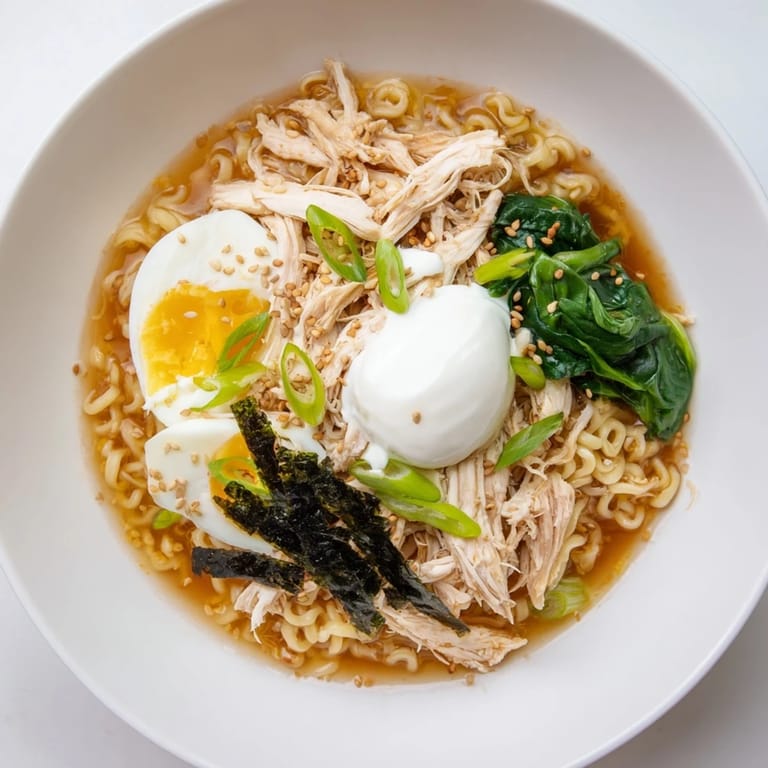
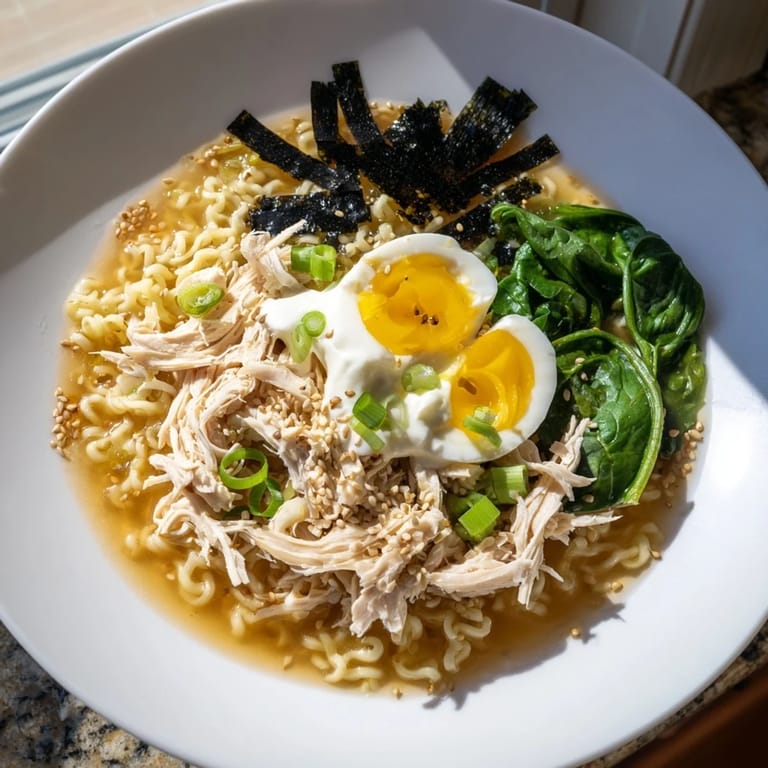
- Place a halved egg on top, then a generous dollop of Kewpie mayo, followed by scallions, nori strips if using, sesame seeds, and a grind of black pepper. The order matters because you want the visual drama and the layers of flavor.
- Serve and mix:
- Bring the bowls to the table immediately while the broth is still steaming, and encourage mixing the mayo into the noodles as you eat—that's where the magic happens, as the creamy richness melds into the warm broth.
 Save
Save There was a moment, sitting at my small kitchen table with a steaming bowl of this ramen, when I realized how cooking isn't always about proving something—sometimes it's just about giving yourself permission to have something good on a regular Tuesday. That bowl tasted like intention in the best, most unpretentious way.
The Kewpie Mayo Moment
Kewpie mayonnaise arrives in those distinctive red and gold tubes, and the first time you taste it, you understand why Japanese cooks have been using it for decades. It's sweeter, richer, and almost egg-yolk forward compared to Western mayo—it doesn't just coat your noodles, it transforms the entire bowl into something silkier and more luxurious. If you can't find it, that's okay, but it's worth the effort because it's genuinely different, and sometimes those small differences are what separate a good meal from one you remember.
Why Soft-Boiled Eggs Matter Here
A jammy soft-boiled egg isn't just a topping—it's a textural contrast and a source of richness that makes this bowl feel indulgent without being heavy. The yolk breaks into the warm broth and creates these little pockets of creaminess throughout, while the soft white stays tender and adds protein. Once you nail the timing, you'll start adding soft-boiled eggs to everything from salads to toast because you'll understand what you've been missing.
Quick Flavor Variations and Upgrades
This recipe is wonderfully forgiving—the bones are strong enough that you can play around without losing what makes it work. Some nights I add a tiny drizzle of chili oil for heat, other times a sprinkle of shichimi togarashi (Japanese seven-spice blend) adds complexity without overwhelming the dish. Even just switching between baby spinach and bok choy changes the whole experience, so don't feel locked into one version.
- A dash of chili oil or shichimi togarashi adds heat and depth without masking the other flavors.
- Rotisserie chicken is just as valid as home-cooked—convenience doesn't make it less delicious.
- Fresh ginger slivers or a tiny splash of rice vinegar can brighten everything if you're in the mood for something sharper.
 Save
Save This ramen teaches you that a great meal doesn't require hours of labor, just a few good choices made with intention. Keep the ingredients on hand and you'll have this ready whenever you need something warm and comforting.
Recipe Questions & Answers
- → Can I use leftover chicken instead of fresh cooked chicken?
Yes, shredded rotisserie or leftover roast chicken works well and adds convenience without sacrificing flavor.
- → How do I achieve the perfect soft-boiled egg?
Boil eggs gently for 6–7 minutes, then place them in ice water to stop cooking. This results in a silky yolk perfect for ramen.
- → Is Kewpie mayonnaise necessary for the dish?
Kewpie mayo provides a unique creaminess and umami, but regular mayonnaise is a suitable alternative if unavailable.
- → Can I substitute baby spinach with other greens?
Yes, bok choy or similar leafy greens can be used to maintain freshness and texture.
- → What optional toppings enhance the dish?
Nori strips, toasted sesame seeds, scallions, and a sprinkle of black pepper or chili oil add depth and contrast to the flavors.
- → How do I incorporate Kewpie mayo into the ramen?
Add a spoonful on top of the hot noodles and stir it into the broth as you eat for a rich, creamy finish.